

What is Go (Golang)? A Beginner-Friendly Guide
If you ask what Golang is, the simple answer is this. Go is a fast, clean, and beginner-friendly programming language made for modern software development. Developers use it to build websites, apps, cloud systems, APIs, and large platforms that need speed and stability. The language keeps coding simple while giving strong performance. That balance makes Go a favorite choice for startups and growing tech teams.
At Nucleo Analytics, we see more businesses moving toward Go because development teams want better speed, cleaner code, and lower maintenance work. Many developers also prefer Go because the syntax feels easy to read and easy to manage during long projects. A beginner can learn the basics quickly without feeling buried under complex rules.
Go also works great for scalable web systems. Fast loading pages, smooth backend performance, and reliable APIs support a better user experience. Those things matter a lot for modern websites and software products today.
Why Does the Go Programming Language Matter Today?
The tech world moves fast every year. Businesses need systems that can handle traffic spikes, growing data, and real-time requests without slowing down. That demand pushed many companies toward the Go programming language.
Go solves many common problems developers face daily. The language stays simple while giving excellent performance. Teams can build apps faster and manage large projects with less stress.
Here is Why Developers Love Go:
- Clean and readable syntax helps developers write code faster.
- Built-in concurrency handles many tasks at the same time.
- Fast compilation saves valuable development hours.
- Strong performance supports large-scale applications smoothly.
- Easy deployment improves software management for teams.
- Simple structure reduces debugging and maintenance pressure.
Many companies use Go for cloud platforms, backend systems, and microservices because the language remains reliable under heavy workloads.

How Did Golang Start?
Google created Go in 2007. Engineers at Google wanted a language that solved issues found in older systems. Large projects became slow and difficult to maintain with traditional tools. Go entered the scene to fix that problem.
The creators focused on three major goals:
- Simplicity
- Speed
- Scalability
Go became public in 2009. Since then, the language has gained strong support across the development community. Many modern platforms now depend on Go because it works well for high-performance systems.
Today, developers use Golang in industries like fintech, SaaS, healthcare, cloud computing, and e-commerce.
What Makes Golang Beginner-Friendly?
Many new developers feel overwhelmed while learning programming languages. Some languages include too many rules, symbols, and complex structures. Go takes a different route.
The language focuses on clarity. Developers can understand the code without reading huge manuals every day.
Beginners Enjoy Go Because:
- The syntax looks simple and clean.
- The setup process stays very easy.
- Error handling feels direct and readable.
- Documentation remains beginner-friendly.
- Learning resources stay widely available online.
A beginner can build small apps within weeks of practice. That fast learning curve keeps motivation high during early coding stages.
How Does Go Work Behind the Scenes?
Go uses a compiler-based system. The compiler converts source code into machine-level instructions. That process helps applications run faster than many interpreted languages.
Go also includes goroutines. Goroutines allow multiple tasks to run together without heavy resource usage. This feature supports high-speed applications and modern cloud systems.
The structure stays clean and easy to understand. A beginner can learn the language without facing unnecessary complexity during the early learning phase.
Build Faster Digital Platforms with Expert Golang Development
Why Use Golang for Modern Applications?
Many businesses ask developers one question today. Why use Golang instead of older languages? The answer usually comes down to speed, scalability, and maintenance.
Go Works Well For:
- Web applications
- APIs
- Cloud platforms
- DevOps tools
- Distributed systems
- SaaS products
Key Advantages Include:
- Faster execution speed
- Lower server resource usage
- Easier team collaboration
- Better scalability support
- Faster deployment process
At Nucleo Analytics, we often recommend Go for businesses planning long-term software growth because the language supports scalable infrastructure very efficiently.
Golang vs Python: Which One Should Beginners Choose?
The debate around Golang vs Python continues across developer communities. Both languages offer strong benefits. However, the right choice depends on project goals.
Python works well for automation, AI, and data science. Go works better for backend systems and scalable platforms.
| Feature | Golang | Python |
| Speed | Very fast | Slower |
| Syntax | Clean and structured | Beginner-friendly |
| Scalability | Excellent | Moderate |
| Concurrency | Built-in support | Limited |
| Performance | High | Medium |
| Learning Curve | Simple | Very simple |
Python feels easier during the first learning stage. Go becomes stronger for performance-heavy systems and scalable backend products.
Is Golang Good for Startups?
Yes. Many founders now prefer Golang for startups because it reduces development complexity while improving product performance.
Startups usually need:
- Fast product launches
- Low infrastructure costs
- Scalable architecture
- Small developer teams
Go supports all those needs very well.
Startups Benefit from Go Because:
- Development moves faster.
- Server costs stay lower.
- Maintenance becomes easier.
- Teams scale products smoothly.
- Performance stays strong during growth.
A startup can launch platforms quickly while keeping long-term scalability ready from the beginning.
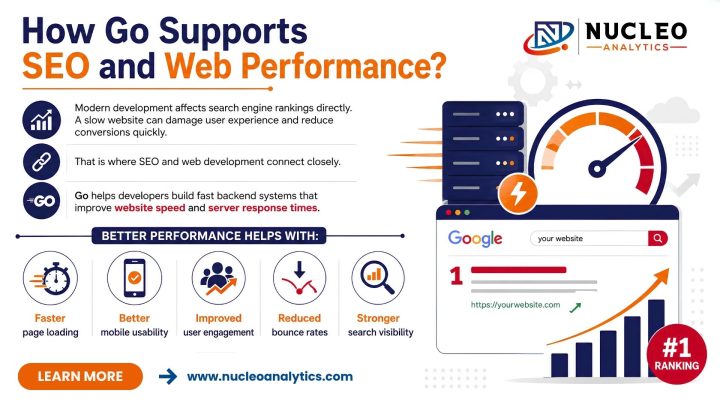
How Go Supports SEO and Web Performance?
Modern development affects search engine rankings directly. A slow website can damage user experience and reduce conversions quickly. That is where SEO and web development connect closely.
Go helps developers build fast backend systems that improve website speed and server response times.

Better Performance Helps With:
- Faster page loading
- Better mobile usability
- Improved user engagement
- Reduced bounce rates
- Stronger search visibility
Search engines favor websites that deliver smooth performance consistently across devices.
How Does Go Help Technical Optimization in Web Development?
Businesses now focus heavily on technical optimization in web development because performance affects both SEO rankings and customer experience.
Go improves backend efficiency while reducing unnecessary processing delays.
Developers Use Go for Optimization Through:
- Lightweight APIs
- Fast database communication
- Better memory management
- Stable server handling
- Efficient concurrency
Those improvements help websites stay responsive even during traffic spikes.
Can Golang Reduce Website Development Cost?
Yes. Go can support lower website development costs in several ways.
The language compiles fast and stays easy to maintain. Developers spend less time fixing errors and managing complex dependencies.
Businesses save money because:
- Projects require smaller teams.
- Deployment stays simpler.
- Maintenance becomes easier.
- Infrastructure usage stays efficient.
- Server performance remains strong.
Those savings matter greatly for growing businesses and startup companies.
How Does Go Help Build Mobile-Friendly Websites?
Every business needs a mobile-friendly website today. Mobile users expect fast-loading pages and smooth experiences across all devices.
Go supports strong backend performance that helps websites load quickly on smartphones and tablets.
Fast backend systems improve:
- Mobile page speed
- API response times
- User experience
- App integration
- Real-time functionality
Good mobile performance helps businesses keep visitors engaged longer.
Golang and Technical SEO
Developers often focus only on design while ignoring backend performance. However, strong technical SEO depends heavily on fast and reliable infrastructure.
Go supports technical SEO by improving server response and handling large traffic volumes efficiently.
Go Contributes to SEO Through:
- Better page speed
- Reduced downtime
- Faster crawl response
- Stable backend architecture
- Improved scalability
Search engines reward websites that stay reliable and fast.
How Go Supports Core Web Vitals Optimization?
Google measures user experience through performance signals called core web vitals optimization. Fast systems help websites score better in those areas.
Go supports those improvements because backend performance affects page rendering and response speed.
Important Core Web Vitals Areas Include:
- Loading speed
- Visual stability
- User interaction response
A fast backend creates smoother frontend performance across devices and browsers.
Understanding HTTP Status Code 409 in Golang
Developers often manage API systems with Go. During API development, teams sometimes encounter HTTP status code 409 errors.
This error means a request conflicts with existing data or server conditions.
Common Causes Include:
- Duplicate database entries
- Conflicting updates
- Simultaneous user actions
- Version mismatches
Go helps developers handle these situations clearly through structured error handling and efficient backend logic.
Best Tools and Frameworks for Golang Beginners
A beginner usually learns faster with the right tools. Go offers many beginner-friendly frameworks and libraries.
Popular Tools Include:
- Gin for APIs
- Fiber for web applications
- Echo for lightweight backend systems
- GORM for database management
- Cobra for CLI applications
A structured Golang tutorial often starts with these tools because learning becomes easier with practical understanding and real development workflows.
At Nucleo Analytics, we encourage beginners to build small projects early because practical learning creates stronger coding confidence.
How Long Does It Take to Learn Golang?
Learning speed depends on consistency and practice time. A beginner with daily learning habits can understand core concepts within a few months.
A Basic Learning Roadmap Looks Like This:
- Learn syntax and variables.
- Understand loops and functions.
- Practice arrays and maps.
- Build small applications.
- Learn APIs and web servers.
- Explore concurrency and goroutines.
Regular practice builds strong coding habits much faster than passive learning alone.
Common Mistakes Beginners Make While Learning Go
Every beginner faces challenges during the learning process. However, simple awareness helps avoid common mistakes early.
Frequent Beginner Mistakes Include:
- Skipping practical projects
- Ignoring error handling
- Writing overly complex logic
- Avoiding documentation reading
- Learning too many tools together
Focused learning creates better long-term coding skills.
The Future of Golang
Go continues growing across the software industry. Many companies now build cloud systems, backend services, and scalable APIs with Go because performance needs keep increasing.
The language also fits modern development trends very well.
Future Growth Areas Include:
- Cloud-native development
- AI infrastructure
- DevOps systems
- Scalable SaaS platforms
- High-performance APIs
Go remains a strong choice for developers who want stable, long-term career opportunities.
Conclusion
Understanding what Golang is gives beginners a strong starting point in modern software development. Go combines speed, simplicity, and scalability in one clean package. Developers can build fast systems without fighting overly complex syntax every day. Businesses also benefit from better performance and easier maintenance across growing platforms.
At Nucleo Analytics, we believe Go gives companies a practical path toward scalable digital growth while keeping development efficient and manageable for long-term success.