







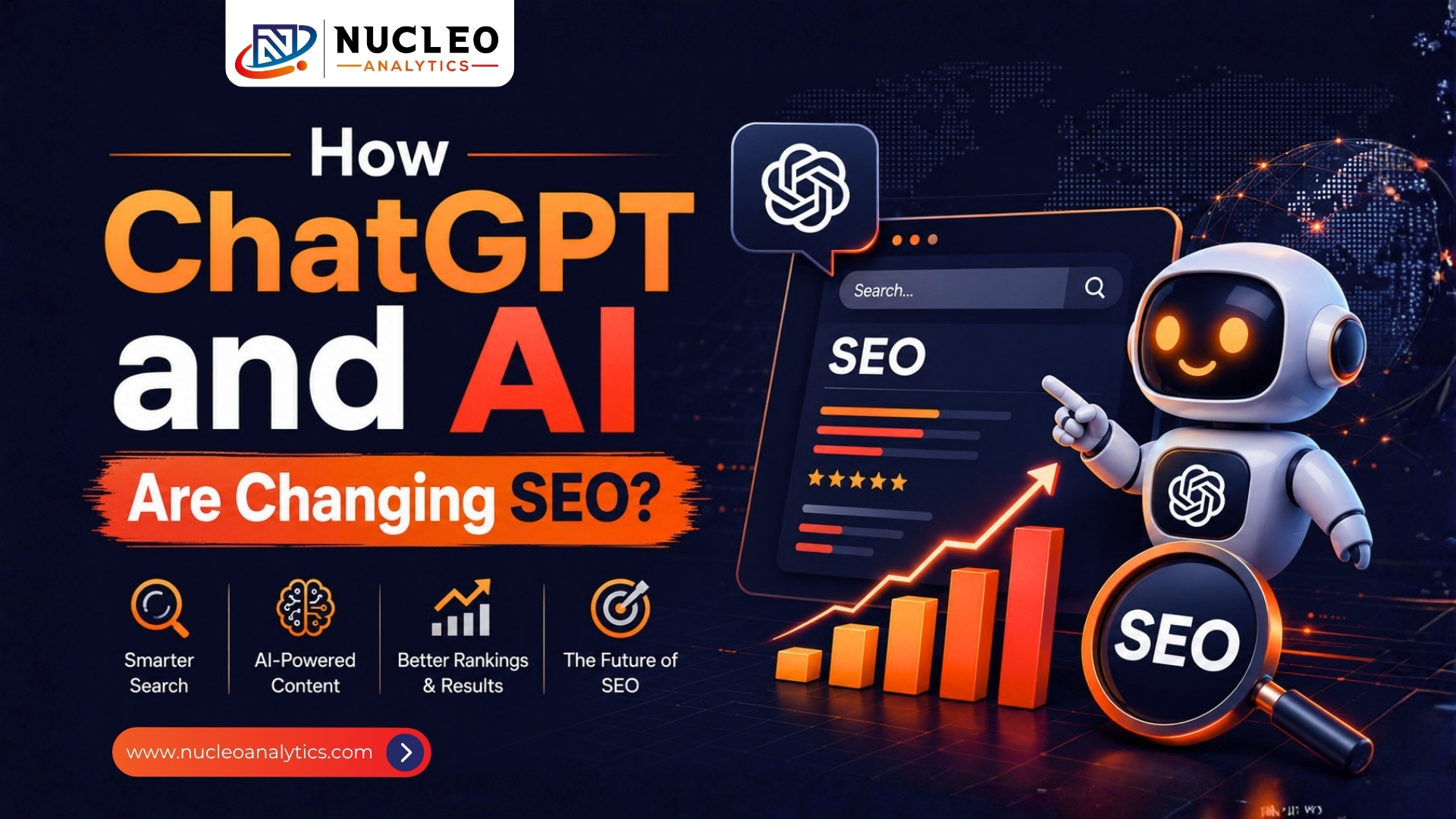
How ChatGPT and AI Are Changing SEO?
SEO today is not what it used to be. A few years ago, SEO required websites to focus on three main elements, which were keywords, backlinks, and excessive content creation. The present time experiences rapid changes in all aspects of life. AI tools such as ChatGPT introduce fundamental changes to user search behavior and content ranking systems. Your current position shows that you have already fallen behind because you continue to follow outdated methods. The blog demonstrates current industry changes, identifies essential elements, and provides straightforward strategy development methods. The connection between ChatGPT and SEO will be examined in this study.
The Shift: Search is No Longer Just Search
Search engines are not just showing links anymore. They are giving direct answers. That changes everything.
When someone types a query today, they don’t always want ten blue links. They want a clear, quick answer. AI-powered tools are stepping in to deliver that.
The impact of AI on SEO needs to be analyzed at this point. Rankings alone are not enough. Your content will not be discovered if it does not get recognized as a reliable answer.
Why AI Content is Winning Attention
AI systems have the ability to read documents, create brief summaries, and produce answers within a time frame of several seconds. The situation presents organizations with both a potential danger and a possible benefit.
People begin to trust answers produced by AI systems because those answers provide quicker and clearer information. Your content needs to follow a particular structure that AI can easily comprehend.
This is where smart AI SEO strategies come into play. It’s not about writing more content. It’s about writing better, cleaner, and more useful content.
Search Intent Matters More Than Ever
Old SEO focused on keywords. New SEO focuses on intent.
What is the user really trying to do? Are they learning? Buying? Comparing?
AI models are getting better at understanding this. If your page doesn’t match intent, it won’t show up in AI-driven results.
To optimize website for AI search, you need to think like a user, not like a keyword planner.
Struggling with AI SEO?
Content Needs to Be Clear, Not Clever
Fancy writing doesn’t win anymore. Clarity does.
AI tools prefer content that is:
- Easy to read
- Well-structured
- Direct and helpful
This is where generative engine optimization starts to matter. You’re not just writing for Google anymore. You’re writing for AI systems that decide what gets shown as the final answer.
AI Is Changing Keyword Strategy
Keywords are still important, but the way we use them is different now.
Instead of focusing on exact matches, focus on:
- Natural language
- Questions
- Context
That’s the core of modern AI search optimization. It’s about understanding how people speak, not just how they type.
AEO in Marketing: The New Layer
There’s a new term floating around: Answer Engine Optimization.
It’s not just a buzzword. It’s real.
AEO in marketing is about making your content the final answer that AI tools choose. Not just a link in a list, but the answer itself.
That’s a big shift. And if you ignore it, you lose visibility.
How to Integrate AEO with SEO Without Breaking Your Strategy
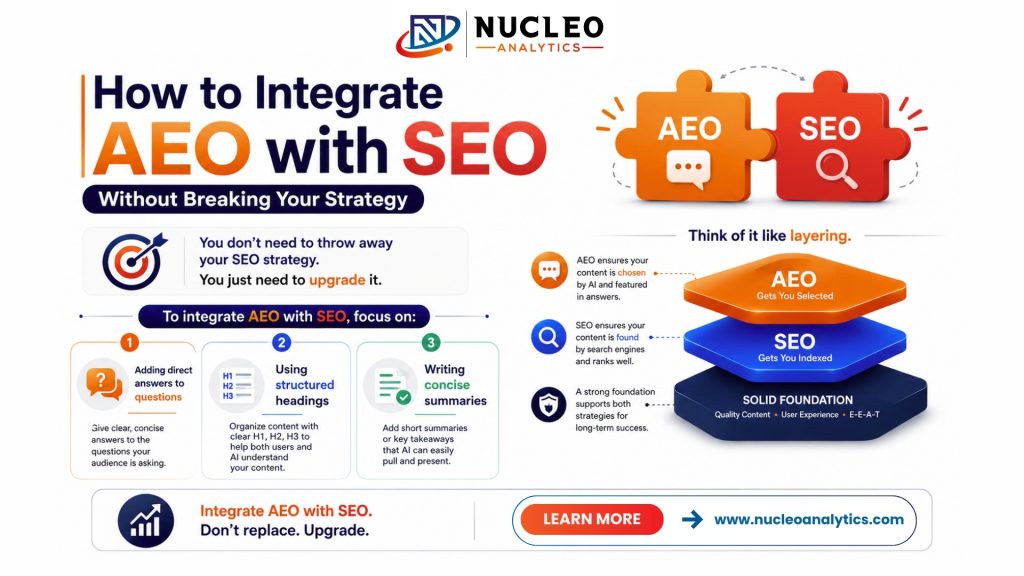
You don’t need to throw away your SEO strategy. You just need to upgrade it.
To integrate AEO with SEO, focus on:
- Adding direct answers to questions
- Using structured headings
- Writing concise summaries
Think of it like layering. SEO gets you indexed. AEO gets you selected.
How to Do AEO Without Overthinking It
A lot of people complicate this. You don’t need to.
If you’re wondering how to do AEO, start simple:
- Answer common questions clearly
- Use bullet points where needed
- Keep paragraphs short
That’s it. You’re making it easier for AI to extract your content.
The Role of Content Depth
Short content won’t cut it anymore.
AI tools prefer content that shows depth and authority. But here’s the catch: it still needs to be easy to read.
Balance is key.
This is another angle of the impact of AI on SEO. Depth matters, but clarity matters more.
Human Voice Still Wins
Ironically, as AI grows, human tone matters more.
People can tell when content feels robotic. AI tools are also getting better at detecting natural language patterns.
That’s why your writing should feel real. Slightly imperfect. Honest.
This is where ChatGPT and SEO intersect again. AI can help you write, but it shouldn’t erase your voice.
Building Authority in the AI Era
Authority is not just backlinks anymore.
Now it includes:
- Content quality
- Consistency
- Trust signals
AI systems look for reliable sources. If your content is shallow, it won’t get picked.
Strong AI SEO strategies focus heavily on building topical authority over time.
Structuring Content for AI
Structure is everything.
Use:
- Clear headings
- Short paragraphs
- Direct answers
This helps AI understand your content faster.
If you want to truly optimize website for AI search, your formatting matters just as much as your words.
Generative Results Are Taking Over
Search engines are moving toward generating answers instead of listing pages.
This is where generative engine optimization becomes critical again.
If your content is not being used to generate answers, it’s basically invisible in this new ecosystem.
AI Search Optimization and User Trust
Trust is the new ranking factor.
AI systems prefer content that:
- Sounds credible
- Feels natural
- Provides real value
That’s the heart of AI search optimization today. It’s not about gaming the system. It’s about earning trust.
Micro Influencers vs AI Influencers in SEO
This is a strange but real shift.
Brands are experimenting with micro influencers vs AI influencers to drive traffic and visibility.
AI influencers are scalable. Micro influencers are relatable.
The best strategy? Use both, but make sure your content still feels human.
Brand Visibility in AI Search Is the New Goal
Ranking is no longer the end goal.
Now it’s about brand visibility in AI search.
If AI tools mention your brand in answers, you win. Even if users never click your site.
That changes how we measure success.
How to Actually Adapt (Without Getting Lost)
Let’s keep it simple.
If you want to stay relevant:
- Focus on helpful content
- Answer real questions
- Keep things clear and structured
That’s how you win in this new landscape.
And yes, this ties back to AEO in marketing again. Being the answer is more valuable than being a result.
Bringing It All Together with Nucleo Analytics
Our experience shows that effective SEO solutions for our work start from traditional methods and progress to AI-based methodologies. The future indeed belongs to organizations that establish their operational methods before their competitors do.
We help brands not just rank, but actually get picked by AI systems.
Because visibility today is not just about search engines. It’s about being the answer.
Conclusion
SEO is not dead. It’s evolving.
AI is not replacing SEO. It’s reshaping it.
If you learn how to do AEO and integrate AEO with SEO, you stay ahead. If not, you slowly disappear from the conversation.
And in this new world, brand visibility in AI search is what really matters.
The rules are changing. But the goal is still the same: be useful, be clear, and be trusted.
Want More AI visibility?
Frequently Asked Questions
How does Nucleo Analytics approach AI search optimization?
What is the difference between SEO and AEO?
Why is AI changing the way content ranks?
How Can Businesses Stay Visible in AI-Driven Search?
Related Posts
Is SEO Important for Every Business?
Did you know SEO is the secret ingredient to the success recipe of every business? Yes. it is! Ok! Just think, when did you look […]
Why Is Technical SEO Important for Small Business?
Were you aware that if Google can’t crawl or index your website, you can’t rank? That is where the importance of technical SEO comes in. […]

How SEO Enhances Your Digital Marketing Strategy?
A strong digital marketing plan is crucial for every company in today’s fast-paced digital world to succeed in the competitive world. Every effective digital marketing […]

Master Keyword Competition Analysis with This Simple Guide
In today’s fast-paced era of online marketing, mere posting of content does not suffice. You may possess phenomenal products or services, but unless your website […]
Why is Google Not Indexing My Pages?
In the digital world, websites need Google visibility to attract traffic and develop an online presence. Many website owners, however, discover that a typical problem […]

Beyond Content Marketing: New Approaches to Engage Audiences
With the fast-paced digital era today, more than content is needed. Differentiation must be accompanied by creativity, strategy, and a desire for content innovation, as […]