








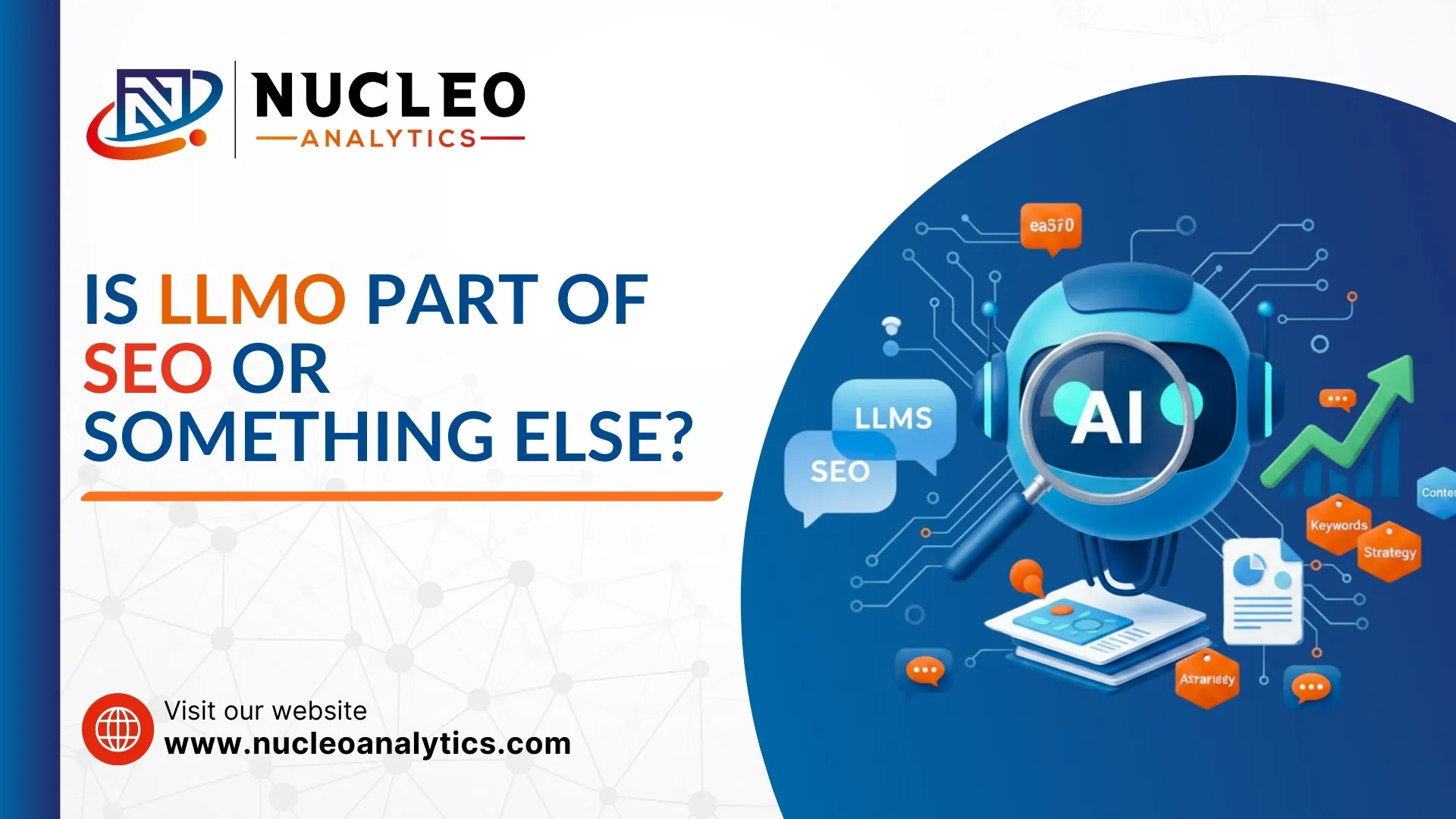
Is LLMO Part of SEO or Something Else?
For a while, SEO seemed like a machine you could figure out. It wasn’t always comfortable, but it was routine. You would research keywords, build pages, get links, and see rankings rise. Sometimes slowly. Sometimes painfully. Even so, you knew what you were going for.
That clarity is fading, however. People are no longer always searching. They are asking. They fire up an AI tool, type a question, and receive a tidy answer in seconds. No scrolling. No comparison. Often no click at all.
That change is presenting companies with a new calculus for visibility. I don’t mean just in theory, but also in very concrete terms. If your content isn’t appearing in those answers, you might as well not exist at that time.
This is where LLMO comes in.
What DOES LLMO MEAN?
LLMO is an acronym for Large Language Model Optimization. It sounds technical, but it’s a simple concept. It’s all about preparing your content so that AI systems can understand it, trust it, and reuse it when they’re asked questions.
These systems are not search engines. They do not rank pages from one to ten in real time. They rely on what they already know, how often information appears, and how confidently it is stated across multiple sources.
If SEO is about helping people find your page, LLMO is about helping AI understand your knowledge.
WHY THIS QUESTION MATTERS RIGHT NOW?
This is not a future problem. It is already happening.
AI optimisation is showing up in search results. Chat-based tools are being built into browsers, phones, and work software. Users are skipping the step where they compare multiple sites.
When one answer replaces ten links, only a handful of sources influence what people see.
If your brand is not part of that answer, you lose visibility quietly. There is no ranking drop alert. No sudden traffic crash. Just fewer opportunities to be considered.
That is why LLMO is being discussed more seriously now.
HOW LLMO CONNECTS TO SEO?
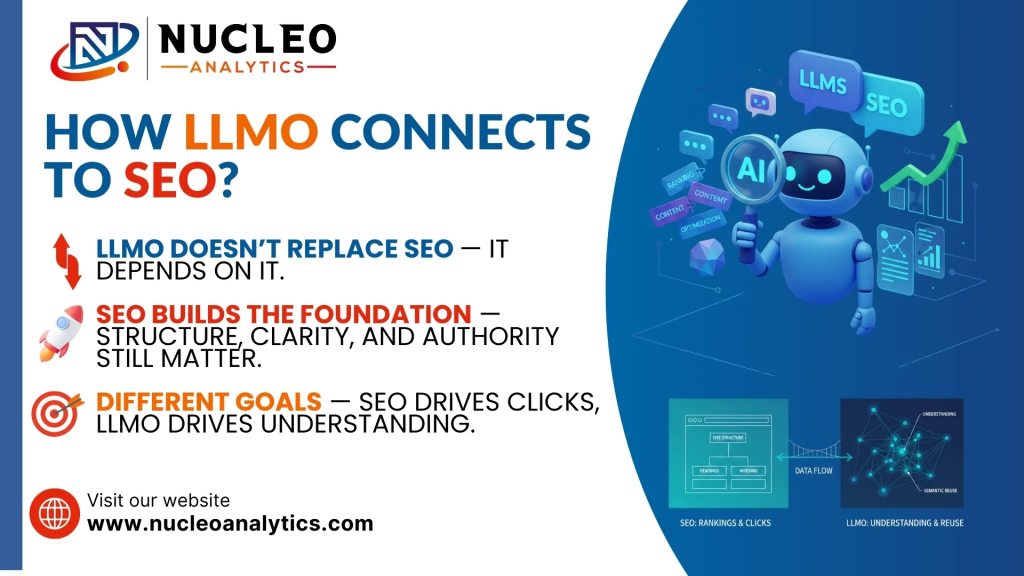
LLMO does not replace SEO. Anyone saying that is overselling.
SEO fundamentals still matter. Clear site structure matters. Logical headings matter. Writing that stays on topic matters. Authority still matters.
Without solid SEO, LLMO has nothing to work with. AI models still rely on well-indexed, reputable content as part of their training and reference signals.
The connection is real. The goals, however, are different.
SEO aims for rankings and clicks.
LLMO aims for understanding and reuse.
Not Sure How AI Is Affecting Your Organic Visibility?
WHERE DOES LLMO START TO DIVIDE FROM SEO?
Traditional SEO focuses on signals. Keywords. Backlinks. Page speed. Internal linking.
LLMs focus on meaning.
They care about whether a definition is clear. Whether an explanation is consistent. Whether facts line up across sources. They prefer content that answers a question directly rather than circling it.
A page can perform well in SEO and still never be referenced by an AI model. That is one of the hardest truths for teams to accept.
SEO success does not automatically translate into AI visibility.
LLMO AND CONTENT VISIBILITY ARE NOT THE SAME AS RANKINGS
Rankings tell you where your page appears on a results page.
LLMO affects whether your ideas appear in an answer.
That answer might paraphrase you. It might combine with other sources. It might not mention your brand name at all. Still, your influence can be there.
Still, your content visibility influence can be there. Visibility without traffic feels uncomfortable. But it is becoming normal.
Understanding this shift helps businesses stop chasing the wrong metrics.
HOW AI MODELS DETERMINE WHAT TO SAY?
The way large language models work is that they recognize patterns. They repeat information that appears consistently and is easy to understand.
They avoid content that is vague, padded, or overloaded with marketing language. They struggle with pages that hide the point or never clearly define terms.
AI models reward clarity more than creativity.
And if you read like someone explaining something to a colleague, your content is more likely to be reused. If it reads like a sales pitch, it usually gets ignored.
WHY LLMO FEELS UNCOMFORTABLE FOR MARKETERS?
LLMO removes some familiar controls.
You cannot fully track it. You cannot guarantee attribution. You cannot force inclusion.
Instead of optimising for algorithms, you are optimising for understanding. That feels closer to teaching than marketing.
Many teams struggle because this approach does not reward shortcuts. It rewards patience, clarity, and consistency.
That is why LLMO feels like something else, even though it overlaps with SEO.
HOW IS USER BEHAVIOUR QUIETLY CHANGING?
People aren’t browsing like they used to. They ask direct questions, and they are looking for direct answers. Plenty do not even know how frequently AI helps determine what they see. It’s a subtle shift, which is why it can be so easily missed. It lessens the number of times there are opportunities for content visibility to explain itself over time.
With the answers being at our fingertips, there is less willingness to entertain ambiguous material. Pages with slow “time to first byte” also tend not to be very useful. LLMO reacts to this change by defending lucidity over persuasion.
AI OPTIMISATION IN A MODERN STRATEGY
AI Optimisation should never be regarded as a stand-alone strategy.
It involves content strategy, SEO, brand messaging, and even PR. When such teams are not collaborating, LLMO activities typically break down.
SEO brings discoverability.
LLMO builds trust and recall.
Brand mentions reinforce credibility.
For Nucleo Analytics, that generally entails ensuring how a brand describes itself is consistent throughout its website, in pres,s and third-party references. Consistency matters more than volume.
CONTENT FORMATS THAT PERFORM BETTER FOR LLMO
Some patterns are becoming clear.
Content that starts with a direct answer performs better than content that builds slowly. Definitions placed early help AI models identify relevance quickly.
FAQ sections work well because they mirror how people ask questions. Tables and comparisons work well because facts are easy to extract.
Long-form guides still matter, but only when they are structured properly. Rambling pages without clear sections usually fail.
WHY BRAND SIGNALS ARE MORE IMPORTANT THAN EVER?
LLMs are also selective about the brands they mention.
They prefer brands that appear consistently with the same facts across multiple reputable sources. This includes product pages, reviews, press mentions, and industry citations.
LLMO is not just about what you publish on your site. It is about how often others describe you in the same way.
This is where PR and partnerships quietly support AI visibility.
WHERE SEO STILL DOES THE HEAVY LIFTING?
SEO still drives traffic. It still captures demand. It still converts users who want to explore options.
Technical performance, backlink quality, and internal linking remain critical. None of that disappears because AI exists.
LLMO fills a gap that SEO was never designed to cover.
Discovery and influence are no longer the same thing.
HOW NUCLEO ANALYTICS APPROACHES LLMO?
At Nucleo Analytics, LLMO usually starts with a content audit. We look at high-value pages and ask one blunt question. Does this page clearly explain anything in the first few lines?
If not, we fix that first.
Then we look at structure. Headings that reflect real questions. Short summaries that state facts clearly. Consistent terminology across related pages.
Finally, we strengthen credibility. Named authors. Dates. Citations. Third-party references. These signals help AI systems trust what they are reading.
WHY EXPLANATION NOW BEATS PERSUASION?
Traditional marketing focused heavily on persuasion. Convince the reader. Sell the value. Push benefits early. That approach still has a place, but it does not work well with AI systems.
LLMs do not get persuaded. They repeat what they understand. Content that explains how something works, why it exists, or what problem it solves is easier for a model to reuse. Persuasion comes later, after the explanation is clear.
MEASURING LLMO WITHOUT GETTING STUCK
There is no perfect dashboard for LLMO yet.
Instead of chasing exact numbers, we watch trends. Branded search behavior. Referral patterns. Changes in how AI answers describe a category.
Control tests help. Optimise a set of pages and leave another set untouched. Compare outcomes over time.
Progress is directional, not instant.
COMMON MISTAKES WITH LLMO
One common mistake is overwriting content to sound more technical. Another is stuffing keywords into summaries that read awkwardly.
Some teams treat LLMO as a one-time task, which rarely works. AI visibility depends on ongoing clarity and consistency.
LLMO rewards steady improvement, not aggressive tactics.
WHERE TO BEGIN WITHOUT MAKING IT TOO COMPLICATED?
Begin with your most important pages.
Ask if they respond to a straightforward question. Tighten the opening. Remove filler. Add structure.
You don’t need new tools to do this. Simply better writing and clearer thinking.
It’s something that most brands never do, so when you do it, it is powerful.
THE ROLE OF CONSISTENCY ACROSS YOUR WEBSITE
One page written well is not enough. AI models look for repeated patterns. If your service is described in five different ways across your site, it creates confusion.
Consistency in terminology, positioning, and explanations increases trust signals. When the same idea appears in similar language across multiple pages, AI systems are more confident in repeating it.
WHY LONG-FORM CONTENT MATTERS?
There is a belief that AI prefers short content only. That is not quite true. Short summaries help selection, but long-form content helps verification.
When AI systems look for reliable sources, they lean on deeper pages that fully explain a topic. Long-form content establishes authority, especially when it is well structured and stays focused.
The key is balance. Clear summaries supported by detailed explanations underneath.
HOW INTERNAL TEAMS OFTEN SLOW LLMO DOWN?
LLMO touches multiple teams, which can become a problem. Content teams focus on tone. SEO teams focus on rankings. PR teams focus on messaging. Product teams focus on features.
When these groups are not aligned, explanations become inconsistent. That inconsistency weakens AI trust. Clear ownership and shared language across teams make a noticeable difference.
HOW DOES LLMO IMPACT LONG-TERM BRAND MEMORY?
Your ideas can shape understanding, even if AI responses omit your brand’s name. With repeated exposure to the same explanations, familiarity grows.
This is how brand memory is established in AI-led scenarios. Not through slogans, but by ceaseless clarity. LLMO is part of the way that happens.
FINAL THOUGHTS
LLMO is connected to SEO, but it is not a subcategory of it.
SEO helps people find you.
LLMO helps your ideas survive when clicks disappear.
As search continues to change, visibility will depend less on rankings and more on clarity and trust.
Brands that adapt early will stay relevant. Brands that wait will struggle to catch up.
Understand LLMO Before Making Any Big Changes.
Frequently Asked Questions
Q1: Is LLMO necessary for small businesses?
Q2: Will LLMO hurt my SEO rankings?
Q3: Which pages should be optimised first?
Q4: How long does LLMO take to show results?
Related Posts
What Is a White Label SEO Report and How Does It Work?
A white label SEO report is a detailed SEO performance document created by a third-party provider and delivered under your agency’s brand name. It shows […]
What is the Process of SEO Monitoring?
You have created a webpage. You’ve released some incredible content. You’re prepared to take the world by storm, but here’s the thing: traffic by itself […]
Is SEO Important for Every Business?
Did you know SEO is the secret ingredient to the success recipe of every business? Yes. it is! Ok! Just think, when did you look […]
How to Conduct Competitive Analysis in Generative AI Visibility
Generative AI is changing the way people are discovering things on the internet. Now that search engines are including AI-driven answers as part of search […]
How to Use SEO Forecasting for Better Strategy Planning?
The digital world is evolving rapidly, and in fact, more rapidly than most businesses. Search trends rise and fall. Algorithms shift. What was effective last […]
How to Improve Brand Visibility in AI-Generated Search Results?
These days, being listed on page one of results is not enough. The search results world is changing with the realm of artificial intelligence. What […]