

When you look only at your own data, growth can feel unclear. Traffic changes may seem random and confusing. Rankings may move without obvious reasons. However, once you compare your website with competitors, patterns become easier to see.
Competitor analysis shows your true SEO strength in the market. It shows where traffic comes from and which channels bring steady visitors. This shows which pages drive leads and sales on a regular basis. It highlights keyword gaps that you may have ignored earlier. Also, it uncovers technical issues that slow down your website. It also compares your search engine performance with others in your niche.
That is the real value in simple words.
You may notice that top pages include deeper content and better structure. You may also find that faster loading speed gives competitors an edge.
This process turns assumptions into clear insights. It shows what works. You improve content, fix gaps, and choose stronger keywords.
Now let us see how competitor analysis helps you grow your SEO.
Why Comparing With Competitors Changes Everything
SEO works like a race in a crowded field. Every brand wants better rankings and more traffic. Every business wants stronger visibility online.
Looking only at your own website creates confusion. You see numbers moving up and down. You see traffic increase or drop. However, those numbers mean little without context.
Context comes from comparison with competitors.
When you study competitors closely, you see patterns. You understand who dominates specific keywords. You see which pages attract strong engagement. Moreover, you notice which topics gain more backlinks.
This clear view builds confidence in decision making. Instead of guessing, you act with strong evidence.
Competitor Analysis Shows Your Real Market Position
Many website owners believe rankings look fine. A few keywords sit on page one. Traffic appears stable every month. That feels comfortable and safe.
Comfort can hide hidden weaknesses.
Through keyword rankings comparison, you may discover competitors rank for hundreds of additional phrases. Those phrases bring steady organic traffic. Those phrases attract ready-to-buy customers.
That difference creates a revenue gap.
When you map competitor keyword coverage, you see:
- Missing long-tail keywords
- High-intent buyer keywords
- Local search variations
- Question-based search queries
This information highlights missed opportunities clearly.
Strong competitor analysis exposes the size of your content footprint. It reveals where growth potential exists. It also reveals where competitors dominate strongly.
Discover Keyword Gaps With Clear Direction
Keyword research alone gives ideas. However, SEO competitor analysis gives validated opportunities.
If competitors rank well for certain product-related keywords, that signals demand. If competitors rank for comparison terms, that signals buying interest.
You begin to understand user behavior better.
Instead of writing random blog posts, you create pages that answer real search intent. That shift increases conversion rates over time.
When reviewing competitor keyword data, focus on:
- Keywords with stable traffic trends
- Keywords driving high-ranking pages
- Keywords connected to revenue pages
This structured review strengthens content planning significantly.
Content Quality Differences Become Clear
Engaging content plays a huge role in rankings. A competitor page may rank higher because it covers topics deeply. That page may include helpful examples. That page may answer common questions clearly.
Comparing content side by side shows real differences.
Look for:
- Depth of explanation
- Clear headings and structure
- Updated statistics
- Visual elements like charts
- FAQ sections
You begin to understand why certain pages outperform yours.
With proper SEO monitoring, you also track when competitors update content. Updated pages often regain rankings quickly.
Small improvements across multiple pages produce large ranking improvements over time.
Technical SEO Gaps Show Up Fast
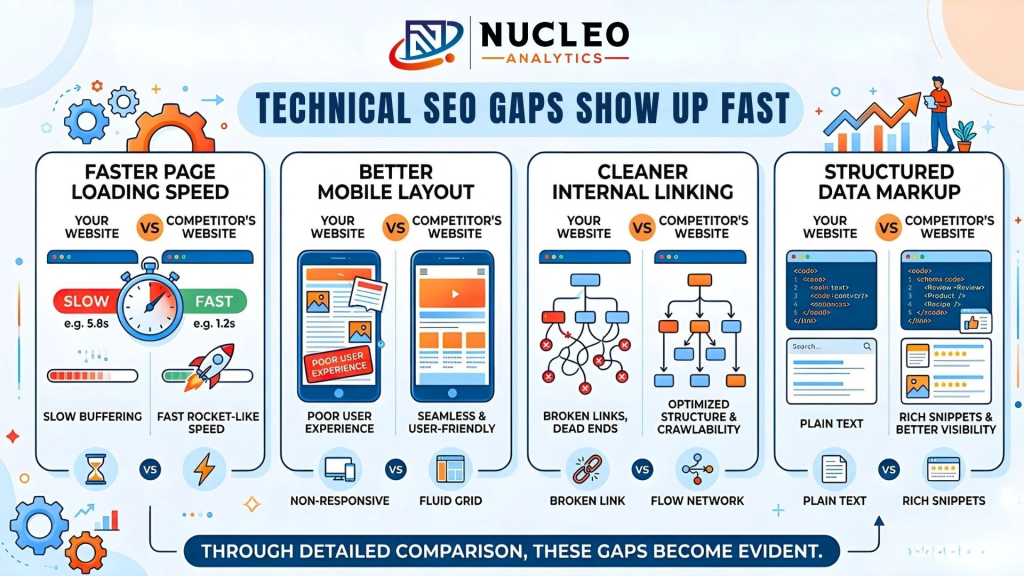
Through detailed comparison, you may notice competitors have:
- Faster page loading speed
- Better mobile layout
- Cleaner internal linking
- Structured data markup
Each of these factors improves search engine performance steadily.
A slow website loses engagement quickly. Poor mobile design reduces conversion rates. Broken links reduce crawl efficiency.
Fixing technical weaknesses often produces faster ranking improvements than new blog content.
Backlink Patterns Reveal Authority Sources
Backlinks still influence rankings strongly. Studying competitor backlink profiles provides powerful insights.
You may see:
- Industry blogs linking to competitors
- Resource pages referencing competitor guides
- Media mentions boosting authority
When several competitors earn links from the same domain, that signals opportunity.
Outreach becomes easier with clear targets.
Strong link building improve domain authority gradually. That improvement supports better keyword rankings across multiple pages.
Authority grows through strategy and persistence.
Competitor Monitoring Keeps You Proactive
SEO changes constantly with algorithm updates and market shifts. Regular competitor monitoring helps you stay alert.
When a competitor suddenly jumps in rankings, study the cause quickly. That jump may come from new content, new backlinks, or improved technical setup.
Tracking movement reveals patterns clearly.
If competitors gain traffic after publishing long-form guides, that signals content preference trends. If rankings drop after removing certain pages, that signals content value loss.
This ongoing observation protects your traffic stability.
Search Intent Becomes More Visible
Search engines reward content that matches intent accurately. Competitor page structure often reveals what search engines expect.
For example:
- Product pages ranking high often include pricing clarity
- Comparison pages ranking high often include feature tables
- Informational pages ranking high often include step-by-step guides
By reviewing these patterns, you refine content intent alignment.
Better alignment improves click-through rates and supports stronger search engine performance over time.
Intent clarity removes confusion for search engines and users.
Curious Which Keywords Bring Rivals More Traffic?
Revenue Opportunities Become Easier to Spot
Traffic volume looks impressive on reports. However, revenue-driving keywords matter more.
Competitor data often reveals:
- Commercial intent keywords
- Location-based purchase phrases
- Brand comparison searches
Strong rankings in these areas often signal high revenue generation.
Focusing content efforts around such keywords creates direct business impact.
A strategic SEO marketing service integrates competitor revenue keyword insights into planning. This approach aligns SEO efforts with business goals clearly.
Revenue-focused optimization improves marketing efficiency significantly.
Content Formats That Win Become Clear
Some industries respond well to guides and tutorials. Others respond better to case studies and product demos.
Competitor content reveals format preference.
You may observe top-ranking pages include:
- FAQ blocks
- Bullet-point summaries
- Clear benefit sections
- Customer testimonials
These structural choices improve readability.
Adapting winning structures increases engagement and dwell time. Higher engagement supports improved keyword rankings gradually.
Structure shapes user experience strongly.
Competitor Weaknesses Offer Strategic Advantage
Competitor review also exposes weaknesses.
You may notice:
- Outdated statistics
- Thin content sections
- Poor design layout
- Missing multimedia support
Improving these areas on your own website creates competitive advantage.
When competitor traffic drops suddenly, analyze possible reasons carefully. Such analysis prevents repeating similar mistakes.
A strong strategy includes learning from both strengths and weaknesses in the market.
Traffic Trends Show Long-Term Strategy
Short-term ranking changes often mislead decision makers. Long-term traffic trends reveal deeper strategy.
Tracking competitor traffic over six months shows growth direction clearly.
Gradual growth often signals consistent content production. Sharp spikes may indicate viral campaigns or paid support.
Using consistent SEO monitoring, you interpret patterns accurately.
Strategic planning improves when data supports decisions.
Building a Structured Competitor Analysis Framework
Effective Competitor Analysis includes structured steps:
- Identify direct search competitors
- Analyze top ranking pages
- Compare keyword coverage
- Review backlink sources
- Study technical structure
- Track traffic changes monthly
Following a framework ensures clarity and repeatability.
Data organization improves decision confidence significantly.
Mistakes to Avoid During Analysis
Some common mistakes reduce effectiveness:
- Focusing only on high-volume keywords
- Ignoring user intent patterns
- Copying content structure blindly
- Reviewing data once per year
Avoiding these mistakes ensures steady SEO progress.
Consistent evaluation strengthens long-term strategy.
Long-Term Benefits of Strategic Competitor Review
Over time, structured competitor review delivers:
- Clear content roadmap
- Higher ranking stability
- Improved authority growth
- Stronger revenue alignment
SEO becomes predictable instead of chaotic. Growth becomes measurable instead of random. With smart analysis and marketing performance, businesses can grow faster..
Final Thoughts
Strong SEO requires clarity and direction. Competitor analysis provides both in measurable ways. It reveals keyword gaps and highlights content depth differences. Also, it exposes backlink opportunities. It uncovers technical weaknesses. It protects your search engine performance from sudden ranking drops.
This process transforms confusion into strategy.
Growth becomes structured and focused. Content becomes intent-driven and purposeful. Technical fixes become prioritized correctly. At Nucleo Analytics, competitor-driven SEO strategy turns insights into steady growth and measurable results.