
Markets feel jammed right now. New apps, shops, and services keep popping up every week. People scroll past ads without even pausing. The ones that actually stay in someone’s head are the brands people already trust. Brand building is what does that. Not the fancy logo or the clever tagline by itself. It’s the whole feeling that makes someone pick you again next time. Skip it, and you’re running a place with no name board. A few might still walk in. Most won’t bother. Attention is short. Choices are everywhere. That’s why brand building feels more important than it used to. Here’s the real talk on why it matters, how to actually do it, and the stuff that helps without the usual fluff.
Brand building used to be something you did when you had extra money. Now it feels like the basic cost of staying in the game. Customers check reviews, ask friends, look at social before they buy. If your brand keeps changing or feels unclear, they just move on. A clear brand makes them stop. They already know roughly what you stand for.
Look at the brands you keep buying from. You trust them more than the cheaper options. That didn’t happen by accident. Same experience, again and again. That’s the work of brand building. It turns one-time buyers into people who come back without you chasing them.
Why Brand Building Matters When Everything Feels Noisy
Competition doesn’t slow down. Ads cost more every year. Organic reach keeps getting harder. If you only run promotions, the money disappears, and the effect fades. Brand building leaves something behind. People start looking for you on their own.
What actually changes when you put effort in: Your name gets recognised faster, and people feel safer choosing you
- You can charge proper prices because the brand itself carries some weight
- Recommendations start happening without you pushing for them
- Better people want to join the team
- Quiet months hurt less because regulars stick around
Without it every sale starts from zero. With it, the next one gets a little easier.
Business branding also works like a soft shield. When something goes wrong, a known brand gets the benefit of the doubt. Unknown ones get written off quickly.
How Brand Awareness Connects to Actual Growth
Brand awareness is just how many people know you exist and what you roughly do. But knowing the name isn’t enough. There has to be some meaning attached. People should feel the result or the vibe they get from you.
Growing that awareness is slow work. Helpful posts, same look and tone, real conversations. You don’t need to be on every platform. Just show up clearly where your people already spend time.
A lot of businesses throw money at ads for fast visibility. That can work short term. Longer term, brand marketing that focuses on identity beats pure selling. People remember the feeling more than the discount code.
Things that slowly grow awareness: Share tips that actually help without always asking for a sale
- Keep the same tone and look across everything
- Let real customer stories and reviews do some of the talking
- Show up regularly instead of disappearing for months at a time
- Work with people who already reach the same audience
Do this for months, and the recognition starts to stack. One post or one ad rarely changes much. Steady presence does.
Brand Building Strategies That Don’t Feel Like a Waste
You don’t need a big budget or a fancy agency to start. The best brand strategy begins with knowing what you stand for and who you help best. Then every decision just supports that.
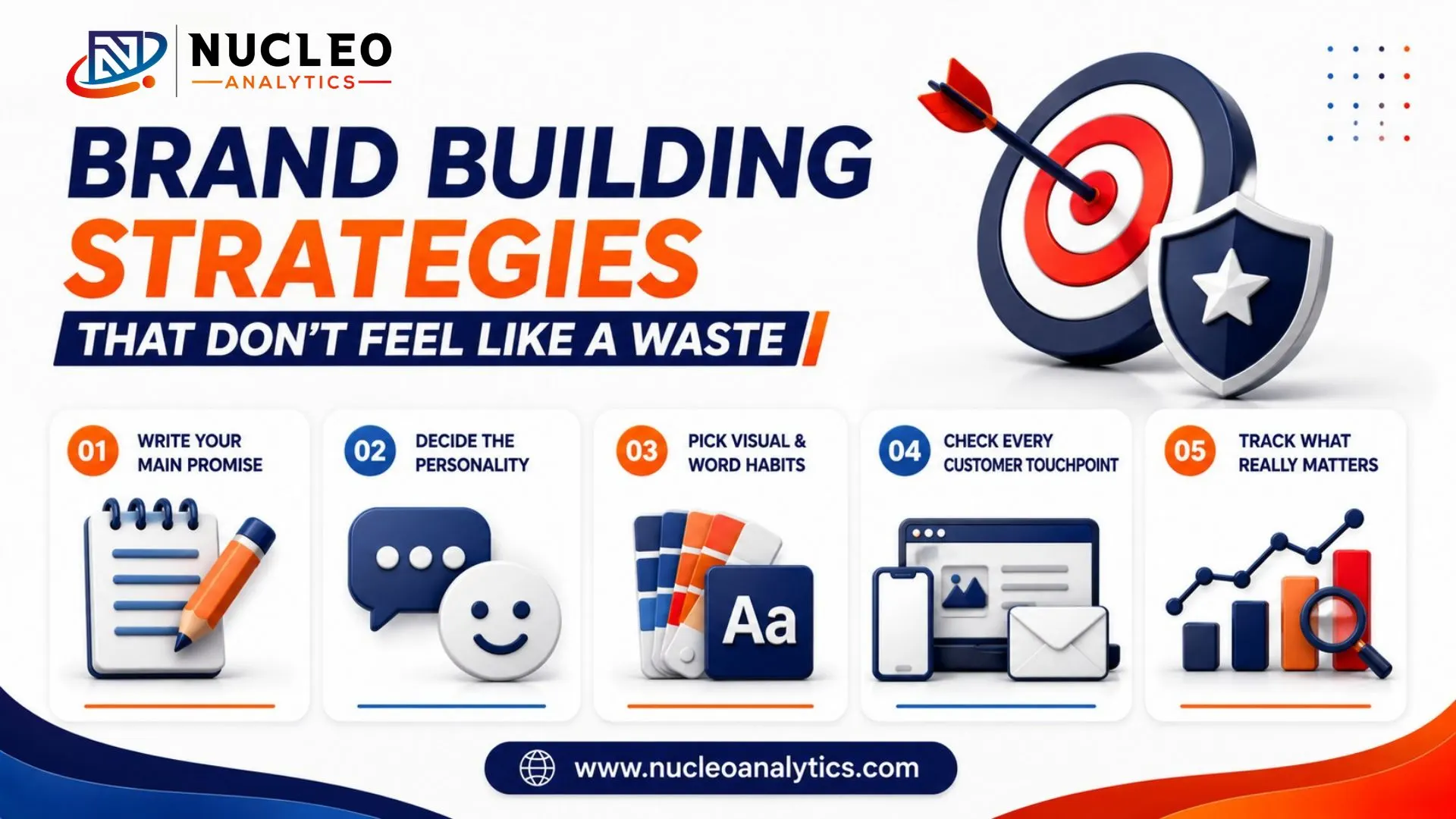
Simple starting points: Write your main promise in one plain sentence. What do people really walk away with?
- Decide the personality. Straight and useful? A bit bold? Calm and steady? Then stick to it.
- Pick a few visual and word habits that stay the same. Colours, fonts, phrases you use a lot.
- Check every place a customer meets you. Website, emails, packaging, support chats. Do they match?
- Watch the numbers that matter. Repeat buys, referrals, how people describe you when someone asks.
These give you a base. Once they’re there, the daily work gets simpler. You stop guessing every time.
Most companies overcomplicate this. Long documents that nobody reads. Keep it practical. Good brands feel like real people talking to real people.
How to Build a Strong Brand Without Making It a Big Project
Building a strong brand is less about big launches and more about small repeated things. Customers notice patterns. When emails, posts, and service all feel like they come from the same place, trust grows without you forcing it.
Focus on these first: Consistency beats perfect every time. Better to show up often with simple messages than vanish for weeks planning something flawless
- Listen more than you talk. Notice the exact words customers use for their problems and use those same words back
- Keep the small promises. Quick replies, clear prices, honest updates. These shape the brand more than any slogan ever will
- Own your space. Trying to please everyone usually means connecting with no one properly
- Write the basics down so new people on the team don’t mess with the tone
Over time, these habits create something bigger than any single campaign. People start linking your name with reliability or expertise or just care. That link is hard for others to copy quickly.
Business branding also means saying no sometimes. Not every opportunity fits. Turning down work that clashes with your identity protects the brand later on.
Mistakes That Quietly Ruin Brand Work
Plenty of businesses put real energy into brand building and still see weak results. A few patterns cause most of the damage.
Mistake | Consequence |
Inconsistency | Confuses customers; brand feels messy |
Chasing every trend | Wastes time; lacks fit with audience |
One-time project mindset | Brand loses attention/momentum |
Leading with price | Trains customers to wait for discounts |
Ignoring the internal team | Team doesn't embody brand values |
You don’t need to start from scratch to fix these. Small course corrections add up. Get the team aligned, simplify the message, stay patient with it.
Linking Brand Strategy to Everyday Marketing Work
Brand strategy sets the direction. Daily marketing does the actual work. When the two match, results get better without needing more money.
If your strategy is about being the most helpful expert in your space, then posts, emails, and ads should lean into teaching or solving problems. Hard-sell tactics start to feel off.
This match also saves cash. You stop testing random ideas and stick to what reinforces the core identity. Content performs better because it feels real. Ads convert higher because people already have some idea who you are.
Strong brands make other channels work harder too. SEO improves when more people search your name directly. Referral programs grow when customers feel good recommending you. Partnerships become easier because other businesses want to connect with a clear brand.
Why It Feels More Urgent Right Now
Everything moves faster. AI tools make it easy for almost anyone to produce content and ads. That just means more noise. People respond by leaning harder on brands they already trust.
Money worries play a part as well. When budgets get tight, buyers stick with names they know. A solid brand becomes a kind of safety net.
More buying happens online, and more work is remote. Many customers never meet you face to face. The brand experience has to carry more of the relationship than it used to. Waiting usually costs more later. Catching up on recognition and trust takes longer once others have already taken space in people’s heads.