

Are you aware of the fact that 58% of B2B marketers reported increased sales and revenue in 2023?
A big thank you to Content Marketing.
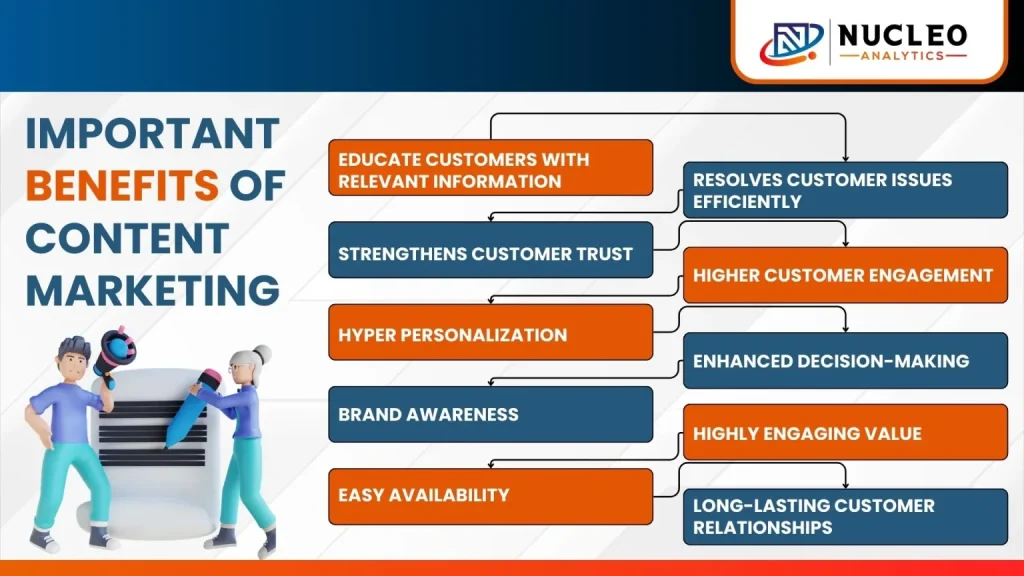
Building consumer trust has become extremely challenging for businesses in the hyper-competitive digital landscape. To combat this challenge a powerful tool i.e. content marketing comes to the rescue. Content marketing is vital in building and nurturing trust/loyalty among clients by delivering value-added content.
Through strategic planning and meaningful content creation, businesses can gain the attention of their target audience and foster trust, which is a key element in building strong customer relationships. By delivering content that aligns with their target customers, businesses can establish themselves as reliable sources across their respective industries. It parallelly helps to gain customer trust as well.
Content marketing maintains consistent and transparent communication that develops two vital components for gaining customer trust i.e. reliability and authenticity. Moreover, content that addresses consumer pain points offers solutions, or showcases real-life experiences resonate deeply, strengthening the emotional connection between brands and their customers. Content marketing serves as a conduit for meaningful engagement, fostering long-term relationships based on trust.
What is Content Marketing?
Content marketing is defined as a strategic marketing approach that focuses on creating and distributing valuable content consistently across different communication channels to engage their target audience. Depending upon the industry, content can be of different types including articles, blogs, video testimonials, press releases, newsletters, infographics, and more.
The primary objective of any content is to provide relevant information not to explicitly promote a brand/product/service. However, the end goal of content marketing strategy is to build trust, strengthen brand authority, and foster long-term customer relationships. By delivering valuable content consistently, businesses can attract and retain customers while driving engagement.