Online shopping is completely broken right now. No one sees an ad, clicks a link, and buys on the spot. We ignore banners automatically. Instead, we skim a video on a phone, look up a Reddit thread on a laptop, and maybe buy after an email discount hits weeks later.
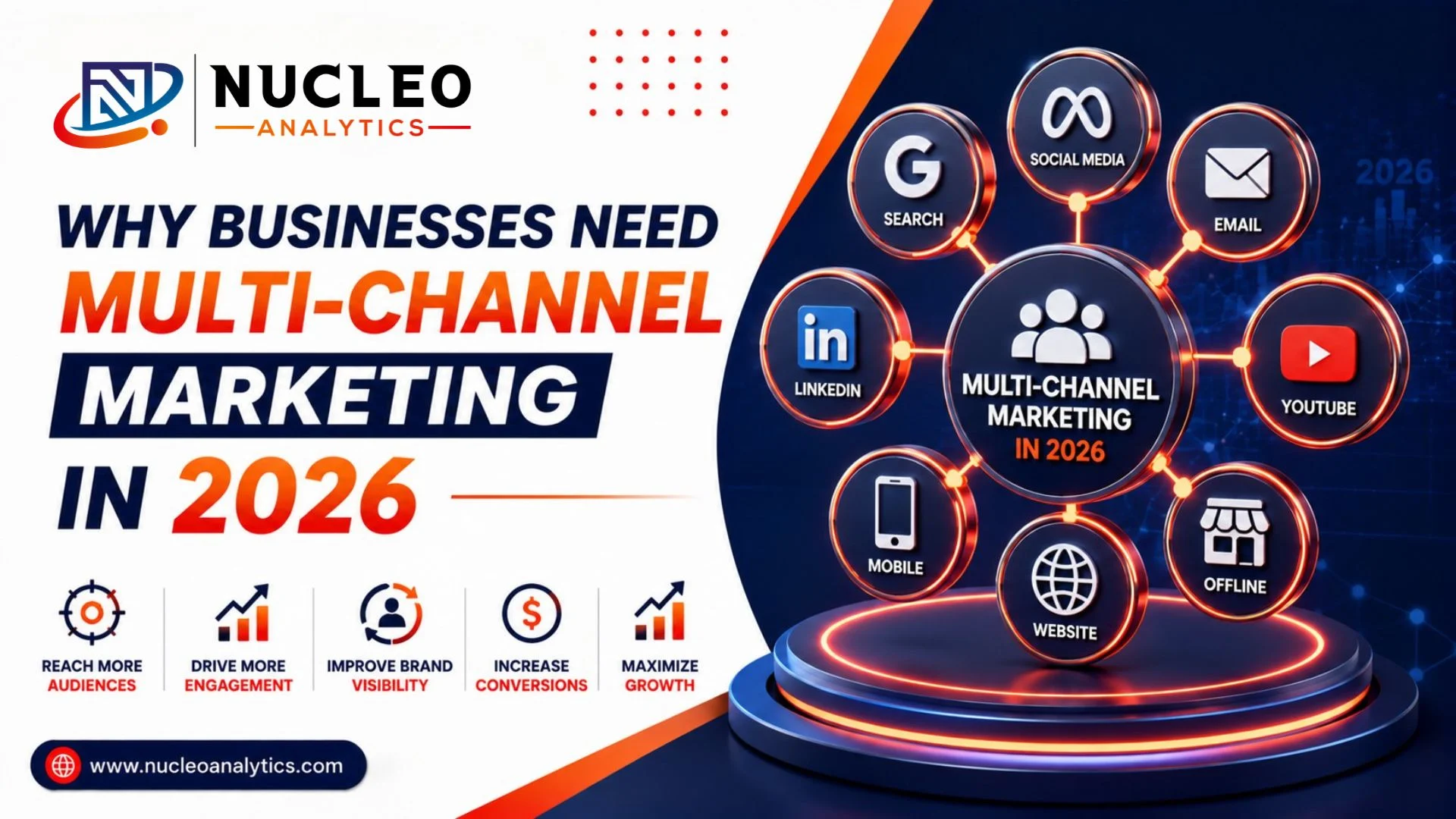
This fragmented behavior is exactly why a single-platform approach to business fails. To scale, you need a realistic multichannel marketing strategy that actually covers the different apps where your buyers spend their time.
Relying on one isolated corner of the internet means you are invisible to most of the market. Consumers move fast across multiple screens, and your business needs to be right there waiting for them.
The Death of the Single-Channel Playbook
Relying on just one platform to bring in all your revenue is financial suicide. If you put everything into Facebook ads or Google SEO, you are completely at the mercy of a single algorithm tweak that could wipe you out overnight.
Ad costs spike constantly, and platform rules shift without warning. Spreading your brand across different digital marketing channels isn't some fancy growth hack; it’s basic survival to keep your business from sudden, painful traffic drops.
Smart founders don't wait for an ad account ban to start diversifying. They map out multiple paths to reach buyers early, making sure a single platform change can never tank their entire operation.
Understanding the Rise of the Modern Buyer
Consumers are not buying products in a linear fashion anymore. Consumers have very short attention spans and are bombarded with generic advertisements every day. They have become immune to banner advertisements.
A normal buyer might spot your product on Instagram while scrolling through their feed at breakfast. They won’t buy it right then because they are distracted by their morning commute.
Later that afternoon, they might search your brand on a laptop to read a quick product review. If you aren't visible at every single turn of that journey, you just don't exist to them.
Buyers expect a smooth transition when they bounce from their phones to their computers. They want to consume different types of media depending on the time of day and what they are doing.
How Consumer Habits Have Shifted
- Screen hopping: People drift from their phones to work laptops all day long. They switch mid-thought and forget what they were doing.
- No one trusts you: Modern shoppers aggressively cross-check your prices and hunt for real reviews on Reddit or YouTube.
- Total ad blindness: We all tune out repetitive banners automatically. Lazy, single-app marketing gets ignored.
- Zero patience: Buyers want to drop a quick question in a chat app and get the answer via email later. They despise repeating themselves.
Spreading out your digital footprint is the only way to catch these distracted shoppers before they vanish. Think of it as a steady, quiet drumbeat keeping your name in their heads. Every bit of content is just a signpost making the path to your checkout page obvious.
The Massive Benefits of Multichannel Marketing
Being everywhere gives you an unfair advantage over lazy competitors. It turns your customer acquisition from a stressful guessing game into a predictable process.
When people see your brand across the web, you instantly look established. Here is what the actual benefits of multichannel marketing look like on a normal balance sheet:
Major Wins for Your Business
- Higher conversions: Showing up in three or more places heavily spikes your purchase rates compared to single-source setups.
- Sticky customers: Giving people multiple ways to stay in touch stops them from drifting away to competitors.
- Real data: You stop guessing and see exactly where the high-paying buyers spend their time.
- Cheaper leads: Organic traffic from different corners offsets what you burn on expensive paid ads.
Relying on one channel puts your business at the mercy of some tech giant's internal updates. Diversifying your push gives you real control over your revenue growth. The more touchpoints, the greater the probability of striking a chord. It is impossible to predict at what point your advertisement would convince the stubborn consumer to open his wallet and pay for the product.
Sorting Out the Marketing Jargon
Marketers love complicated buzzwords, but the reality is straightforward once you cut the fluff. You have probably heard people argue about omnichannel marketing versus standard multi-platform setups.
Let’s simplify it. Multichannel marketing just means you are active on different, independent apps at the same time. The step up from that is omnichannel marketing, which connects those apps on the backend so your data stays unified.
Next up is cross-channel marketing. This just means your apps trigger each other, like an abandoned shopping cart firing off an automated reminder text.
Your website, social media, and emails have to match. An integrated marketing setup stops your brand from sounding like five different companies fighting for attention.
Plus, connecting your tech fixes your backend operations. Your sales and marketing departments won’t have any reason to fight over broken spreadsheets and poor communication skills that make your company appear amateurish before your clients.
How to Create a Multichannel Marketing Strategy
You cannot just open accounts on ten different apps, post a few times, and hope for a miracle. That is a fast track to burning out your team and wasting cash.
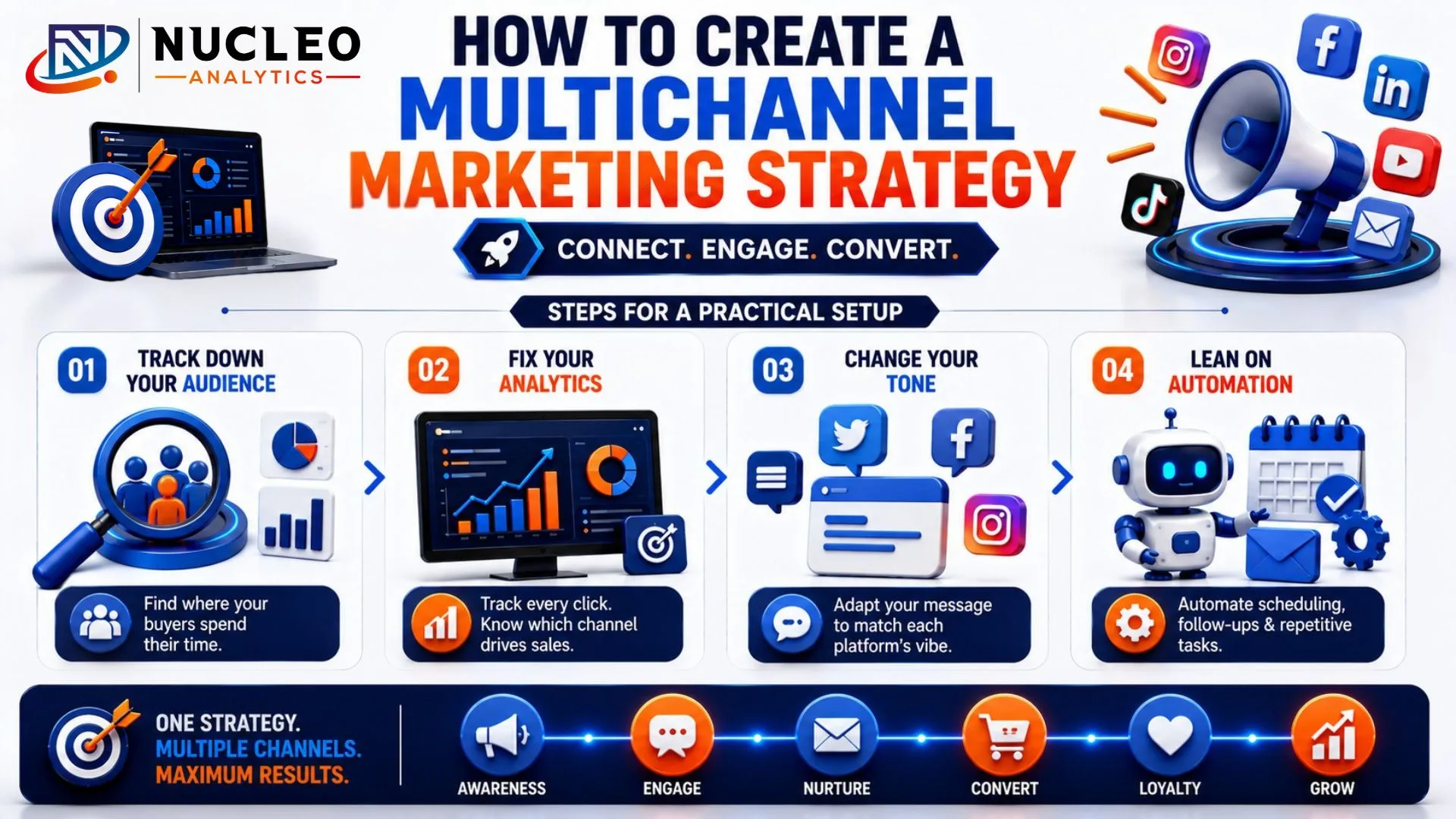
What you need is a practical solution to connect all these channels together. Here is an easy guide to developing a multichannel marketing strategy:
Steps for a Practical Setup
- Track down your audience: Look at your data to see where your actual buyers spend their free time.
- Fix your analytics: Set up clean tracking so you can see exactly which app brought in each sale.
- Change your tone: Rewrite your core message so it matches the specific vibe of each separate platform.
- Lean on automation: Use software to handle annoying tasks like post scheduling and automated follow-up sequences.
Start small by mastering two or three core platforms before trying to expand. Trying to dominate every single corner of the internet at once yields zero results.
Pay close attention to what your weekly numbers are telling you. If your audience completely ignores your written updates but loves your videos, pivot your energy immediately.
Don't let vanity metrics fool you either. Getting thousands of likes on a trendy app doesn't mean anything if none of those people ever visit your website or buy your products.
Why Integrated Campaigns Win the Day
A messy marketing plan completely derails your target audience. If your social media feels wild and casual but your website is incredibly stiff and formal, people get weird vibes and bail.
An integrated marketing approach keeps your voice steady across the web. That predictability is the only thing that actually builds deep consumer trust over time.
Your paid ads need to match your organic posts. Your digital marketing channels should talk to each other, not fight like separate companies for a buyer's attention.
Consistency keeps you memorable in a crowded marketplace. If your visuals and messaging match everywhere, buyers actually remember you when they need your services.
People need to see your brand multiple times before buying. A unified message ensures every single interaction actually counts toward a sale.
Navigating the Shift to Cross-Channel Journeys
The goal is moving prospects to the checkout page without any friction. That is the only reason cross-channel marketing actually matters.
It works simply. Someone reads your blog today, sees your helpful video on YouTube tomorrow, and gets an email discount by Friday.
This multi-platform sequence keeps you top-of-mind without spamming them. You are turning separate apps into one automated funnel that closes deals in the background.
It cuts out the gaps where you usually lose online sales. Buyers get a connected experience instead of an annoying, disjointed hard sell.
Elevating the Entire Customer Experience
Modern buyers value convenience above everything else. They naturally gravitate toward companies that make the purchasing process fast and completely frictionless.
This is why omnichannel marketing is mandatory now. Your marketing data and support systems must be connected.
A smooth, connected experience stops people from looking at your competitors. Keeping things easy is what breeds long-term customer loyalty.
People will happily pay a premium for an effortless process. A broken, confusing journey just drives frustrated shoppers straight to other options.
Your support staff must know your active promotions. If a customer reaches out on social media, your email team should already know the context.
Scaling Safely with Content Infrastructure
Stop wasting time writing completely unique, one-off articles for every single app out there. Build large core assets and chop them into smaller pieces.
One solid case study can easily become five social posts, two newsletters, and a video script. This shortcut keeps your marketing moving without draining your cash.
Good content acts like infrastructure for your business. It fuels your ads, teaches your leads, and keeps you visible around the clock.
This recycling strategy ensures you never run out of ideas. It also guarantees your core business message stays entirely consistent across different apps. You save hours every single week by working smarter. Your team stays sane, and your budget goes a lot further.
Breaking Down the Resource Barrier
Most business owners freak out about the time investment here. They picture themselves stuck at a desk all day, manually uploading files to ten different apps.
The reality is much easier if you actually use modern automation tools. You can knock out a month’s worth of scheduling in a single afternoon.
The real struggle isn't time; it's discipline. If you can't keep the quality high on a specific platform, ignore it completely rather than posting useless filler.
Build a basic, repeatable routine your team can handle without losing their minds. Showing up twice a week consistently beats spamming people for seven days and then disappearing.
Measuring What Actually Matters
Expanding your footprint means you're about to get hit with a tidal wave of useless data. Likes, shares, and views will start flying at you from everywhere.
Ignore the vanity metrics because they do not pay your bills. Keep your eyes glued to actual closed sales, cash flow, and what it costs to acquire a single customer.
A quiet platform might give you low view counts but secretly drive your biggest contract deals. You need clean tracking to spot these weird anomalies. Once you find out where the actual money is coming from, double down hard. Treat your data like a compass, not a trophy room.
Partnering with the Right Experts
Trying to build and manage a massive web like this completely on your own is exhausting. Juggling software updates, tracking code, and writing daily copy wears thin fast.
That is why we built Nucleo Analytics. We don't do fluff; we build and manage custom growth engines for businesses that need to scale up without the headache.
Our team handles the heavy backend tech, from web builds to deep SEO and paid ad management. We put your brand right where your buyers look.
You don't need to waste months guessing which networks work for your specific industry. We set up the tracking, run the campaigns, and give you the bottom-line numbers.
Conclusion
Relying on a single traffic source is a massive liability. The modern web is completely fragmented, and buyers demand to see you on their own terms before making a choice.
Diversifying your reach across the digital landscape is the only way to protect your revenue. It shields your income from sudden platform policy changes and changing consumer habits.
Keep your message aligned, watch the metrics that actually matter, and build a presence that lasts. Sustainable business growth only happens when you make buying completely effortless for your audience.
Making the switch to a multi-platform approach feels heavy initially, but the security it provides is massive. Start connecting your platforms now and secure your market share.