
nucleo analytics
nucleo analytics
  • home
  • Services
    • SEO
    • Social Media Marketing
    • Google Ads
    • Reputation Management
    • International SEO
    • Local SEO Service Agency
    • Custom Website Development
    • Mobile-Application-Development
  • Outsource
    • SEO Outsourcing Agency in India
    • SEO Consultant India
    • SEO Reseller Services
  • Testimonials
  • Case Studies
  • FAQ
  • Blog
Contact Us
company logo

Helping businesses grow through strategic Digital Marketing, Custom Website and Mobile App Development, AI, and Innovative technology solutions that deliver measurable, long term results.

Follow us :

FacebookInstagramPinterestlinkedinYoutube

Quick Links

  • Home
  • Services
  • Testimonials
  • Case Studies
  • FAQ
  • Blog
  • Contact Us

Services

  • SEO
  • Social Media Marketing
  • Google Ads Services
  • Reputation Management
  • International SEO
  • Local SEO Service Agency
  • Custom Website Development
  • Mobile Application Development

Policy

  • Terms of Service
  • Cancellation & Refund Policy
  • Support
  • Privacy Policy

Contact Info

  • 1688 Sector 82, JLPL Industrial Area, Sahibzada Ajit Singh Nagar, Punjab 140308, India
  • +91-959-209-7054
  • info@nucleoanalytics.com
©2026 Nucleo Analytics.All Rights Reserved.
Terms of usePrivacyRefunds & Returns

Link Building for Local SEO to Rank Higher on Google Maps

Ranking on Google Maps is one of the biggest advantages a local business can have. When your business shows up in the top three map results, you don’t just get visibility, you get calls, visits, and customers who are ready to act.

Link Building for Local SEO to Rank Higher on Google Maps

But here’s the truth most people don’t talk about enough: local SEO link building plays a much bigger role in Google Maps rankings than many businesses realize. It’s not just about reviews or proximity. It’s about trust, relevance, and authority, and links help Google measure all three.

This guide breaks down proven link-building tactics that actually move the needle for Google Maps ranking. No shortcuts. No spam. Just methods that work for real local businesses.

Why Link Building Matters for Local SEO

Google Maps rankings are influenced by three main factors: relevance, distance, and prominence. Distance is out of your control. Relevance comes from your categories, services, and content. But prominence, that’s where links come in.

Prominence is Google’s way of asking, “How well-known and trusted is this business?” One of the strongest signals of prominence is local backlink authority.

Links tell Google that other websites recognize your business. When those links come from local, relevant sources, they send even stronger signals. That’s why local SEO link building is different from traditional SEO link building.

You’re not trying to rank a blog post nationwide. You’re trying to dominate a specific area.

How Local Link Building Is Different From Traditional Link Building

Traditional SEO often focuses on high-authority websites, big publications, and broad relevance. Local SEO is more grounded.

For local rankings, Google cares more about:

  • Geographic relevance
  • Local context
  • Community connections
  • Business legitimacy

A reference from a nearby newspaper, urban blog, commerce chamber, or community group may count more for Google Maps ranking than a hyperlink from an unconnected but powerful DA site.

Hence, your local backlink strategy should be purposeful and location-oriented.

Start With Your Google Business Profile Foundation

Before chasing links, your Google Business Profile needs to be solid. Links won’t help much if your foundation is weak.

  • Make sure your profile has:
  • Correct business name, address, and phone number
  • Accurate primary and secondary categories
  • Fully filled services or products
  • High-quality photos
  • Consistent business information across the web

Links strengthen Google Business Profile authority, but they work best when everything else is clean and aligned.

Local Citations: The Easiest Links to Get Right

Citations simply refer to the mentions of your company’s name, address, and phone number on different websites. While most citations come with links, they still contribute to the local search visibility even when there are no links.

Common citation sources include:

  • Yelp
  • Yellow Pages
  • Bing Places
  • Apple Maps
  • Local business directories
  • Industry-specific directories

The primary point here is uniformity. Listings that are not consistent lower trust among users. Clean citations are still valuable for local SEO link building, even if the links are nofollow.

Chamber of Commerce and Local Associations

One of the most underused link sources is local organizations. Chambers of commerce, business associations, trade groups, and local alliances often link to member websites.

These links are powerful because they are:

  • Highly local
  • Trust-based
  • Hard to fake

Joining a local chamber might cost a small annual fee, but the local backlink authority you gain is often worth far more than paid ads.

Local Sponsorships That Actually Make Sense

Sponsorships can be a smart way to earn links, but only if done correctly.

Good sponsorship opportunities include:

  • Local sports teams
  • School events
  • Community fundraisers
  • Nonprofit initiatives
  • Local festivals

These often come with a sponsor page that includes a link to your business. When done right, sponsorships build brand recognition and Google Maps ranking signals at the same time.

Avoid sponsorships that exist purely to sell links. Google is smarter than that.

Local PR and News Mentions

Local press still matters. A mention or feature in a local newspaper, radio station website, or city blog is a strong trust signal.

Ways to earn local PR links:

  • Share a business milestone
  • Announce a new service or location
  • Support a community cause
  • Offer expert commentary on local topics

Journalists are always looking for stories. Even small coverage can improve local search visibility when it includes a link or business mention.

Local Guest Content That Adds Value

Guest posting still works for local SEO, but the goal is relevance, not volume.

Look for:

  • Local blogs
  • Community websites
  • Neighborhood publications
  • Local industry resources

Instead of pitching generic articles, offer content that helps the local audience. Local tips, local case studies, or community-focused insights work best.

These links support your local backlink strategy while also putting your brand in front of the right audience.

Not sure if links are the reason your business isn’t ranking on Google Maps?

Partner With Nearby Businesses (The Right Way)

Local partnerships are one of the most natural link-building methods.

Examples:

  • A plumber partnering with a real estate agent
  • A gym partnering with a nutritionist
  • A café partnering with a local bakery

You can feature each other on partner pages, blog posts, or resource sections. These links are contextually relevant and reinforce local SEO link building without looking forced.

Testimonials as a Link Building Tool

Writing testimonials for tools, suppliers, or local partners you genuinely use can earn links.

Many businesses publish testimonials on their websites and link back to the customer. This works well because it’s natural and relationship-based.

Choose partners that make sense locally or within your industry. Random testimonial links won’t help much with Google Maps ranking.

Event Pages and Community Calendars

Local event calendars are gold for link building.

If you host or participate in:

  • Workshops
  • Open houses
  • Training sessions
  • Community events

Submit them to local event listings. These pages often include links and drive real traffic. They also reinforce geographic relevance, which strengthens local search visibility.

Building Location Pages That Attract Links

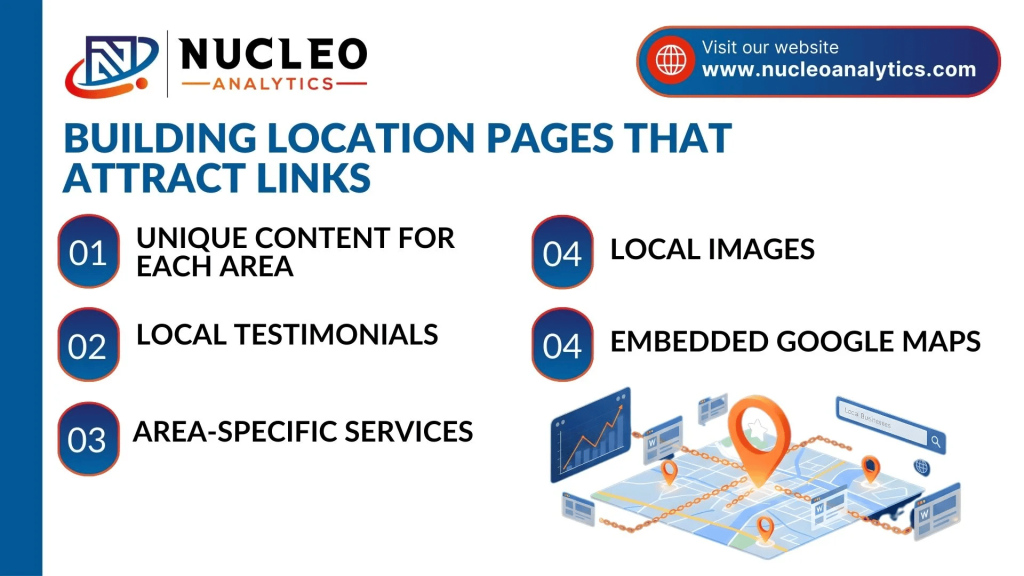
Building Location Pages That Attract Links
If your business serves multiple areas, well-built location pages can attract local links.

Good location pages include:

  • Unique content for each area
  • Local testimonials
  • Area-specific services
  • Local images
  • Embedded Google Maps

These pages give other sites something relevant to link to, boosting Google Business Profile authority indirectly.

Avoiding Spammy Local Link Tactics

Some local SEO advice still pushes outdated tactics. Avoid:

  • Buying links from “local SEO packages”
  • Low-quality blog networks
  • Fake directories
  • Automated link submissions

These can hurt more than help. Google Maps rankings are sensitive to trust signals. Spam links weaken local backlink authority instead of strengthening it.

Reviews and Links: How They Work Together

Reviews don’t replace links, but they complement them. Businesses with strong reviews and strong links tend to perform better in Maps.

Encourage real customer reviews. Respond to them. Keep them fresh. Then build links that support that trust.

Together, they create a strong local SEO link building ecosystem.

Tracking Local Link Impact the Right Way

Don’t expect instant results. Local link building is gradual.

Track:

  • Google Maps position changes
  • Google Business Profile views
  • Calls and direction requests
  • Local keyword rankings
  • Referral traffic from local links

The goal is steady improvement in local search visibility, not overnight jumps.

How Long Does Local Link Building Take to Work?

In most cases, businesses see movement within some days to months, depending on competition and consistency. Heavily competitive areas may take longer.

The essential point is to maintain the same level of activity and create links that are really relevant to your area and sector.

When To Pay More Attention To Links Than To Other Local Seo Factors

If your business:

  • Has strong reviews
  • Has a complete Google Business Profile
  • Has consistent citations

But still struggles to rank

Then the links are likely the missing piece.

That’s when local SEO link building delivers the biggest impact.

How Nucleo Analytics Helps Businesses Win Google Maps Rankings

At Nucleo Analytics, we don’t treat link building as a numbers game. For local SEO, that approach fails more often than it works. Instead, we focus on building trust signals that Google actually uses when ranking businesses on Maps.

Our local link-building work starts with understanding your market. Every city, industry, and service behaves differently. The dentist’s approach may not suit the contractor’s. The methods in a small town may not be applicable in a competitive metro area. We formulate our strategies on those realities rather than standard checklists.

We audit your existing local presence first. That includes citations, Google Business Profile strength, existing backlinks, and competitor link profiles. From there, we identify where authority is missing and where it can realistically be earned.

Our team focuses on:

  • Local citations that are accurate, clean, and consistent
  • Community-based links from real local websites
  • Partnerships, sponsorships, and associations that make sense for your business
  • Local PR and brand mentions that improve credibility
  • Supporting location pages that strengthen geographic relevance

We avoid risky shortcuts. No link farms. No spam networks. No artificial boosts that disappear after an update. Everything we build is meant to last and compound over time.

Most importantly, we connect link building with the rest of your local SEO. Links don’t exist in isolation. They support your Google Business Profile, your reviews, your on-site content, and your local landing pages.

This is the reason that our customers not only gain a higher position, but also remain there.

If your company is having a hard time getting into the Google Maps results or maintaining its place, Nucleo Analytics will assist you in creating the type of local authority that Google is willing to trust.

Conclusion: Local Links Are About Trust, Not Tricks

Link building for local SEO is not about cheating the system. It is about showing Google that your business is real, trusted, and is a part of the local community.

When your links are from places that your customers know, like local websites, organizations, and partners, Google will take notice.

If you want to be listed higher on Google Maps, then do not seek ways around the system. Build real connections. Earn real mentions. Strengthen real trust.

And if you want help doing that the right way, Nucleo Analytics is ready to help you turn local visibility into real growth.

Ready to rank higher on Google Maps with links that actually work?

Table of Contents

  • Why Link Building Matters for Local SEO
  • How Local Link Building Is Different From Traditional Link Building
  • Start With Your Google Business Profile Foundation
  • Local Citations: The Easiest Links to Get Right
  • Chamber of Commerce and Local Associations
  • Local Sponsorships That Actually Make Sense
  • Local PR and News Mentions
  • Local Guest Content That Adds Value
  • Partner With Nearby Businesses (The Right Way)
  • Testimonials as a Link Building Tool
  • Event Pages and Community Calendars
  • Building Location Pages That Attract Links
  • Avoiding Spammy Local Link Tactics
  • Reviews and Links: How They Work Together
  • How Long Does Local Link Building Take to Work?
  • How Nucleo Analytics Helps Businesses Win Google Maps Rankings

Recent Posts

_

Case Study: Building a High-Performance Backend with Go

Jul 16, 2026

_

Why Businesses Choose Go for Scalable Applications?

Jul 16, 2026

_

How Go Reduces Backend Costs for SaaS Companies

Jul 16, 2026

_

Why Developers Are Switching to Go in 2026

Jul 16, 2026

_

Digital Marketing Trends in 2026 Changing Business Growth

Jul 16, 2026

Need Help With Your Ads?

Our PPC experts analyze your campaigns and uncover hidden opportunities to boost ROI.

faq_background

Frequently Asked Questions

Find quick answers to the most common questions our clients ask about our services.

faq illustration
Related Posts
We’re proud to still be working with many of the same people that hired us in our early days.
Case Study: Building a High-Performance Backend with Go

Case Study: Building a High-Performance Backend with Go

Backend systems usually break long before companies realize something feels wrong.Everything looks stable from the outside. Traffic still arrives. Users still log in. Dashboards continue loading. Revenue numbers still m…

Read More
Why Businesses Choose Go for Scalable Applications?

Why Businesses Choose Go for Scalable Applications?

Scalability has become one of the biggest priorities in modern software development. Businesses are no longer building applications only for current traffic levels. Most companies now expect products to grow, sometimes…

Read More
How Go Reduces Backend Costs for SaaS Companies

How Go Reduces Backend Costs for SaaS Companies

Backend costs are one of those things that quietly grow in the background while SaaS teams focus on building features and shipping updates. Because early traffic is modest and infrastructure is still inexpensive, everyt…

Read More