
If you run a website, manage clients, or work inside a digital marketing company, SEO tools are no longer optional. They sit quietly in the background, then suddenly make big decisions. What content moves forward. Which keywords get ignored. And how success gets judged at the end of the month.
The problem is not a lack of tools. It is the opposite. There are too many options, too many promises, and too much noise. Every platform claims to be essential. Every sales page says it will unlock growth, rankings, and traffic if you just commit.
Two names always rise to the top of the conversation. Mangools and Ahrefs.
Both are popular. Both are trusted. Both are used by freelancers, agencies, and in-house teams. But they serve different types of users and different working styles. Choosing between them is less about which one is “better” and more about how you actually work when real deadlines and real expectations are involved.
This comparison is about clarity, not hype.
The Real Problem SEO Tools Are Trying to Solve
SEO is not just about writing good content anymore. It is about making informed decisions in an environment where Google gives very little feedback and even less explanation.
You publish a page. It ranks, or it does not. You tweak it. Sometimes it improves. Sometimes nothing happens for weeks. Without data, this process feels slow and frustrating, especially when clients or stakeholders expect clear answers.
SEO tools exist to reduce that uncertainty.
They help digital marketing firms and businesses answer questions that actually matter:
- What keywords are worth chasing right now?
- How competitive is this topic in real terms, not just surface metrics?
- Why does a competitor outrank us consistently?
- What type of content actually performs in this space?
- Are rankings improving steadily or quietly slipping?
Without digital marketing tools, these questions turn into opinions and internal debates. Having the correct tools, they become strategies that can be justified and implemented.
Both Mangools and Ahrefs seek to address these issues, but they achieve it in quite dissimilar ways.
What Is Mangools?
Mangools is built for clarity and speed. It is easy to use and is not overloaded with technical specifications or hours of software training. That is why it is particularly popular among smaller teams, individual marketers, bloggers, and small businesses.
Rather than being one massive platform, Mangools is a bundle of focused tools that work together:
- KWFinder for keyword research
- SERPChecker for search result analysis
- SERPWatcher for rank tracking
- LinkMiner for backlink insights
- SiteProfiler for high-level SEO metrics
The interface is user-friendly and simple to navigate. You never get lost in logging in. You can get what you want fast and continue with your business; for many users, that matters more than having every metric imaginable.
For a digital marketing company managing multiple smaller clients, this simplicity can be a big advantage. Less time learning tools means more time executing strategies.
What Is Ahrefs?
Ahrefs is built for depth and scale.
Large SEO teams, established agencies, and advanced marketers often use it and prefer to have total visibility of search performance. Ahrefs does not simplify things for you. It gives you a massive amount of data and expects you to understand how to use it.
Its core features include:
- Site Explorer for deep competitor analysis
- Keywords Explorer with advanced metrics
- Content Explorer for content research
- Rank Tracker with detailed controls
- Site Audit for technical SEO
Ahrefs comes out brightly when search engine optimization is the main income source, and not a supplementary medium. In the case of a digital marketing company that has the highest division of SEO services, this amount of data can be critical.
The tradeoff is complexity. First-time users tend to become overwhelmed. It has a learning curve, and it takes time to transform all that data into definite actions.
Ease of Use: Simplicity vs Power
Ease of use sounds basic, but it affects how often a tool actually gets used.
Mangools is straightforward. You open KWFinder, type in a keyword, and quickly understand whether it is worth targeting. Difficulty scores are simple. SERP data is visual. Nothing feels buried behind layers of filters.
This matters when time is limited. Many teams want fast insights they can act on immediately.
Ahrefs takes longer to learn. There are more reports, more sections, and more data points competing for attention. You often need to explore several areas to get a full picture.
For experienced SEOs, this depth is useful. For beginners or small teams, it can slow momentum.
The difference comes down to workflow. Mangools supports speed and clarity. Ahrefs supports depth and control.
Keyword Research Comparison
Mangools Keyword Research
KWFinder is the standout feature inside Mangools. It is constructed in a way that assists the user in seeking viable, realistic keyword opportunities rather than pursuing keywords with high volumes, which are practically unattainable to rank.
When you search for a keyword, you see:
- Search volume trends
- Keyword difficulty score
- Cost per click data
- A clear SERP overview
What makes KWFinder valuable is how quickly it highlights long-tail opportunities. These are keywords that smaller websites and newer brands can actually compete for.
For content teams inside a digital marketing company, this means faster planning and fewer wasted efforts.
Ahrefs Keyword Research
Ahrefs approaches keyword research at a much larger scale.
Its Keywords Explorer includes metrics such as:
- Click potential
- Parent topic relationships
- Keyword clustering
- Global volume breakdowns
Ahrefs pushes its users to push topic-based strategies instead of working with a single keyword at a time. It is effective when the brands have a lot of content or when they are in a saturated market.
Its negative side is that it is more time-consuming to interpret. It is simple to overthink decisions when one has no experience.
Feature Comparison Table
| Feature | Mangools | Ahrefs |
| Ease of use | Very beginner-friendly | Steeper learning curve |
| Keyword research | Strong for long-tail and quick wins | Deep, large-scale keyword data |
| Backlink analysis | Basic and clean | Industry-leading depth |
| Rank tracking | Simple and visual | Highly customizable |
| Technical SEO audits | Limited | Advanced and detailed |
| Pricing | Affordable | Expensive |
| Best for | Small teams, bloggers, startups | Agencies, advanced SEO teams |
This table alone answers a lot of questions for most users.
Backlink Analysis: Where Ahrefs Dominates
Backlinks continue to be among the most effective ranking factors, and this is where Ahrefs obviously outsmarts its competitors.
Ahrefs owns one of the largest backlink databases. You can analyze almost any website and see:
- Referring domains
- Anchor text patterns
- New and lost links
- Link growth trends
- Competitor backlink strategies
This information is of great value to agencies that receive link-building services. It assists in detecting opportunities, monitoring, and knowing why competitors are winning.
Mangools offers LinkMiner, which is solid for basic backlink analysis. It shows link strength and source quality clearly. However, it does not provide the same depth or historical data.
If backlinks are central to your SEO strategy, Ahrefs is difficult to replace.
Still Unsure Which SEO Tool Actually Fits Your Workflow?
Rank Tracking and SERP Analysis
Tracking rankings is how progress gets measured.
Mangools SERPWatcher focuses on simplicity. You track keywords and see trends that are easy to understand. Movement is obvious. Reporting is straightforward.
This is beneficial when dealing with small-scale campaigns and clients who prefer straightforwardness as opposed to complexity.
Ahrefs Rank Tracker offers more control. You can track by location, device, and competitors. It is powerful but requires more setup.
Mangools is a sufficient insight source that does not complicate things to an extent that is overwhelming to many businesses.
Technical SEO and Site Audits
Technical SEO is usually neglected until something goes amiss.
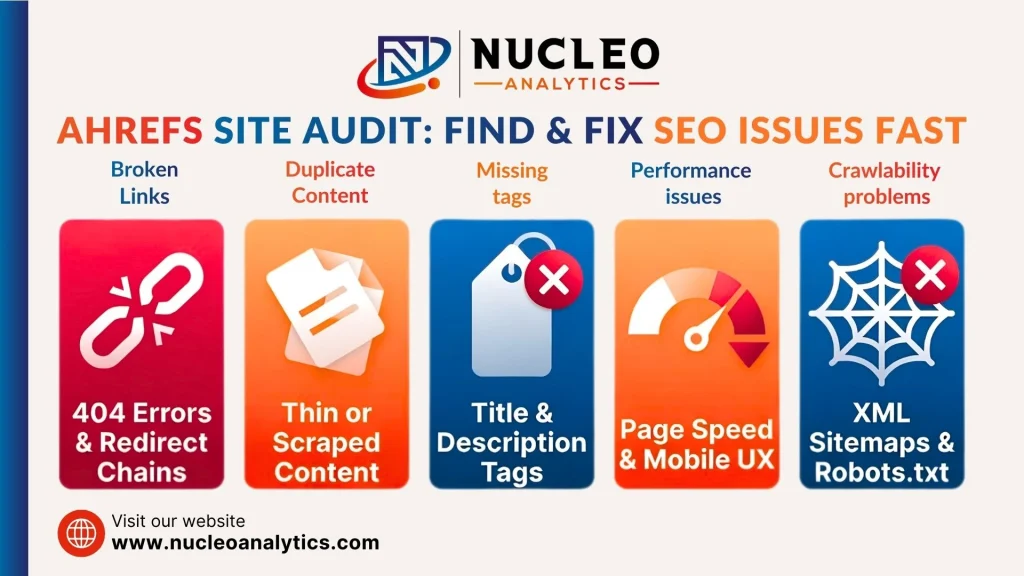
Ahrefs provides a complete Site Audit tool that crawls websites and highlights such problems as:
- Broken links
- Duplicate content
- Missing tags
- Performance issues
- Crawlability problems
This is more applicable to e-commerce websites and other large websites.
Mangools is not a company that pays much attention to technical audits. It provides superficial measures, but it is not a substitute for a complete audit tool.
In this case, Ahrefs will be more valuable to a digital marketing company that works with sophisticated web pages.
Pricing: This Matters More Than People Admit
Pricing influences decisions more than most people admit.
Mangools is affordable. Its pricing works well for freelancers, startups, and small teams. You get access to all core tools without heavy financial pressure.
Ahrefs is expensive. Even entry-level plans can feel steep for smaller operations. For agencies and established businesses, the investment makes sense. For others, it can be hard to justify.
Each platform is priced for a different audience.
Who Should Choose Mangools
Mangools is a strong choice if:
- You are new to SEO
- You manage smaller websites or niche projects
- You want fast keyword research
- You value clean design
- You want reliable digital marketing tools without high costs
It helps teams move quickly and stay focused.
Who Should Choose Ahrefs?
Ahrefs makes sense if:
- You have solid SEO experience
- You manage high-competition websites
- Backlink analysis is a priority
- You need deep competitor insights
- Budget is not a major limitation
It is designed for advanced strategies.
Can You Use Both?
Some teams do.
Mangools is often used for quick keyword research and early planning. Ahrefs is used for deep competitive analysis and backlinks.
For a growing digital marketing company, this combination offers flexibility but increases cost.
Final Thoughts on Mangools vs Ahrefs
There is no universal winner.
Mangools focuses on simplicity, clarity, and efficiency. Ahrefs is depth-oriented, data-oriented, and scale-oriented. The correct decision will vary depending on the manner in which you work and the necessity at this moment.
Too many businesses buy powerful tools they barely use. The smarter approach is choosing tools that match your workflow and goals.
At Nucleo Analytics, tool selection is always tied to strategy. The right digital marketing tools support growth when they are chosen intentionally. SEO works best when decisions are clear, and execution stays focused.
In case you are seeking the services of a digital marketing agency that does not focus on making the process complex, then Nucleo Analytics can assist companies in establishing SEO plans that actually drive the needle.