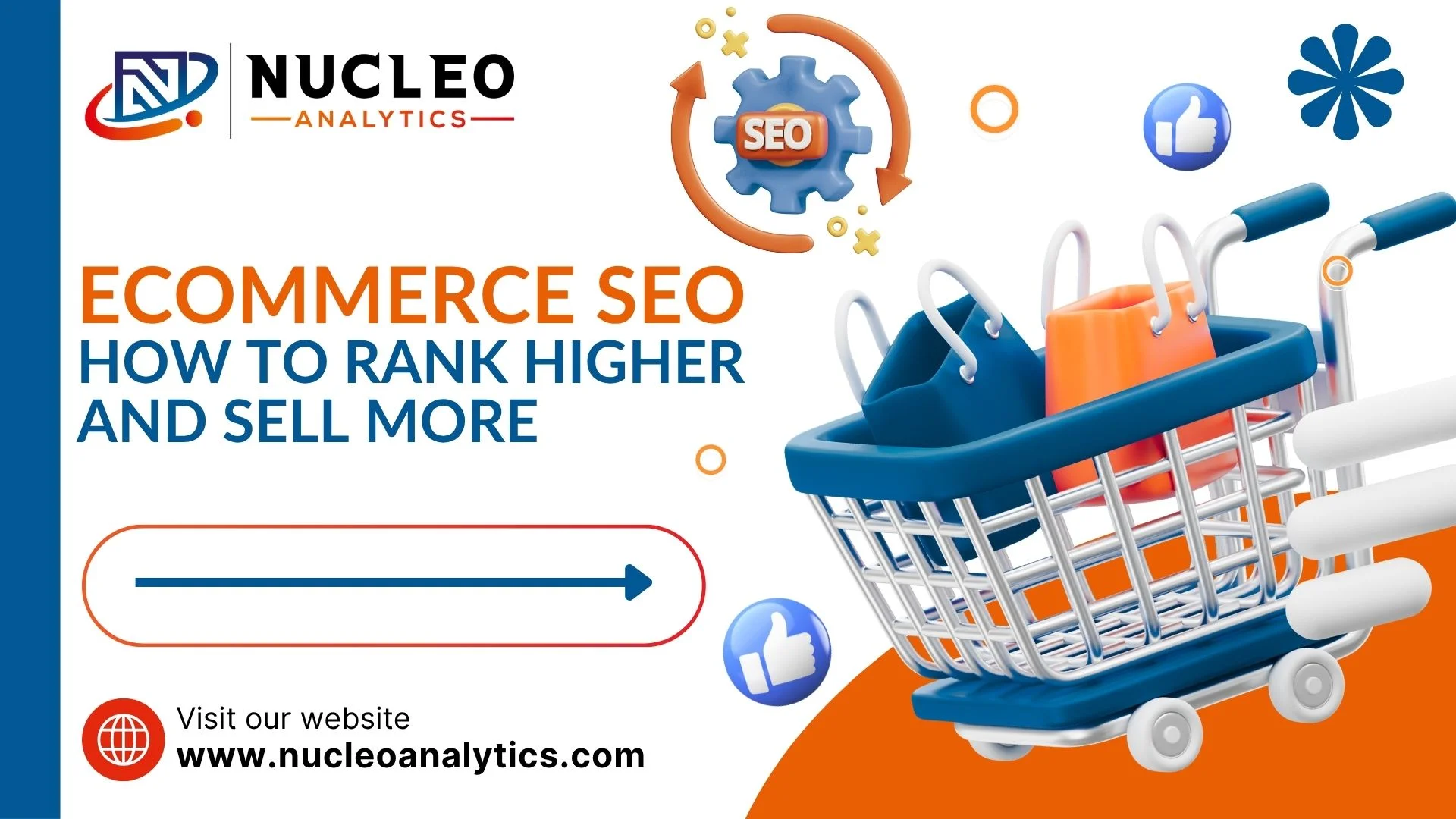
Running an online store today is no joke. The competition is fierce, and if your store isn’t showing up in search results, you’re basically invisible to a huge chunk of potential customers. That’s why working with the best seo service providers can make a real difference. They understand the ins and outs of eCommerce SEO, which is a whole different ball game compared to regular website SEO. But if you’re new to this, figuring out where to start can be overwhelming.
This blog takes the whole process of ranking higher and selling more using intelligent SEO apart. You’ll have a clear picture of everything from keyword research to technical adjustments, and how-to tips that you can apply. And you’ll understand why an experienced seo service agency is not just a cost but an investment that generates returns.
Why eCommerce SEO Deserves Special Attention?
SEO is all about getting traffic, right? Sure. But when you’re in e-commerce, it’s about the right traffic. You want people who are ready to buy, not browse. And that requires you to optimize your site differently than you would a regular blog or info site.
Your product pages, category pages, and even your homepage must use the language of buyers arriving for concrete search terms, answering questions, and providing clear, compelling information.
Also, eCommerce websites tend to be larger and more complicated, with hundreds or thousands of pages. That poses particular challenges to site speed, navigation, and duplicate content that you don’t typically find on smaller sites. You can’t fix these problems; it’s a matter of ranking or getting buried.
How to Build a Winning eCommerce SEO Strategy?
Dig Deep into Buyer-Focused Keywords
Not all keywords are equal. High search volume does not necessarily equal high purchase intent. Your e-commerce seo strategy begins with the identification of keywords that indicate a buying mentality, phrases such as “buy leather wallets online” or “best price for gaming laptops.” These are individuals who have already made up their minds that they want something and are now searching for where to obtain it.
There are plenty of tools to assist with this. Google Keyword Planner is free and adequate, but services like SEMrush or Ahrefs provide more information on competition and connected keywords. Don’t overlook long-tail keywords; they may attract less traffic, but those people are frequently more prepared to purchase.
Create Product Pages That Sell and Rank
Every product page must be a mini landing page optimized to rank and convert shoppers. Begin with distinct, accurate product titles containing your primary keyword. Create product descriptions beyond the bare minimum, discuss benefits, features, ways the product solves issues, and who it is for.
Do not copy what manufacturers say; search engines hate copying, and so do customers. Do not simply put keywords in there; sprinkle them in your copy. Bullet points are easier to read, and they provide related words and synonyms, thus capturing a more exhaustive search. It can also help increase the level of SEO and create trust by adding detailed specs, size guides, or even user documentation.
Images are also important. Use quality images and make sure that the photos are provided with descriptive alt tags. Alt tags make the search engine aware of what you are writing, and they also increase accessibility among people with disabilities.
Optimize Category Pages
Users don’t always come in through product pages. Category pages can rank well when they are properly keyworded and well-structured. Employ straightforward headings with target terms, short but informative descriptions, and group products into sense. Internal links between products and categories guide both users and search engines through your site.
Keep Your Site Fast and Mobile-Friendly
The speed of the site is a colossal SEO as well as a user experience aspect. A sluggish site kills conversions since nobody is going to wait. Slow-loading pages are also penalized in the ranking algorithm of Google. Check your load times with Google PageSpeed Insights or GTMetrix and apply their recommendations.
The mobile optimization cannot be compromised. Since a larger population is shopping using phones and tablets, you need to have a responsive and easy-to-use site on smaller screens. The buttons must be user-friendly to tap, the fonts legible, and the navigation uncomplicated.
Build a Smart Internal Linking Structure
Internal links also divert SEO value within your site and persuade the visitors to continue browsing. Pair related products, interlink product pages and blogs, and utilise filler anchor text by using related keywords. An example is the blog post about the best camping gear, which can refer to your outdoor equipment category.
Create Helpful, Product-Related Content
Blogs are no longer considered to be content marketing. Use leverage buying guides, tutorials, frequently asked questions, and videos to attract new traffic that is not yet ready to make a purchase, but is only in the research phase.
This content allows you to optimize for secondary keywords such as e-commerce seo tips and “seo for an e-commerce site.” Content that is good creates trust and retains your audience. It also creates natural opportunities for backlinks when others find your content valuable.
Leverage Backlinks and Reviews
High-quality backlinks from other sites enhance the authority of your site. Contact bloggers, influencers, or niche sites to be featured or write as a guest. The backlinks make the search engines know that your site is worth trusting.
Customer reviews do come into play. They add new content and social proof that establishes credibility. Make reviewing easy and respond to reviews so you can demonstrate that you care.
Avoid these eCommerce SEO Traps.
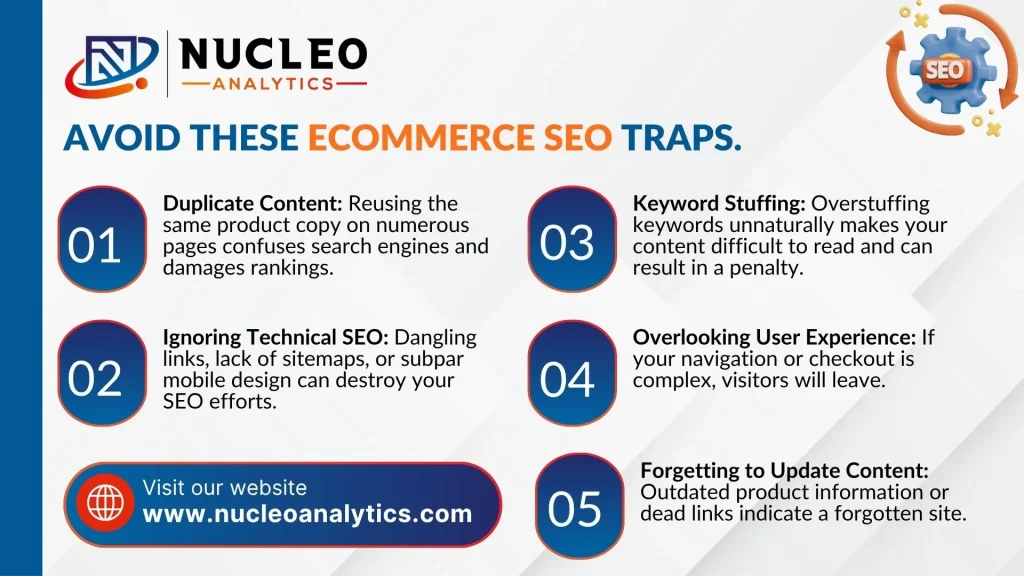
Even clever internet stores do things wrong when it comes to SEO, which stops them in their tracks: Monitor your SEO well-being periodically with such tools as Google Search Console. Make corrections promptly and update content when necessary.
Tracking and Measuring SEO Success
SEO is not set-it-and-forget-it. Measure what is working and tune things up from there. Google Analytics can tell you which pages are most viewed, how your visitors are behaving, and which sources are bringing you buyers.
Identify pages with high traffic that don’t have high conversions and optimize those. Search Console reveals which keywords bring people to your site, any crawl errors, and how your site performs in mobile search. Use this data to improve your SEO strategy over time.
Staying Ahead: Future-Proof Your eCommerce SEO
SEO is not a one-time affair. The landscape of search continues to shift, with the introduction of new algorithms, new competitors, and changing shopper tendencies. That means what is effective today may not be quite as effective six months down the road.
Future-proofing your eCommerce SEO strategy is paramount if you wish to remain at the top. Regular site checks identify problems before they become huge issues. It’s a habit to get into to check your keywords, refresh outdated content, and correct technical issues.
Keeping your product catalog up to date and your site structure clean keeps both your users and search engines happy.
Another fundamental aspect of future-proofing is adjusting to new trends. Voice search, personalization by AI, and video content are all on the rise. Playing around with these ahead of time can put you ahead of the competition as they lag behind.
Lastly, don’t neglect to monitor your analytics. Leverage data to make educated decisions and shift your plan when required. SEO success is a marathon, not a sprint. Sustained effort and adaptability will be rewarded in the long term.
Why Having a Professional SEO Agency is Important?
eCommerce SEO isn’t simply a matter of sprinkling keywords throughout your site. It takes a combination of technical expertise, marketing experience, and consistent effort. The best SEO service providers marry data-driven insights with real-world experience to develop strategies that yield tangible results. That’s why hiring the pros is a game-changer.
Expertise Across Multiple SEO Disciplines
SEO these days is complicated. It’s not merely about keywords; it is about technical SEO, content planning, user experience, link building, and more. Professional companies have experts in every domain who understand what to do at what time. They keep themselves updated about the recent algorithm updates, so your plan doesn’t lag behind.
Saves Time and Reduces Frustration
It’s daunting to learn SEO yourself with a business to manage, particularly when it’s e-commerce SEO. You could waste hours studying and using techniques that don’t pan out, or overlook important issues that cost you rankings.
Having a full-time seo service agency saves you the tedium of doing it all yourself by outsourcing the heavy lifting to professionals who provide faster, more consistent results. You’re free to concentrate on what you’re good at – managing your business.
Personalized Strategies That Match Your Business
No two online stores are alike. A professional agency spends the time getting to know your products, customers, and objectives before developing an individualized SEO strategy.
Optimizing individual pages is part of that process, following the on-page SEO for e-commerce website best practices such as unique titles and meta descriptions, and well-organized content. They will also review your competitors, your website’s strengths and weaknesses, and market conditions.
This tailored method generates targeted traffic and improved conversions, not generic SEO tips.
Regular Monitoring and Optimization
SEO is not a one-off job; it’s an ongoing process. Agencies offer regular monitoring, monitor performance indicators, and adapt strategies as necessary to stay ahead of rivals. They detect new opportunities and resolve issues before they impact your rankings.
Access to Advanced Tools and Resources
Professional SEO agencies invest in top-notch tools for keyword research, competitor analysis, backlink checking, and site audits. They can be costly and need to be used in a special way. If you hire an agency, you get access to this impressive tech stack without the added expense or learning curve.
Improved ROI and Business Growth
Ultimately, what all SEO endeavors aim for is driving revenue and sales. Seasoned agencies concentrate on those strategies that yield quantifiable returns, more traffic, better rankings for buyer-centric keywords, and enhanced conversion rates.
Their experience enables you to extract maximum value from your marketing dollars and expand your business in a sustainable manner.
Conclusion: The Road to More Sales and Higher Rankings
It requires time and effort to succeed with eCommerce SEO. But the reward is well worth it: higher organic traffic, improved rankings, and above all, more sales.
Target buyer intent keywords, optimize product and category pages, produce valuable content, and make your site fast and usable. Don’t be afraid to hire an expert. The right SEO partner can be the difference between struggling to get discovered and ruling your niche.
Ready to get your online business ranked higher and sell more? Call Nucleo Analytics, an established seo service agency with extensive eCommerce SEO experience. Let’s create a plan that generates authentic growth for your business.