







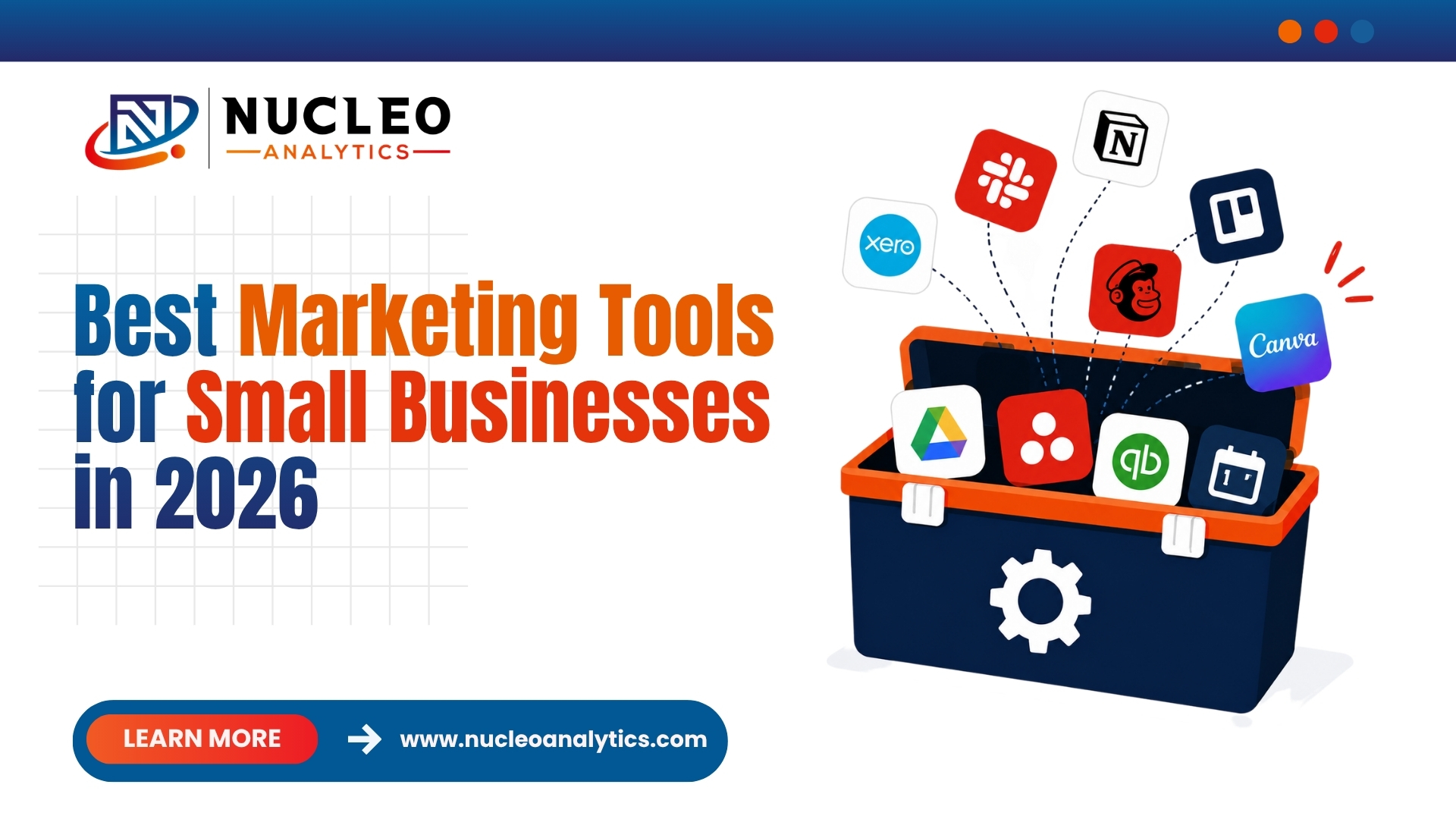
Best Marketing Tools for Small Businesses in 2026
Marketing a small business in 2026 is very different from five years ago. Today’s tools narrow the gap between small and large teams, making it possible for a duo with the right stack to compete for attention, leads, and conversions in spaces previously dominated by full marketing departments.
The challenge is not finding tools anymore. There are hundreds of them. The challenge is knowing which ones are worth the money, which ones actually work together, and which ones are delivering real data-driven marketing results for small businesses right now
This is that list. Every AI marketing tool here earns its place based on what it actually does for a small business, not how good the product page sounds.
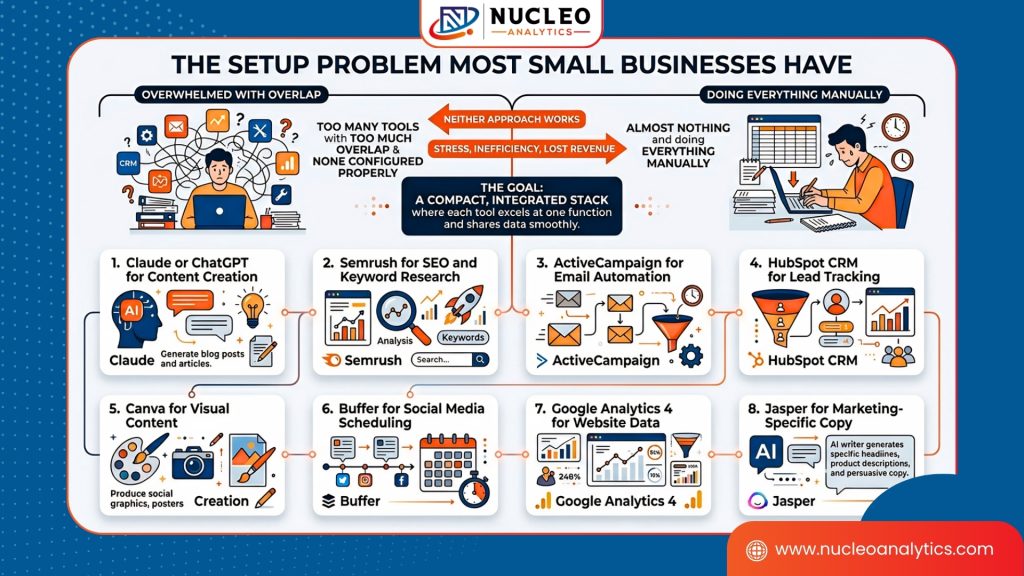
The Setup Problem Most Small Businesses Have
Most small businesses either have too many tools with too much overlap and none of them configured properly, or they have almost nothing and are doing everything manually.
Neither approach works. The goal is a compact, integrated stack where each tool excels at one function and shares data smoothly. This list is designed with that model in mind.
1. Claude or ChatGPT for Content Creation
Content demand for small businesses has not gone down. Blog posts, emails, social captions, ad copy, and landing pages, keeping up with all of it manually is not realistic for a small team.
AI tools for content creation, like Claude and ChatGPT, cut the time from idea to first draft significantly. The businesses getting real value from these tools are not publishing raw output; they use them to eliminate the blank page problem and then spend time refining. Claude excels in nuanced, long-form writing, while ChatGPT is stronger in versatility and plugin options. Understanding these strengths helps you choose the best tool for your needs.
Claude handles long-form and nuanced writing, making it ideal for in-depth blog posts or articles. ChatGPT offers broader versatility across formats, such as emails, ads, and social media, and benefits from a wide plugin ecosystem. Try one within your weekly workflow, focusing on its unique advantages, before deciding if you need both.
2. Semrush for SEO and Keyword Research
A lot of small businesses write content based on what they assume their customers are searching for. Semrush shows you what they are actually searching for, which is often quite different.
Beyond keyword research, Semrush tracks your rankings over time, audits your site for technical issues that hurt organic performance, and shows you exactly what your competitors are ranking for. That competitive view alone removes months of guesswork about where content opportunities exist.
The AI tools for SEO built into SEMrush have become genuinely practical in 2026. Content gap analysis, on-page suggestions, and topic clustering are all there. For a small business trying to grow organic traffic without an agency, this is one of the most complete SEO tools available at this price point.
3. Active Campaign for Email Automation
Generic email blasts to an entire list produce diminishing returns. People open emails that feel relevant to them specifically and ignore ones that clearly went to everyone.
Active Campaign is one of the stronger marketing automation tools for small businesses because it lets you build sequences that respond to actual behavior. Someone visits a specific page multiple times without converting. They get a targeted follow-up automatically. A subscriber clicks on a particular topic. They get tagged and enter a more relevant sequence.
You build the logic once, and it runs indefinitely. For small teams without bandwidth for manual follow-up, this is one of the highest-value tools on the list.
4. HubSpot CRM for Lead Tracking
Leads do not follow up with themselves. The most common reason small businesses lose leads is not bad marketing. There is no system to manage what happens after the first contact.
HubSpot’s free CRM logs every interaction automatically. Emails, calls, form submissions, and website visits are all captured without manual data entry. You can see where every contact sits in your pipeline, who needs attention today, and which deals have gone quiet.
As a best lead generation tool, HubSpot also connects marketing activity to pipeline movement, so you can see which channels produce leads that actually convert rather than just leads that look good in a report.
5. Canva for Visual Content
Visual consistency builds brand credibility faster than most other things. Someone lands on your social profile or website and forms an impression within seconds, before reading anything. That impression is almost entirely visual.
Canva enables consistent branding without hiring a designer. The brand kit lets you set your logo, colors, and fonts only once, applying your identity to every template moving forward. Output appears cohesive across formats with minimal effort.
6. Buffer for Social Media Scheduling
Posting consistently on social media is harder than it sounds when you are running a business at the same time. Most small businesses start strong and then gradually go quiet because posting every day competes with everything else on the list.
Buffer separates content creation from publishing. You batch your posts in one or two focused sessions per week, load the queue, and the platform handles the rest. Over time, the built-in analytics show which formats and topics your specific audience actually engages with, which makes future content decisions easier and more informed.
7. Google Analytics 4 for Website Data
GA4 is free, and most small businesses either have it set up and never check it or do not have it at all. Both situations mean making marketing decisions without knowing which pages drive conversions, which traffic sources bring people who actually stay, and where visitors are dropping off before taking action.
That data shifts how you allocate resources. Making decisions based on behavioral data improves their quality. GA4’s basics take just a few hours to learn and pay off quickly.
8. Jasper for Marketing-Specific Copy
General AI tools produce decent copy across many formats. Jasper was built specifically around marketing content, and the difference shows for certain use cases.
Jasper, designed for marketing content, excels at ad headlines, landing page copy, email subject lines, and calls to action by focusing on real marketing performance. The brand voice adapts your business’s sound for consistent results with your content across all platforms.
Do You Want To Fix Your Marketing Setup Today?
A Proper Analytics Layer to Connect Everything
Every platform shows its own version of what’s working, but they often don’t match. Your email tool may show strong campaign results, while your CRM shows that those leads never moved forward. At the same time, social media analytics may show high engagement with no clear link to sales.
When there is no system that unifies this data, decisions are often made based on whichever dashboard was checked last, not the full picture.
A unified analytics layer brings all your data together in one place. It shows what is actually driving revenue, where customers are dropping off, and what your best customers have in common.
For small businesses, this visibility is essential. Every marketing dollar needs to clearly show its impact across the entire system.
This is the kind of clarity we deliver at Nucleo Analytics, helping small businesses connect their tools, data, and real business outcomes into one clear, actionable picture.
How to Build the Stack Without Overspending
Start with two or three tools that solve your most immediate problem. Get those working and connected before adding anything else. Check your existing subscriptions for overlap before paying for something new. Review the whole stack every quarter and cut anything that has not produced measurable results in ninety days.
The best marketing tools for small businesses are not the ones with the most features. They are the ones your team uses every day and that connect directly to outcomes you can measure.
Final Words
The small businesses growing consistently in 2026 aren’t the ones spending the most. They’re the ones building better systems than their competitors.
When the right tools are properly connected and used well, they create results that go far beyond manual effort.
Start by focusing on what’s actually slowing your growth. Measure what matters. Remove what doesn’t add value. And make sure your marketing data is clear enough to act on. That’s where expert support makes a difference, turning scattered data into a system that actually makes sense for your business.
At Nucleo Analytics, we help small businesses build smarter marketing systems by choosing the right AI tools based on their budget and goals. If you want to understand what’s driving your growth and what’s holding it back, we can help you figure it out.
Your Business Deserves Tools That Create Real Growth, Not Extra Work. Visit Us Today for Bette Marketing Setup.
Frequently Asked Questions
How Can Nucleo Analytics Help Small Businesses Choose and Use AI Marketing Tools?
Are AI Marketing Tools Practical for Very Small Teams in 2026?
What Should a Small Business Budget for Marketing Tools Each Month?
What is the Difference Between Marketing Automation Tools and AI Marketing Tools?
How Do You Know If a Marketing Tool is Worth Keeping?
Related Posts

How Can Marketing Automation Tools Improve Your ROI?
Marketing today feels like juggling while someone keeps throwing extra balls at you.You’ve got social media, email campaigns, SEO tasks, paid ads, customer follow-ups, analytics […]
Google SGE (Search Generative Experience): What It Means for Your Business
Google keeps redefining how companies get their audience in the always shifting digital terrain. Search Generative Experience (SGE) is the most recent invention that represents […]

In‑House Marketing vs Hiring an Agency
Marketing is one of those things every business needs, but nobody wants to argue about. You can build an in‑house team or hire outside help. […]
How SEO Enhances Your Digital Marketing Strategy?
A strong digital marketing plan is crucial for every company in today’s fast-paced digital world to succeed in the competitive world. Every effective digital marketing […]

How AI Is Reshaping the Future of Digital Marketing?
In the fast-paced world of digital marketing, marketers are always changing with the times to stay ahead of the competition. Among the most transformative technologies […]

How to Integrate AEO With Traditional SEO Strategies?
The search engine optimization environment has changed dramatically over the recent years. The use of keywords to rank your site on the first page of […]