
Over 10 years we help companies reach their financial and branding goals. Engitech is a values-driven technology agency dedicated.

Gallery

Contacts

Digital Marketing Services Seo
how to optimize website for ai search

How to Optimize Your Website for AI Search

Search is experiencing a rapid transformation. A few years ago, most people typed short keywords into Google, clicked a few links, and browsed websites manually. People now expect AI tools to provide immediate answers when they ask complete questions. 

Most businesses fail to recognize the significance of that shift. AI-based search engines and answer systems transform the methods used for discovering, summarizing, and recommending content. If your website is not structured properly, it may not appear in those responses at all.

This is where AI search optimization becomes important. It’s no longer just about ranking on a search results page. It’s about making your content understandable, trustworthy, and easy for AI systems to interpret and surface.

A lot of businesses are still approaching SEO the old way. They focus heavily on keywords while ignoring how AI systems actually process information. The result is content that may rank occasionally but struggles to appear in AI-generated answers.

This blog breaks down what actually matters now. Not vague theories. Real strategies that help you adapt your website for AI-driven search experiences.

Why AI Search Is Changing the Way Websites Rank

Traditional search engines mainly focused on matching keywords and links. AI search systems go further. They try to understand context, relationships between ideas, and whether the content actually answers the user’s question clearly.

This changes how websites need to be structured. AI systems are not just crawling pages anymore. They are extracting information, summarizing it, and deciding whether it is reliable enough to show in generated responses.

This is how AI is changing SEO, and it has become such an important discussion. Search is moving from “find links” to “find answers.”

What AI systems now look for includes:

  • Clear topic structure
  • Direct answers to questions
  • Trustworthy and consistent information
  • Strong topical authority
  • Contextual relevance instead of just keywords

Websites that still rely on thin pages or keyword stuffing are already losing visibility in many search experiences.


Build Content Around Questions, Not Just Keywords

The largest error that companies commit happens when they develop content based on keywords instead of understanding actual user queries. The performance of AI systems improves when content provides direct answers to authentic questions using natural language.

You should focus on specific knowledge requirements that people have instead of trying to target common search terms. The more specific and useful your answer is, the better chance it has of being surfaced by AI systems.

You should develop separate sections to answer specific questions because. 

  • What is AI search?
  • How do AI search engines rank content?
  • How can businesses adapt their websites?

The present structure proves more effective because AI systems typically extract data from brief segments instead of assessing entire website content with equal weight. 

A practical way to improve this is by adding:

  • FAQ sections
  • Clear headings
  • Short answer summaries before detailed explanations
  • Conversational phrasing that sounds natural

AI SEO optimization depends on its fundamental component, which requires AI tools to deliver clear content through structured data presentation instead of using repeated keywords.

Create Strong Topic Clusters Instead of Random Blogs

Multiple websites create separate articles that do not share any connection with each other. AI systems struggle to understand authority when content lacks structure.

Thematic content clusters show all related material through a central theme. You build your main content foundation through a primary pillar page, which you enhance with in-depth complementary articles.

Your main subject of AI search can connect with these additional topics through their respective pages.

This method shows AI systems that your website presents a thorough understanding of a specific topic.

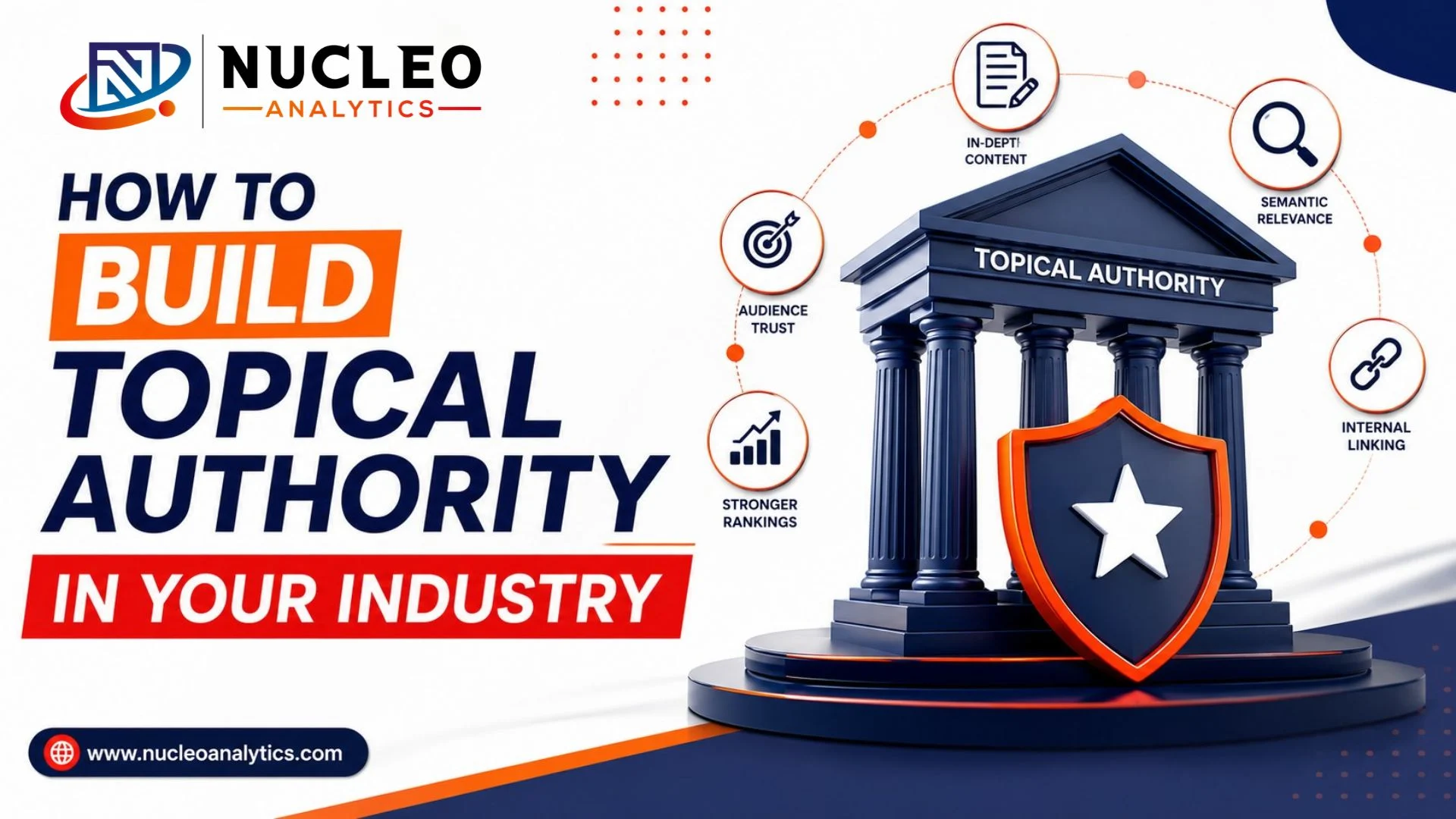
The system creates internal links automatically because related pages establish support through shared contextual information. This strengthens topical authority over time.

If you want to truly optimize a website for AI search, building content ecosystems is much more effective than publishing random keyword-focused blogs.

Structure Your Content So AI Can Extract Information Easily

One major difference between traditional SEO and AI-driven search is how information gets consumed. AI systems often extract snippets, summaries, and direct answers from content instead of simply ranking the entire page.

That means formatting matters more than ever.

Good formatting includes:

  • Clear H2 and H3 headings
  • Bullet points where appropriate
  • Concise explanations before long sections
  • Tables or comparisons are useful
  • Short definitions near the top of sections

AI systems have difficulty understanding unorganized text, which lacks proper structure. The structured content enables both human readers and machine systems to read it more easily.

This is also where AEO in marketing becomes important. Answer Engine Optimization focuses on making content easier for AI systems to pull into generated answers.

AEO is not replacing SEO. It is extending it.

Not Sure If Your Website Is Ready for Ai-Driven Search Visibility?

×

Ready to Get Started?


    Use Schema Markup to Help AI Understand Your Website

    The use of schema markup remains one of the most effective SEO techniques that businesses fail to implement. The technical nature of the system makes many companies overlook it, yet it functions as a crucial tool for search engines to understand their content.

    Schema gives additional context about your pages. It helps AI understand whether something is an article, FAQ, product, review, or business detail.

    Important schema types include:

    • FAQ schema
    • Article schema
    • Organization schema
    • Product schema
    • Local business schema

    Without structured data, AI systems have to guess more. With a schema, the meaning becomes clearer.

    This is a major part of how to do AEO effectively because AI-driven answer systems rely heavily on structured information.

    Improve Entity and Brand Consistency Across the Web

    The operational functions of AI systems function through the use of entities that serve as their fundamental components. An entity is basically a recognized thing — a brand, person, business, product, or concept.

    The AI systems will have difficulty understanding your business because your brand information shows different versions on multiple platforms.

    Make sure your:

    • Business name
    • Address
    • Website URL
    • Social profiles
    • Descriptions

    Stay consistent everywhere online.

    Your authority signals become stronger through this consistency, which enables AI systems to match your brand mentions across various sources correctly. 

    Many businesses underestimate this element because it has no direct connection to their rankings, but this aspect strongly impacts AI systems when they assess trust and legitimacy.

    Focus More on Experience and Originality

    The internet currently experiences an overwhelming influx of content that artificial intelligence systems produce. Original insights have become essential because of this development.

    Generic content is easier for AI systems to ignore because there are thousands of similar versions already online. What stands out now is specificity and real experience.

    Instead of repeating basic information, include:

    • Actual examples
    • Real observations
    • Step-by-step breakdowns
    • Practical recommendations
    • Personal or business experiences

    This makes content more useful and harder to replace with generic AI summaries.

    Websites that deliver genuine original value will receive SEO benefits from AI systems, which will determine website rankings. 

    Optimize for Conversational Search Queries

    People search differently when using AI tools compared to traditional search engines. The length of queries is increasing while users ask questions in a more conversational manner.

    Instead of typing:

    “best SEO agency”

    Users now ask:

    “What’s the best SEO agency for small businesses that focuses on AI search optimization?”

    This changes how content should be written.

    Natural language functions better today because it matches the way people use AI systems. The content that sounds excessively robotic through its excessive use of keywords will achieve lower performance results.

    Try to:

    • Use conversational phrasing
    • Answer follow-up questions naturally
    • Write like a human explaining something clearly
    • Avoid awkward keyword repetition

    This improves both readability and AI understanding.

    Combine AEO and Traditional SEO Together

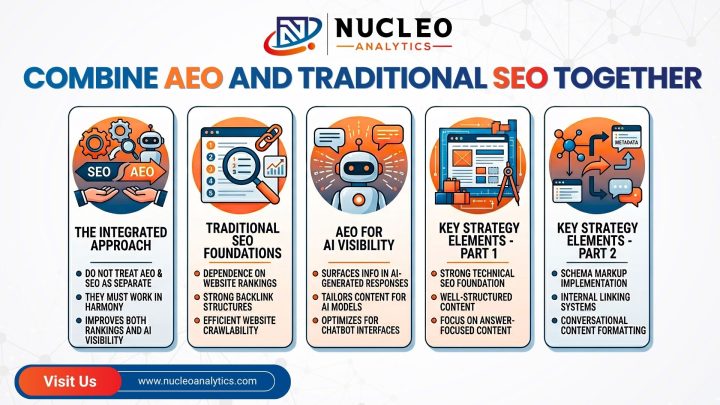
    One mistake businesses make is treating AEO and SEO as completely separate strategies. In reality, they should work together.

    combine aeo and traditional seo

    Traditional SEO holds ongoing importance because search engines continue to depend on website rankings, backlink structures, and website crawlability. But AEO improves how your information gets surfaced in AI-generated responses.

    This is why businesses should integrate AEO with SEO instead of replacing one with the other.

    A practical combined strategy includes:

    • Strong technical SEO foundation
    • Well-structured answer-focused content
    • Schema markup implementation
    • Internal linking systems
    • Conversational content formatting

    The websites performing best right now are usually combining both approaches effectively.

    Build Trust Signals Across Your Website

    AI systems increasingly evaluate trustworthiness before surfacing content. Thin affiliate-style pages without credibility signals are becoming less reliable.

    You should clearly show:

    • Author expertise
    • Real business information
    • Testimonials or case studies
    • Updated content dates
    • Contact details

    Trust matters because AI systems do not want to surface misleading information. The stronger your credibility signals provided by your organization, the higher your chances of achieving visibility. 

    Trust is the main factor that determines how businesses in healthcare, finance, and legal services industries will attain success.

    Why Human Content Still Matters in an AI-Driven World

    A lot of businesses worry that AI will replace content completely. That’s unlikely.

    What’s actually happening is that generic content is losing value while thoughtful, useful content is becoming more important.

    Even discussions like micro influencers vs AI influencers show the same pattern. People still trust authenticity and experience more than automated output alone.

    Artificial intelligence can assist research and organizational tasks, but human comprehension and decision-making skills are essential to produce content that maintains its clarity.

    The websites that achieve success today do not require their content creators to produce the highest volume of articles.

    How We Help Businesses Adapt at Nucleo Analytics

    At Nucleo Analytics, we’ve been watching this shift closely because AI-driven search is already changing how websites perform. Businesses that continue using outdated SEO methods are starting to lose visibility, even if their rankings previously looked strong.

    We approach this differently. Instead of treating AI search as a trend, we build strategies specifically around how modern search systems interpret and surface information.

    That includes:

    • Structuring content for AI readability
    • Building strong topical authority systems
    • Implementing schema and technical improvements
    • Creating answer-focused content structures
    • Improving entity and trust consistency across platforms

    Our main focus applies to sustainable visibility methods because we want permanent visibility. AI search systems are becoming more intelligent every month, so shallow optimization methods start to lose their efficiency.

    Our goal is not just to help businesses rank. It’s to help them become reliable sources that AI systems trust enough to reference consistently. That difference matters much more now than it did a few years ago.

    Conclusion

    Search now involves more than blue links and keyword rankings. AI systems are changing how information is discovered, interpreted, and presented to users. Businesses must change their website design because their present website needs to meet this requirement. 

    The strongest AI search optimization strategies focus on clarity, structure, topical authority, trust, and usefulness. Websites that continue relying on outdated keyword-heavy approaches will struggle more over time as AI-driven search evolves.

    The good news about this shift brings benefits to businesses that produce valuable content for their audience. Your website already has an advantage because it answers questions clearly while organizing information correctly and showing real expertise.

    The key is to stop thinking only about rankings and start thinking about understanding. The current direction of modern SEO leads to this destination.

    Ready to Future-Proof Your Website for Ai-Powered Search?

    ×

    Ready to Get Started?


      Frequently Asked Questions

      What is AI search optimization, and why is it important for websites today?
      AI search optimization improves website content accessibility for AI-powered search systems through better understanding, summarization, and recommendation processes. Nucleo Analytics assists businesses in establishing proper content structure, which enhances their performance across standard search engines, AI-based search systems, and answer-focused platforms.
      How is AI changing the way SEO works in 2026?
      AI technology drives SEO evolution beyond basic keyword matching by enabling search engines to comprehend contextual factors and user intentions and evaluate content quality. Search engines now require websites to provide information that has clear organization, trustworthy content, and straightforward presentation. Nucleo Analytics develops SEO strategies that help businesses maintain their presence in search results during ongoing changes to user search patterns and search engine ranking algorithms.
      What is the difference between SEO and AEO?
      SEO research methods develop strategies that enhance website presence in search engine results, while AEO research methods create systems that permit AI systems to access website content for direct answer extraction. At Nucleo Analytics, we combine both approaches because modern websites need strong rankings and strong AI visibility at the same time.
      How can businesses optimize their websites for AI-driven search results?
      Businesses should prioritize structured content development, which includes clear heading usage, schema markup implementation, and creation of authoritative topical content and answer-based writing. AI systems prefer content that is easy to understand and highly relevant. At Nucleo Analytics, we help businesses implement these strategies in a practical way that supports long-term search visibility and growth.
      Will AI replace traditional SEO completely in the future?
      The current practice of traditional SEO exists as an ongoing process that will develop into a new form. The evaluation process still uses rankings and technical SEO and backlinks as important factors, but AI systems have improved their ability to assess context and the usefulness of content. Nucleo Analytics assists businesses in their growth journey by implementing traditional SEO methods together with current AI-driven optimization techniques, which lead to enhanced, sustainable results.