









Conversion-Focused Website Design Guide
A website needs to achieve more than its visual appeal. The site must drive visitors to take specific actions. The main purpose of conversion-focused website design is to create automatic visitor conversion. A website that delivers a clean interface, together with a powerful message, fast performance, and an efficient user journey will transform casual site visitors into paying customers. An attractive website that fails to produce results wastes both time and money.
Most business owners focus on colors, animations, and trendy layouts while ignoring common website design mistakes that affect conversions. Visitors care about something else. People want fast answers. They also expect trust and transparency. People want a simple path to click, call, buy, or book. A website that removes confusion wins every single time.
Good design brings traffic in. Smart structure turns traffic into revenue. That is where real growth starts.
What is Conversion-Focused Website Design?
The design of the website needs to focus on a single purpose, which the website will accomplish through its various design elements. The design should lead to either sales, lead generation, phone calls, bookings, registrations, or sign-up completion. The webpage requires all its sections to direct users toward the specific conversion goal.
A strong website removes friction. It answers questions quickly. It builds trust fast and makes every click feel easy and natural. Visitors make decisions within seconds. A cluttered layout pushes people away. A clean structure keeps people moving forward.
Here is what matters most:
- Fast loading speed
- Clear headlines
- Easy navigation
- Mobile-friendly design
- Strong call-to-action buttons
- Trust signals and proof
- Simple forms and checkout process
Small improvements can create huge changes in revenue numbers.
Why Most Websites Fail to Convert
Many websites look modern but still struggle with conversions. The issue usually comes from poor strategy. Many websites overload pages with unnecessary information, while others hide important contact buttons or use weak messaging. These are common website design mistakes businesses make every day.
A visitor should never feel confused. A confused visitor leaves fast. Every second of confusion lowers conversion rates.
Bad websites often suffer from:
- Slow page speed
- Poor mobile experience
- Weak headlines
- Too many popups
- Hard-to-read text
- Poor button placement
- No trust indicators
Good design feels smooth. Visitors move naturally through the page without effort.
The Real Connection Between Traffic and Sales
A lot of businesses chase traffic numbers. Bigger traffic sounds exciting, but it does not always mean bigger revenue. This is where understanding traffic vs conversion rates becomes important.
Ten thousand visitors may turn out to be quite useless if none of them take action. A smaller audience that is indeed ready to buy usually scores higher than masses of traffic that is low in quality. Your website should focus on actions instead of vanity numbers.
Smart businesses track:
- Form submissions
- Calls
- Product purchases
- Demo bookings
- Email sign-ups
This is where conversion rate optimization changes everything. Small design updates can increase sales without spending more on ads.
Your Homepage Needs One Clear Purpose
Most homepages try to say too much. That creates noise.
A homepage should answer these questions fast:
- What do you offer?
- Who do you help?
- Why should people trust you?
- What should visitors do next?
Clear messaging beats fancy wording every time. A good homepage structure usually includes:
Strong Headline
Your headline should explain the main benefit immediately. Visitors should understand the offer within seconds.
Supporting Text
Add short supporting lines that explain how your service solves a problem.
Clear CTA Button
Use action-driven buttons like:
- Book a Demo
- Get a Free Audit
- Start Today
- Schedule a Call
- Trust Builders
Add reviews, ratings, client logos, or real numbers. People trust proof more than promises.
Mobile Design is No Longer Optional
Most visitors browse websites from phones. A poor mobile experience destroys conversions quickly. Buttons should feel easy to tap. Text should stay readable. Images should load quickly. Mobile users leave fast when pages feel slow or broken.
A mobile-friendly website improves:
- User experience
- Engagement time
- Search rankings
- Lead generation
- Sales performance
Many businesses still ignore mobile optimization. That creates easy opportunities for competitors.
Website Speed Affects Every Conversion
People hate waiting. Slow websites kill trust instantly. Even a one-second delay can reduce conversions. Fast websites feel more professional and reliable.
Ways to improve speed include:
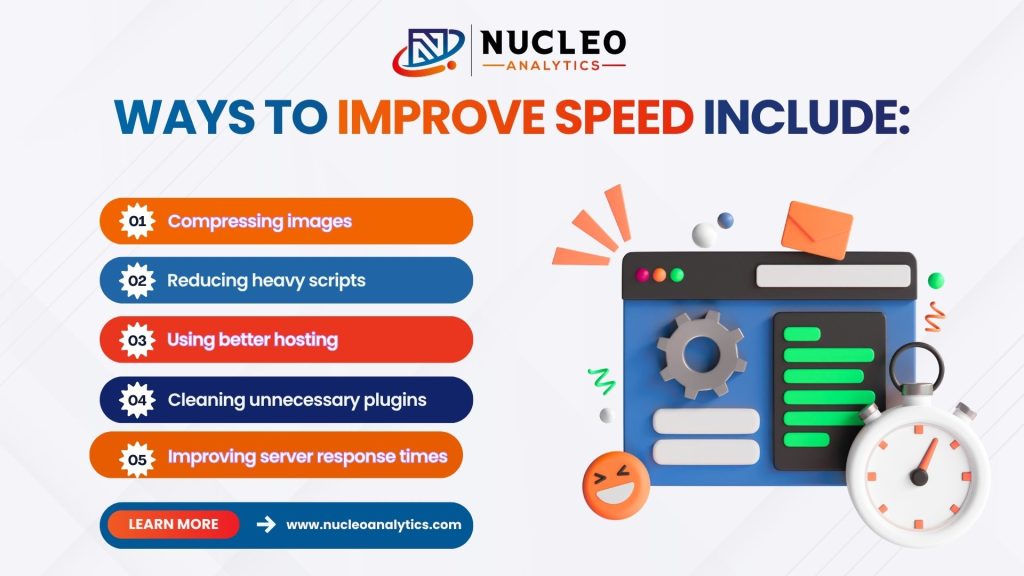
- Compressing images
- Reducing heavy scripts
- Using better hosting
- Cleaning unnecessary plugins
- Improving server response times
Fast websites create smoother experiences. Smooth experiences increase conversions naturally.
Why Website Monitoring Matters
A website should never run without regular tracking. Broken forms, slow pages, or downtime can quietly hurt revenue for weeks. Many businesses never notice those problems early. That is why website monitoring matters so much.
Monitoring tools help businesses track:
- Uptime
- Speed issues
- Broken pages
- Form errors
- User activity
Brands like Nucleo Analytics help businesses monitor website performance and user behavior in real time. That data helps improve customer journeys and conversion results faster.
Need a Website That Brings More Leads and Sales?
SEO and Conversions Must Work Together
Many businesses separate SEO and conversions. Smart brands combine both. Good SEO brings visitors in. Smart design converts visitors into customers. That is why seo monitoring plays an important role in long-term growth.
If a company wants to understand where revenue actually originates from, then a better method is to examine keyword rotation, user behavior, and landing-page engagement.
SEO without conversions creates weak business growth. A conversion strategy without traffic creates limited reach. Both systems should work together.
Why User Experience Controls Buying Decisions
A website should guide visitors naturally from one step to the next. Every page should reduce hesitation.
Strong user experience includes:
- Clear navigation
- Easy readability
- Logical page structure
- Clean spacing
- Consistent design
Visitors should never feel lost inside the website. Simple layouts usually outperform flashy designs.
The Importance of Conversion Tracking
Many businesses guess what works. Smart businesses track everything. That explains the real importance of conversion tracking.
Tracking helps businesses understand:
- Which pages convert best
- Which traffic sources bring buyers
- Which buttons get clicks
- Which forms perform well
- Which pages cause drop-offs
Without tracking, improving results becomes difficult.
Nucleo Analytics can help brands to identify the weak points in their conversion funnel. More data makes for smarter business decisions.
Content Should Support Action
Website copy matters more than many businesses realize. Visitors scan pages quickly. Long blocks of confusing text push users away.
Good website content should:
- Solve problems clearly
- Use simple language
- Answer objections quickly
- Focus on benefits
- Guide visitors toward action
Strong copy removes doubt. Clear copy increases trust. Every page should move visitors one step closer toward conversion.
Trust Signals Increase Conversion Rates
People hesitate before spending money online. Trust signals reduce hesitation.
Useful trust signals include:
- Customer reviews
- Testimonials
- Certifications
- Secure payment icons
- Real photos
- Case studies
- Contact information
Trust creates comfort. Comfortable visitors convert faster.
A website without trust signals feels risky.
Internal Linking Improves User Flow
Internal links help visitors explore your website naturally.
Good internal linking improves:
- SEO performance
- Session duration
- User experience
- Conversion opportunities
For example, businesses can connect service pages with blogs, guides, and case studies.
Helpful internal links may include:
- Website analytics services
- SEO audit pages
- Conversion strategy guides
- Landing page optimization resources
Strong internal structure keeps visitors engaged longer.
Which Platform Works Better?
Businesses often ask about Wix vs WordPress when planning a new website. Both platforms offer advantages. The right choice depends on business goals.
- Wix works well for smaller projects with simple needs. Setup feels quick and beginner-friendly.
- WordPress offers deeper customization and stronger flexibility for growing businesses.
A business expecting heavy growth usually benefits more from WordPress because advanced optimization becomes easier over time. The platform matters less than the strategy behind the website.
Analytics Help You Improve Faster
Data removes guesswork. Analytics show what visitors actually do on your website. That insight helps businesses improve weak pages faster.
Useful metrics include:
- Bounce rates
- Click behavior
- Session duration
- Scroll depth
- Conversion paths
Nucleo Analytics helps businesses turn raw numbers into useful actions that improve website performance steadily.
Conclusion
A website should work like a sales machine. Every section should guide visitors toward action smoothly and clearly. Great design looks good. Smart design produces revenue. That is the power of conversion-focused website design.
Companies that prioritize fast service delivery, dependable operations, user-friendly systems, accurate monitoring and effective user interfaces will achieve greater customer acquisition success. The sales performance results show that even minor product modifications lead to substantial sales growth.
Effective websites remove confusion, create trust, and convert visitors into customers Brands that want better growth should focus on strategy first and visuals second. That approach creates long-term results that actually matter.
Nucleo Analytics empowers organizations by providing website performance, user tracking, lead growth, and conversion rate improvement through more intelligent digital strategies.
Need a Website That Brings Leads Instead of Just Traffic?
Frequently Asked Questions
What Is Conversion-Focused Website Design?
Why Do Website Visitors Leave Quickly?
Why Is Conversion Tracking Important for Businesses?
How Does Website Monitoring Improve Performance?
What Is the Difference Between Traffic and Conversion Rates?
Which Platform Is Better Between Wix and WordPress?
How Can Small Businesses Improve Website Conversions?
Related Posts
10 Website Design Mistakes That Kill Conversions
This happens more often than marketers admit: A business runs ads for months, spends heavily, traffic rises, but leads remain nearly absent. The instinct? Blame […]

What is Technical Optimization in Web Development?
In the digital era, companies trying to have a strong online presence depend on a well-performing website. Still, design of a visually appealing website is […]

What Pages Every Business Website Must Have?
Your business website does not have to look flashy in order for it to work. It requires a structure, it needs to be clear, and […]

How Much Does It Cost to Develop a Website?
A website is essential for any type of online presence, whether it’s a startup, an e-commerce site, or an international business. Apart from its practicality, […]
How Website Monitoring Prevents Downtime and Traffic Loss
If you’ve ever opened your site one random morning and it just… didn’t load, you know that awful stomach-dropping feeling.Downtime hits like a punch. Customers […]

How to Build a High-Converting Website in 2026?
In 2026, a business website has to do far more than look modern. A high-converting website is built with one clear goal. Turn visitors into […]