That shift is shaping the future of SEO in ways many businesses still underestimate.
The SEO in the AI era is no longer about chasing rankings alone. It is about becoming a trusted source that AI systems can understand, reference, and surface in responses. Search engines are using machine learning to study intent, behavior, context, and credibility at a much deeper level than before.
This is where businesses either adapt or slowly disappear from visibility.
The good news is that SEO is not dying. It is expanding. Traditional SEO still drives traffic, but AI-driven search is creating a second layer of visibility that businesses now need to prepare for.
According to recent industry discussions shared by Nucleo Analytics, more than half of all searches now end without a click because users often get answers directly inside AI-generated search results. That single shift changes how websites compete online.
SEO Is Moving Beyond Keywords
For years, businesses focused heavily on keywords by finding the right phrase, adding it to the title, repeating it throughout the content, building links, and trying to rank the page. That approach worked for a long time because search engines relied heavily on keyword matching. However, AI-powered search now works differently by analyzing meaning, relationships between topics, user behavior, and content depth instead of relying only on keywords.
Google’s AI systems now evaluate whether a page genuinely solves a problem rather than simply checking if a keyword appears several times. This changes the way businesses should approach content because the future of AI and SEO belongs to websites that explain topics clearly, organize information effectively, and demonstrate real expertise. Thin content created solely to target search terms now struggles much more than it did before.
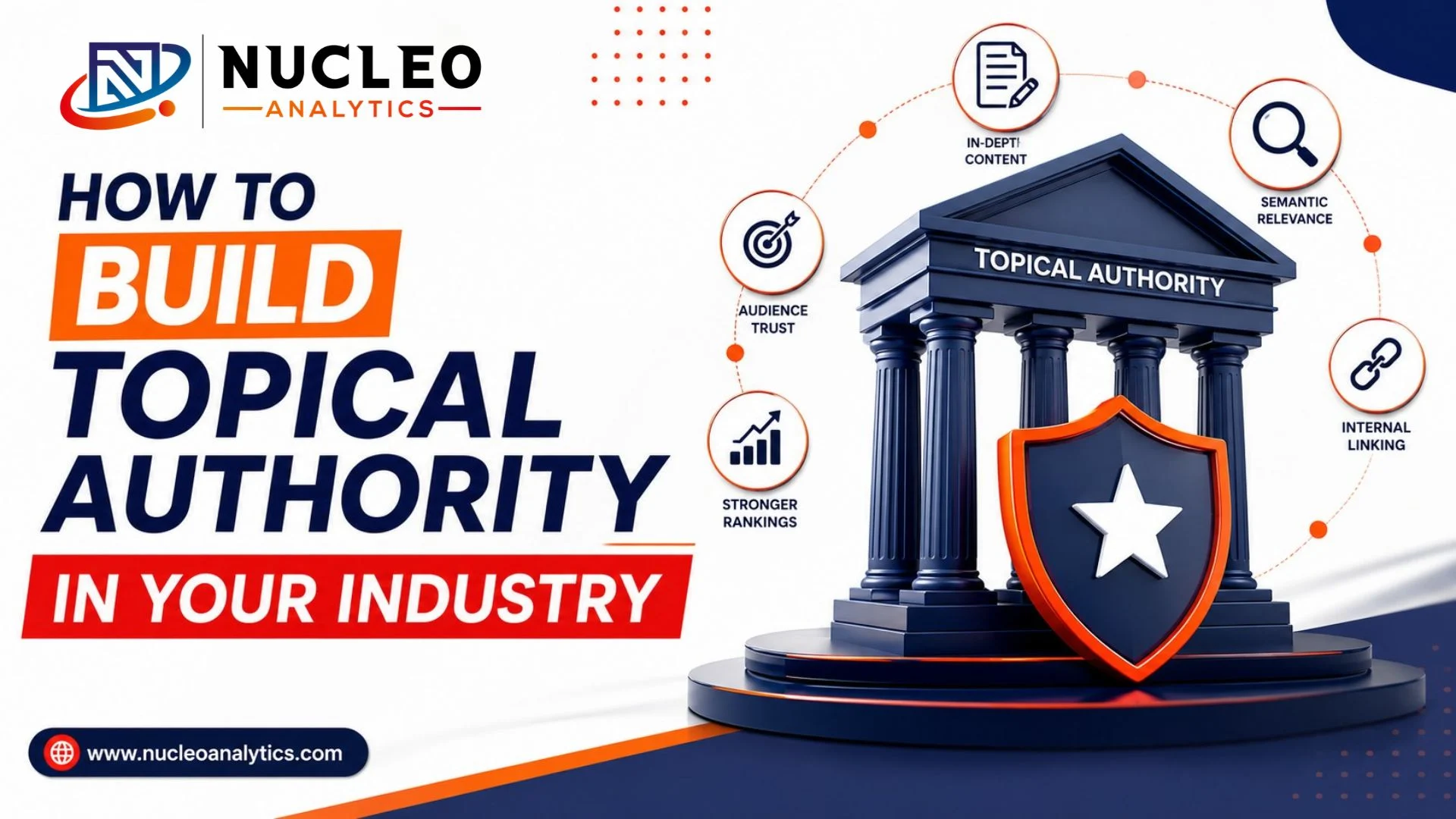
Nucleo Analytics’ research on topical authority explains this clearly by showing that Google rewards websites covering subjects deeply and consistently instead of publishing scattered content across unrelated topics. As a result, topical authority has become more important than ever.
If a business wants visibility in AI search, it needs connected content that answers questions from multiple angles because a single isolated blog post is rarely enough anymore.
AI Search Is Changing User Behavior
People search differently when AI tools are involved. Instead of typing short queries such as “best CRM software,” users now ask more detailed questions like, “What is the best CRM for small B2B companies with remote sales teams?” That difference has a significant impact on how search results are generated.
AI systems are designed to interpret conversational questions and provide direct answers, which is why search behavior is becoming more natural and much longer in form. Voice search is also growing because AI assistants are now built into phones, browsers, and workplace platforms.
This is one of the main reasons businesses now need to optimize websites for AI search instead of relying only on traditional ranking methods.
Content needs:
- Clear headings
- Direct answers
- Strong structure
- FAQ sections
- Consistent terminology
- Context-rich explanations
AI systems extract information differently from traditional search engines. They often pull snippets, summaries, and definitions instead of ranking an entire page. That means formatting now affects visibility much more than before.
The Rise of Answer Engine Optimization
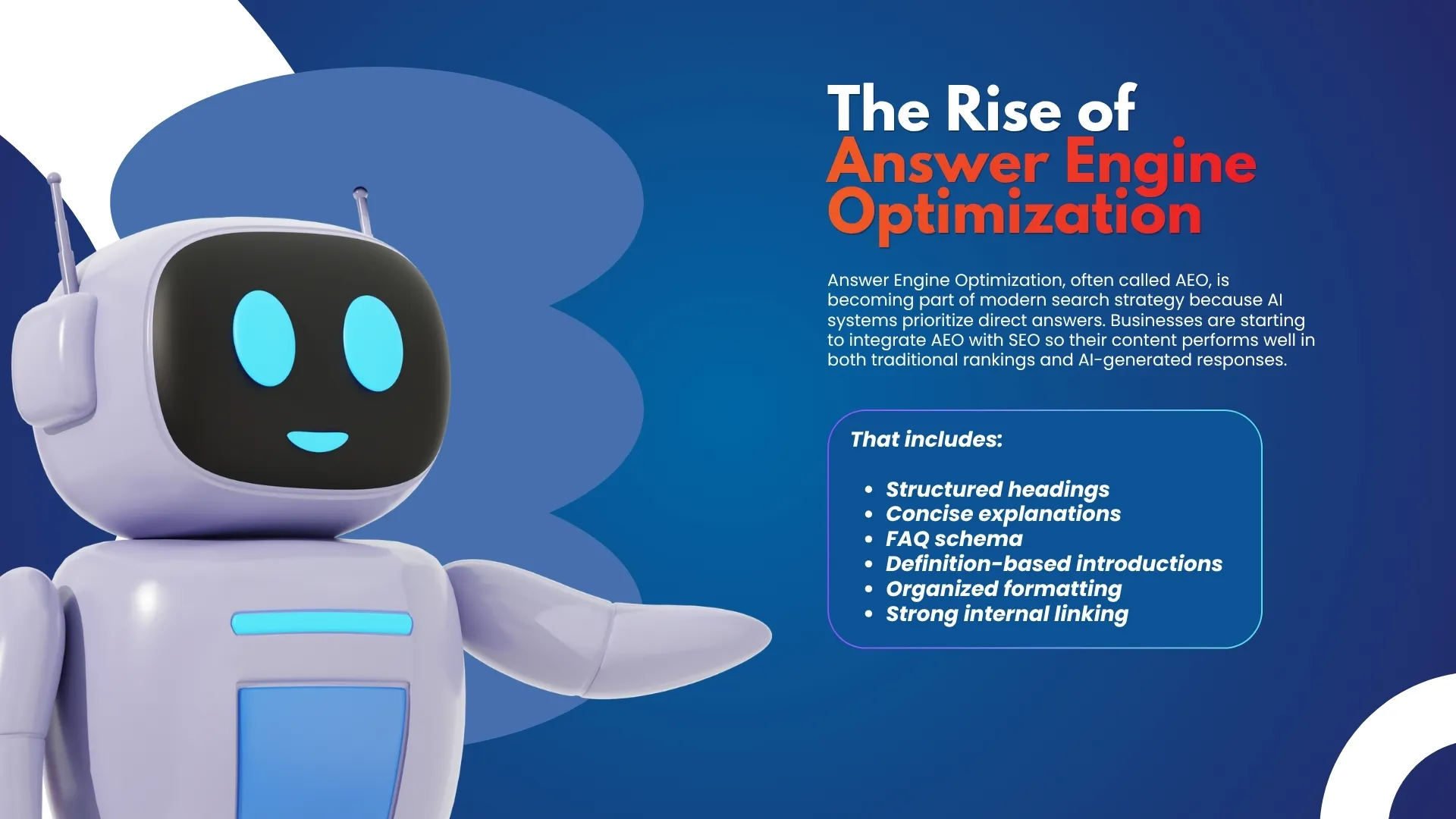
Answer Engine Optimization (AEO) is becoming an important part of modern search strategy because AI systems increasingly prioritize direct answers. Businesses are now integrating AEO with SEO to help their content perform well in both traditional search rankings and AI-generated responses. This shift matters because AI tools do not behave like traditional search engines. AEO focuses on helping AI systems understand content quickly and accurately.
That includes:
- Structured headings
- Concise explanations
- FAQ schema
- Definition-based introductions
- Organized formatting
- Strong internal linking
Many businesses still treat AEO as a separate strategy, but it is not. Instead, it extends SEO rather than replacing it. Nucleo Analytics points out that AI-powered search and zero-click results are becoming increasingly common across search experiences. That is why the number of businesses researching how to do AEO continues to grow rapidly.
Technical SEO Is Becoming More Important Again
Many marketers ignored technical SEO for years. AI search is pushing it back into focus. If AI crawlers cannot properly access, interpret, or structure your content, your visibility drops quietly. No warning. No dramatic penalty. Your content simply stops appearing in answers.
Google’s AI-driven systems now evaluate:
- Page speed
- Mobile experience
- Site structure
- Internal linking
- Schema markup
- Crawlability
- User behavior signals
Nucleo Analytics’ article on foundational SEO with AI explains that structured data and clean site architecture are becoming non-negotiable for AI visibility. This is why businesses using strong AI SEO strategies are spending more time improving site structure rather than only publishing new blogs. Technical clarity helps AI systems trust your website.
AI Content Is Everywhere — But Most of It Is Weak
AI writing tools exploded quickly. Businesses rushed to generate articles at scale because content became cheap and fast to produce. The problem is simple. Most AI-generated content sounds the same.
Search engines are getting better at recognizing shallow writing patterns, repetitive explanations, and generic phrasing. Pages created without expertise or original perspective struggle to perform over time. This is one of the biggest misunderstandings in SEO in the AI era. AI can speed up workflows, but it cannot replace experience.
According to Nucleo Analytics’ content marketing analysis, teams increasingly use AI for drafts, content repurposing, headlines, and editing support, but quality control still depends heavily on human review. The future belongs to hybrid content strategies.
AI helps with:
- Research support
- Topic clustering
- Content outlines
- SEO analysis
- Draft preparation
Humans still need to provide:
- Experience
- Clarity
- Judgment
- Brand voice
- Accuracy
- Real examples
This balance is becoming the foundation of modern AI SEO strategies.
Brand Authority Matters
AI systems prefer trusted sources. That changes how websites compete. A smaller site with strong topical authority and consistent messaging can sometimes outperform a larger website with scattered content.
AI models look for:
- Consistency
- Repeated expertise
- Strong brand mentions
- Reliable citations
- Clear explanations
- Topic depth
Nucleo Analytics’ discussion on LLMO and AI visibility explains that AI systems favor brands that are consistently referenced the same way across websites, press mentions, reviews, and content platforms. This changes link building, too.
The future of SEO is less about collecting random backlinks and more about building authority signals across the web. Digital PR, interviews, podcast mentions, expert commentary, and trusted citations are becoming much more valuable.
Generative Search Is Reshaping Traffic
Traditional SEO focused heavily on clicks. Generative AI search changes that model. Google, ChatGPT, Perplexity, and AI-powered assistants increasingly summarize answers directly inside the interface. Users sometimes get enough information without visiting websites at all. That creates a new challenge. Visibility matters even before clicks happen. Businesses now need strategies built around:
- Citation visibility
- AI summaries
- Featured snippets
- Entity recognition
- Brand mentions
- Conversational search
This is why topics like generative engine optimization and AI search optimization are growing rapidly. Search is becoming answer-first instead of click-first.
User Experience Is Now an SEO Signal
AI systems study user behavior closely. If visitors leave your website immediately, struggle to navigate pages, or cannot find answers quickly, rankings suffer over time. This makes UX part of SEO now.
Google’s AI systems evaluate:
- Bounce rates
- Time on page
- Mobile usability
- Navigation clarity
- Engagement signals
- Content readability
Businesses focusing only on keyword placement miss this bigger picture. The future of SEO depends heavily on creating websites people actually enjoy using. Those things matter because user behavior feeds AI ranking systems continuously.
AI Tools Are Changing SEO Workflows
SEO professionals now rely heavily on AI-assisted workflows.
Modern AI tools for SEO help with:
- Topic research
- Search intent analysis
- Competitor tracking
- Content briefs
- Internal linking suggestions
- Technical audits
- SERP analysis
- Predictive forecasting
Nucleo Analytics’ SEO tools testing report showed that platforms like Ahrefs, SEMrush, Clearscope, and Surfer continue to play major roles in modern SEO campaigns. But tools alone are not enough. That same report makes an important point: “Tools assist. Experience decides.” That sentence captures the AI and SEO future perfectly.
Businesses that depend fully on automation usually create generic output. Businesses combining AI support with human strategy tend to perform much better.
Influencer Search Signals Are Also Changing
Search visibility is no longer limited to websites alone. AI systems now analyze conversations happening across platforms like Reddit, Quora, YouTube, LinkedIn, and social media. This affects how brands build trust online. The discussion around micro influencers vs AI influencers is becoming more relevant because human credibility still carries stronger trust signals in many industries. Real experiences and authentic discussions influence AI understanding more than polished promotional content.
This means brands should pay closer attention to:
- Community engagement
- Expert mentions
- User-generated content
- Public discussions
- Industry conversations
SEO is becoming broader than websites.
B2B SEO Will Shift Heavily Toward Expertise
B2B companies face a different challenge. AI-generated content floods search results daily, especially in SaaS and service industries. Generic business blogs are becoming invisible.
The businesses that win will focus on:
- First-hand insights
- Original research
- Case studies
- Industry expertise
- Deep educational content
This is why companies are investing more in B2B content strategy for AI search rather than producing large volumes of repetitive articles. AI search systems value clarity and expertise much more than content quantity alone.
The Future of SEO Will Belong to Trusted Brands
SEO is not disappearing. It is becoming harder, more layered. More connected to brand authority, technical quality, and user trust. The businesses that adapt early will gain a major advantage while competitors continue chasing outdated SEO tactics.
The future of SEO belongs to websites that:
- Explain topics clearly
- Structure content properly
- Build authority consistently
- Improve user experience
- Publish trustworthy information
- Support AI readability
- Combine SEO with AEO and LLMO
The SEO in the AI era rewards clarity more than tricks.
Search engines and AI systems are getting better at understanding intent, expertise, and credibility. Businesses that still rely on shortcuts will struggle more each year. The companies' growing visibility is now building systems designed for both humans and machines.
Conclusion
The future of SEO isn’t about replacing human marketers with AI. It’s about understanding a search environment that is defined by AI systems that decide what information deserves visibility.
As AI search becomes more prevalent, old-school SEO practices will be a drag on businesses. Today, search engines are more interested in the depth of the topic, credibility, user experience, and content clarity; not just keyword repetition.
In the AI era, SEO rewards businesses that create useful content, improve technical structure and build trust across the web. As search continues to evolve, companies that blend SEO, AEO and AI search visibility strategies are more likely to stay visible.
AI tools can aid with faster workflows but long-term SEO success still depends on human expertise, strategic thinking and real value for users.