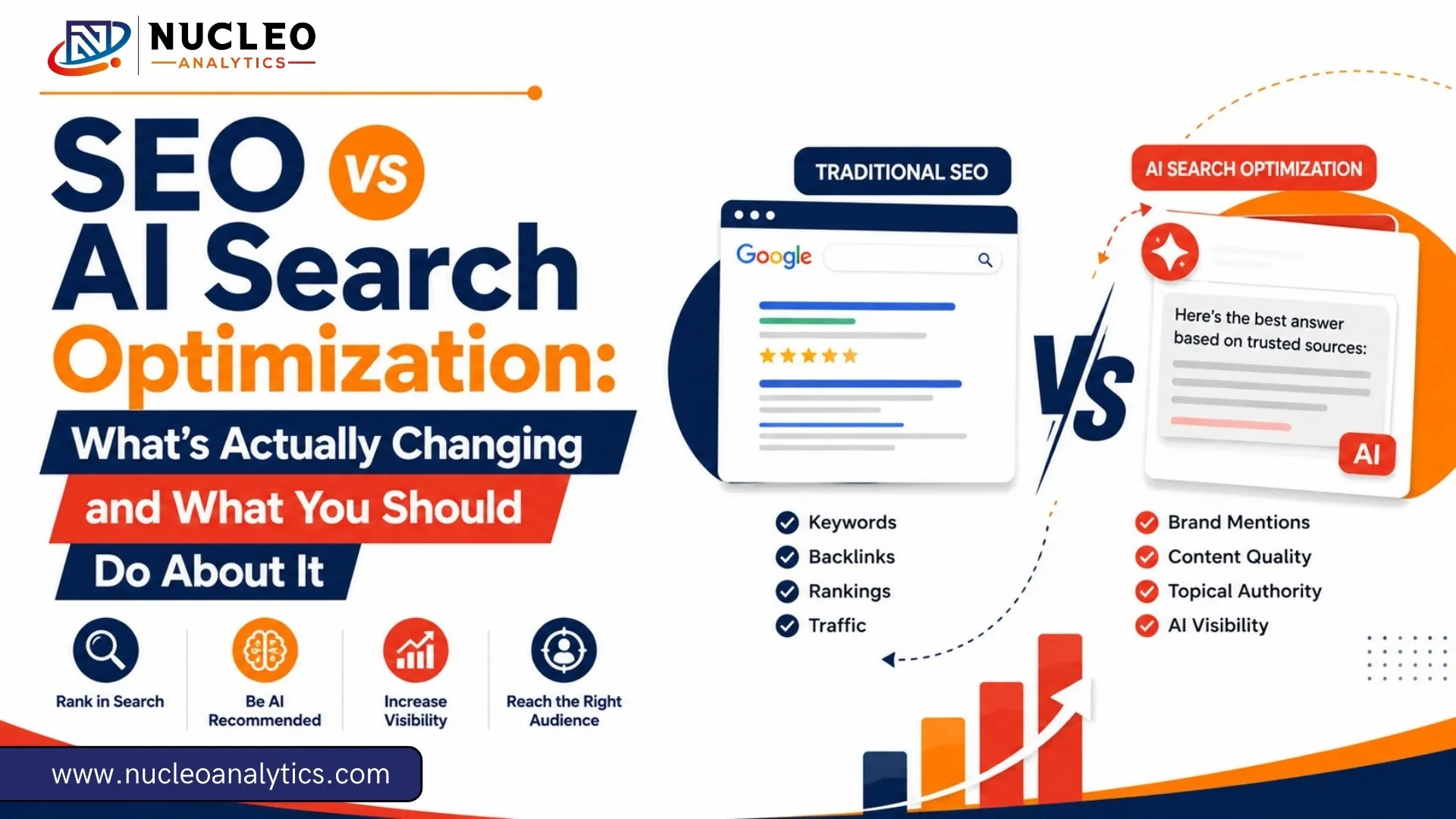

The “Is SEO dead?” conversation still comes up a lot in 2026, but the answer is simple: it is not. What has changed is how people search and how they get information, and that is where SEO vs AI search optimization becomes important. Many users now get answers directly from ChatGPT, Perplexity, Google AI Overviews, or Gemini before they ever click on a website.
So the real question is not whether AI search matters. It is whether your content is set up to work with it or against it.
What Are We Actually Talking About Here
Most people reading this already know traditional SEO. Keywords, backlinks, technical audits, page speed, all of that. You do the work, Google ranks you, and people find you. That loop still exists and still matters.
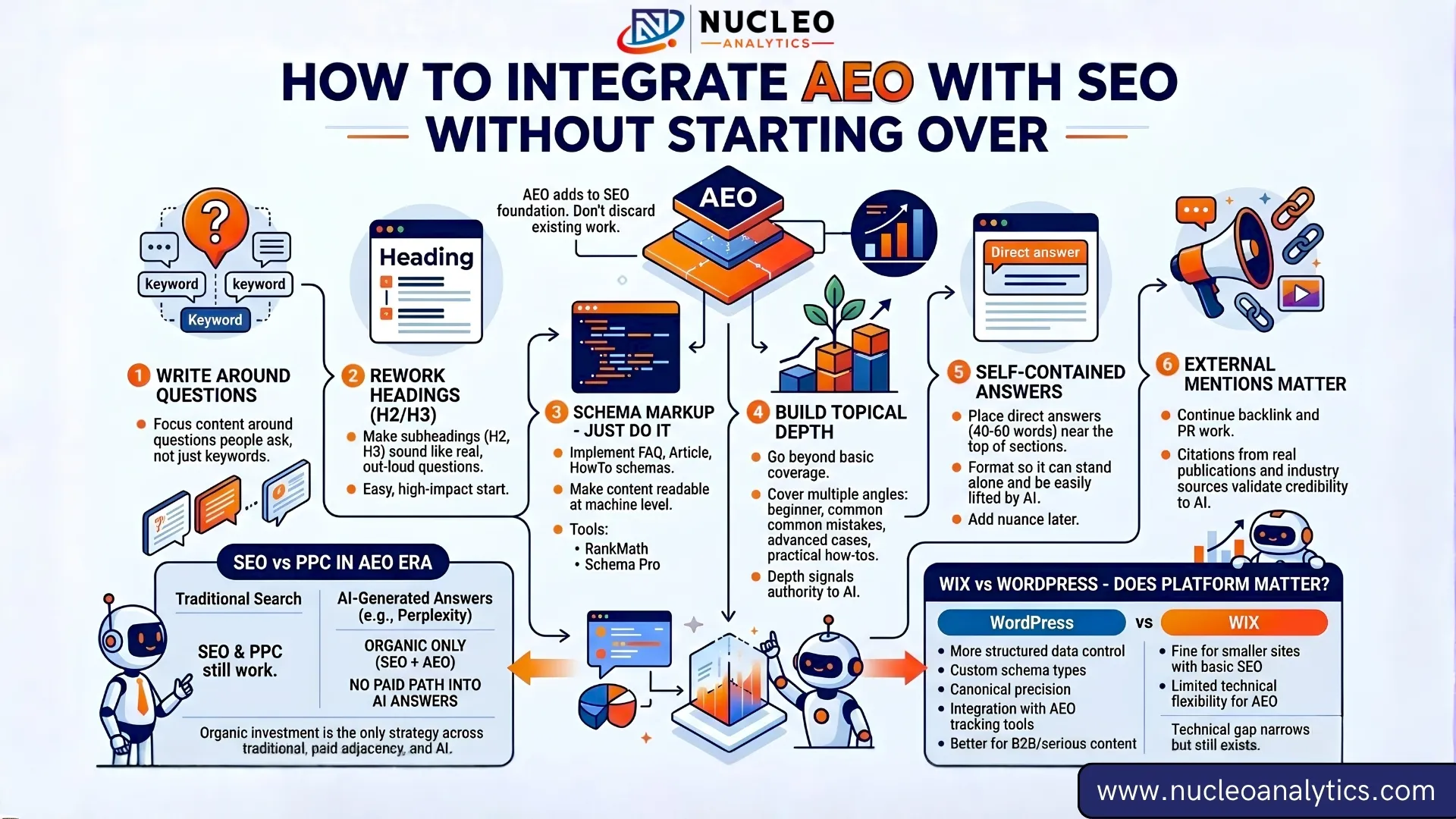
What's new is this second loop running alongside it. AI SEO vs traditional SEO isn't really a versus situation - it's more like you've been optimizing for one audience (Google's crawler), and now there's a second audience you also need to think about (AI systems that synthesize answers).
AEO in marketing is just the name for that second optimization layer. When someone asks ChatGPT something relevant to your business, and ChatGPT references your brand or pulls an explanation from your content, that's AEO doing its job. No click required. The exposure still happened.
The goal is different from traditional SEO, though. Traditional SEO wants you ranked in a list. AEO wants you to be chosen as the answer. Those two things require genuinely different content decisions.
AEO vs SEO Side by Side
Since people always ask for a comparison:
Here is the cleaned version with all `font-family: Georgia, serif;` code removed:
Factor | Traditional SEO | AI Search Optimization (AEO) |
Primary Goal | Rank high on Google or Bing | Get cited in AI-generated answers |
Core Strategy | Keywords, backlinks, technical SEO | Structured data, topical authority, and semantic clarity |
Content Format | Blog posts, landing pages, web pages | Concise, factual, answer-first content |
Main Channels | Google, Bing, Yahoo | ChatGPT, Gemini, Perplexity, Google AI Overviews, Claude |
User Journey | Search, click, visit your site | Question, AI answer, source gets a mention |
Key Metrics | Rankings, clicks, CTR | Citation count, AI visibility, share of voice |
Schema Markup | Helpful, not required | You need it, full stop |
Zero-Click Risk | Lower | Much higher |
The user journey row is the one worth staring at for a second.
Traditional SEO: they click, they visit, you get the traffic.
AI search: they get the answer, maybe your brand gets a mention, and they never show up in your analytics at all. That's a completely different definition of "winning."