
Your website isn’t something you build once and forget. It slowly drifts out of date. Things break. Design starts to feel off. And most of the time, you don’t notice until leads drop or sales feel stuck. That’s when people panic and rush into changes. The smarter move is knowing when to redesign before things go bad. In this guide, we’ll walk through real signs that tell you it’s time, and how to avoid common website design mistakes that quietly hurt your business.
When Your Website Just Feels Outdated
One doesn't need data to know that things are wrong. Sometimes, examining one's own site is proof enough.
Maybe it looks like an old business website. Maybe the colors feel off. Maybe the layout looks crowded. Maybe it just doesn’t feel like something you’d trust today.
That’s not a small issue. People form opinions in seconds. When a website appears outdated, visitors will leave the site before they complete their exploration of available content. This is even more important in website design for small businesses, where trust is everything. You don’t get multiple chances. You get one quick impression, and that’s it.
You’re Getting Visitors, But No One Is Taking Action
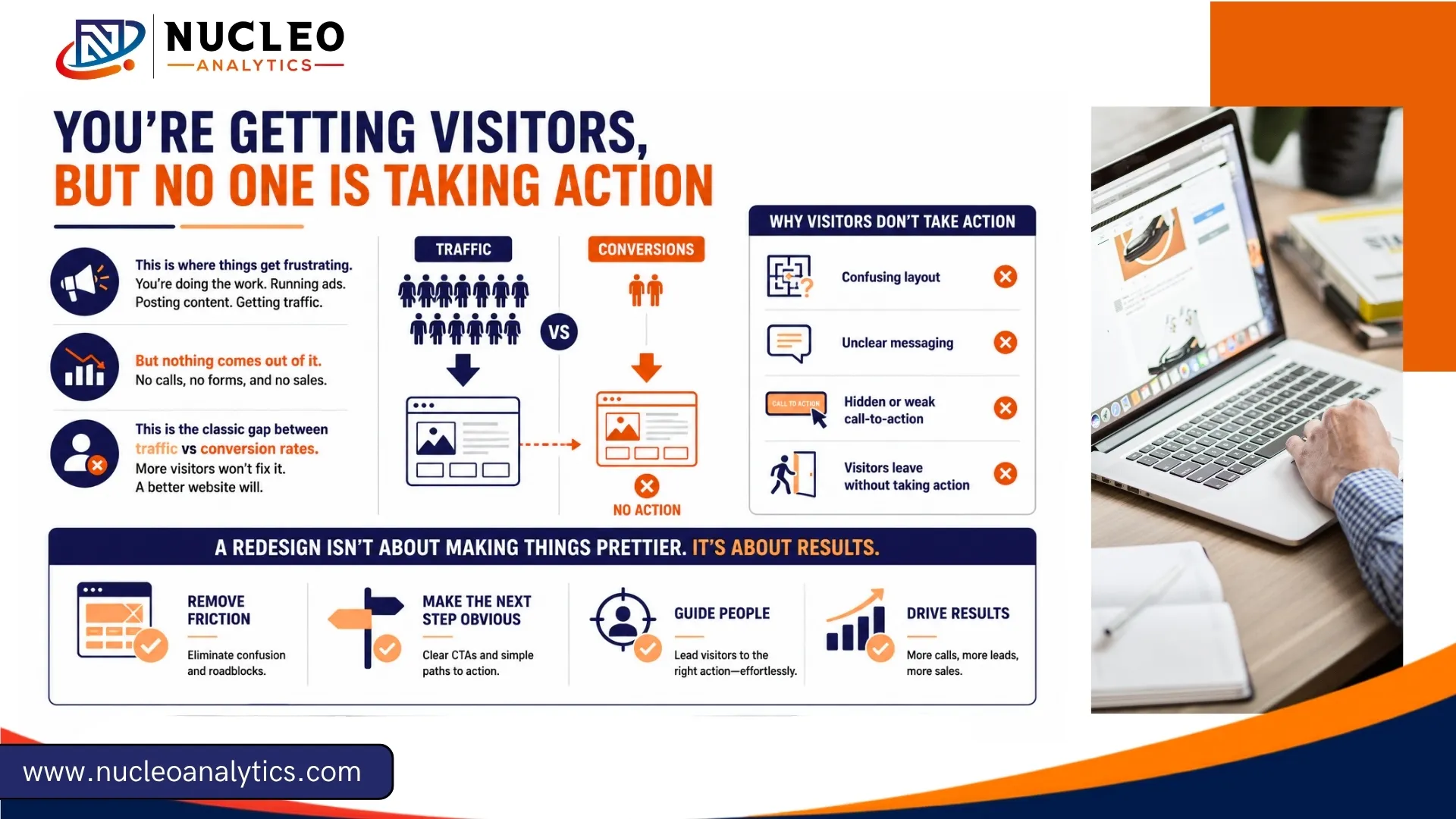
This is where things get frustrating. You’re doing the work. Running ads. Posting content. Getting traffic. But nothing comes out of it. No calls, no forms, and no sales. This is the classic gap between traffic vs conversion rates. More visitors won’t fix it. A better website will. If your layout is confusing, your messaging is unclear, or your call-to-action is buried, people won’t act. They’ll just leave.
A redesign here isn’t about making things prettier. It’s about removing friction. Making the next step obvious. Guiding people instead of hoping they figure it out.
Your Website Is Hard to Manage
If updating your site feels like a chore, something is wrong. You should not require developer assistance for every sentence change or new image upload. That kind of setup slows everything down.
This is where the whole Wix vs WordPress conversation usually comes up. Some platforms are simple but limiting. Others are flexible but need proper setup. If your current system feels restrictive, redesigning on the right platform can make your life a lot easier long-term.
High Bounce Rate Is a Red Flag
When people land on your site and leave within seconds, it’s not random. It’s usually design, speed, or clarity. Something isn’t working.
Here are the most common reasons:
- Slow-loading pages that test patience
- Layouts that feel cluttered or confusing
- No clear next step for the user
This is where high converting website design changes everything. A good design doesn’t just look nice. It tells people where to go, what to do, and why it matters. It keeps them moving instead of bouncing.
You Haven’t Touched Your Site in Years
Three years online is a long time. Trends shift. User behavior changes. The methods that succeeded in the past do not bring success in the present. Your website requires updates from that period because it has become outdated.
The system needs improvement because it requires both visual and technical enhancements. Speed, mobile responsiveness, and structural elements now have more importance than they did three years ago.
The process needs a complete overhaul because minor adjustments no longer bring results. You need a fresh start.
You Don’t Know What’s Working
A lot of business owners make assumptions about their websites without having actual data to support those decisions. They assume certain pages perform well and believe specific buttons receive clicks, but they do not always know what is truly happening. That creates unnecessary risk.
The importance of conversion tracking is simple. It provides information about which elements are working effectively and which areas need improvement. Without this system, businesses are forced to make decisions without proper insights.
Redesigning user interface elements provides an opportunity to solve these problems. However, proper system configuration is necessary because every user interaction can provide valuable information that helps improve website performance.
Your Competitors Are Doing It Better
The competitor websites need evaluation through your honest assessment. The appearance of their sites shows superior design because they created a better user experience.
People compare without thinking too much. Your site will lose visitors when users find it confusing and untrustworthy. Redesigning your system allows you to solve existing problems while achieving future growth through correct implementation.
Losing leads?
Mobile Experience Isn’t Smooth
Most of your website traffic is likely coming from mobile devices. If your site is not designed to support that experience properly, you may be losing visitors quickly.
Common problems include:
Text that is too small to read
Buttons that are difficult to tap
Pages that take too long to load
Mobile-first design is no longer optional. It has become the baseline expectation for modern websites. A redesign ensures your website works naturally on smaller screens while providing a smoother experience without unnecessary frustration.
You’re Rebranding, But Your Website Isn’t
If your business has changed but your website has not, there can be a disconnect between your brand and your online presence. You may have a new logo, updated messaging, or new services, but your website might still reflect an older version of your business.
This creates confusion for visitors because unclear branding can make it harder for people to build trust. A redesign helps bring everything back into alignment by creating a website experience that feels clear, consistent, and connected with your current brand.
Your Website Isn’t Generating ROI
At the end of the day, the primary function of your website is to accomplish business expansion for your company. The website fails its purpose when it remains inactive without generating leads or sales.
The process of conversion rate optimization needs to be established at this particular moment. A redesign built around user behavior and clear actions can turn your site from passive to productive. It’s not about traffic alone. It’s about what happens after people arrive.
Understanding the Cost Without Overthinking It
Choosing the Right Platform From the Start
During a redesign, platform choice matters more than people think. The debate around Wix vs WordPress for business websites usually comes down to control versus simplicity.
Wix is easier to use. WordPress gives you more flexibility. Neither is perfect for everyone. The key is picking what fits your long-term needs, not just what feels easy today.
When It Makes Sense to Bring in Experts
You can redesign your site yourself. A lot of people do. Some even make it look pretty good. Attractive design fails to satisfy requirements because websites need to function correctly and deliver successful outcomes. The website redesign services provide their assistance through this particular aspect.
They focus on how your site works, not just how it looks. And that’s what actually brings in leads and sales.
How We Look at Website Redesign at Nucleo Analytics