

Consumers expect a good online experience from the time a page loads. The role of web design for small businesses is crucial as it can attract and retain customers. This blog explains the best website design practices that help small businesses improve user experience and increase engagement that supports long-term business growth.
Why Do Visitors Leave Slow-Loading Websites?
Slow-loading and outdated websites push visitors away quickly. Many small businesses lose customers because users expect fast and modern website experiences. Visitors make their decision if a business seems decent on the website within a few seconds. So, the structure of a website is more critical than most business owners understand. Customers are demanding quick replies when they browse for online products.
Each section is capable of guiding users towards an understanding of what the business provides and how the company helps resolve issues. Easy layouts are less frustrating and keep users engaged on every page. A Stanford study expanded on this notion, revealing that 75% of users assessed business credibility by the design of a website.
According to Google research, over 50% of mobile users abandon pages with loading times greater than three seconds. All these digits clearly show how design impacts the trust and conversions involved directly.
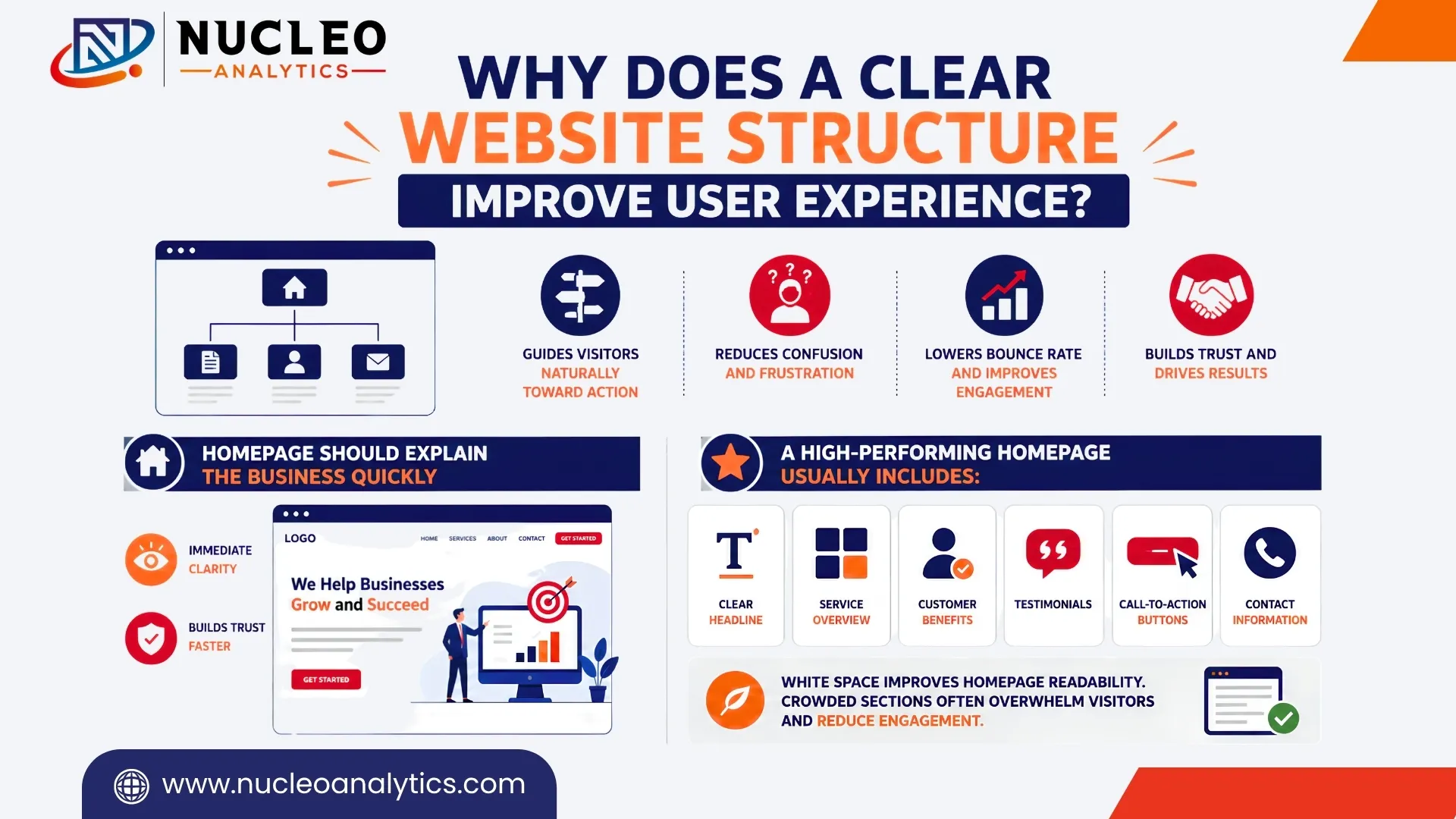
Why Does A Clear Website Structure Improve User Experience?
Every business website should include pages that guide visitors naturally toward action. Confusing navigation creates frustration and increases bounce rates quickly. Therefore, a simple structure improves customer engagement significantly.
Homepage Should Explain the Business Quickly
The homepage acts as the main introduction to the business. Visitors should immediately understand what the company offers and who the services help. Strong homepage messaging improves clarity and builds trust faster.
A high-performing homepage usually includes:
- Clear headline
- Service overview
- Customer benefits
- Testimonials
- Call-to-action buttons
- Contact information
White space also improves homepage readability. Crowded sections often overwhelm visitors and reduce engagement.
About Page Builds Brand Trust
Customers prefer businesses with real stories and genuine companies. Therefore, the about page should explain the company's mission and business approach clearly. Professional team photos and authentic business visuals improve trust more than generic stock photography. Businesses appearing approachable usually create stronger customer connections online.
Service Pages Should Focus on Solutions
Service pages should explain how the business helps customers solve specific problems. Visitors want useful information before making contact. Detailed pages also support SEO performance by targeting specific search intent.
Strong service pages often include:
- Service explanation
- Process overview
- Customer benefits
- Pricing guidance
- FAQs
- Contact forms
Contact Pages Should Stay Simple
Visitors should reach the business easily without searching using multiple sections. Therefore, contact pages should remain clear and accessible. Easy communication improves lead generation opportunities.
Good contact pages usually contain:
- Phone number
- Email address
- Office location
- Contact form
- Business hours
- Google Maps integration
404 Pages Help Retain Visitors
Broken links damage user experience quickly. However, custom 404 pages guide visitors back toward important pages instead of losing traffic completely. Even small improvements support better user retention.
Useful 404 pages often include:
- Friendly messaging
- Homepage link
- Service links
- Search functionality
How Do Mobile Optimization and Website Speed Improve Results?
Many businesses focus heavily on visuals while ignoring website performance. Loading speed and mobile usability directly influence customer behavior.
Mobile Friendly Layouts Improve Engagement
More than 60% of online mobile users open on mobile devices. A responsive and mobile-friendly website design works properly on devices. Clear navigation and organized content help users find information quickly and complete actions more easily.
Faster Websites Improve Conversions
Website speed affects bounce rates and customer satisfaction. Websites loading within one second achieve much higher conversion rates compared to slower websites.
The role of website image optimization and SEO practices is crucial as it can attract and retain customers. Websites that are structured in the right way help navigation to take people towards places you want them to be, such as reaching out or requesting information. Fast-loading pages and responsive design also promote usability on various devices.
Image Optimization Matters More Than Expectations
Large image files slow down websites dramatically. Businesses should optimize visuals carefully before uploading content. Optimized images maintain visual quality while reducing loading time significantly.
Companies trying to improve website speed with images should focus on:
- Webp image formats
- Proper sizing
- Compression tools
- Lazy loading
- CDN support
Navigation Should Feel Natural
Simple navigation improves browsing comfort and helps visitors find information faster. Therefore, websites should avoid complicated menu structures.
Clear menus help visitors find information quickly by showing exactly where each link leads. Jumping between sections feels natural if pages follow a sensible order from broad to specific. Important options stay within reach even after scrolling down, thanks to bars that stick at the top.
Clicking through topics becomes easier when one page points directly to another nearby idea. Grouping similar things under tidy headings cuts confusion, letting people move around without getting lost.
Looking for a faster and more professional business website?
Why Do an Engaging Content and Branding Build Customer Trust?
Website design involves more than layouts and colors—messaging and branding work to shape customer perception.
Headlines Should Communicate Value Clearly
Weak headlines create confusion immediately. Strong headlines explain benefits directly and help visitors understand why the business matters. Clear communication improves engagement and conversion rates across every page.
Website messaging should address customer pain points and explain relevant service solutions. It should highlight key benefits and communicate the results customers can expect. Simple and direct language helps visitors understand information quickly, making the message more clear and easier to follow.
Real Images Create Better Connection
Authentic photography builds stronger trust compared to stock images. Visitors connect more easily with businesses showing real teams, offices, products, and completed projects. Businesses using genuine visuals usually appear more reliable online.
A solid foundation built on engaging content and smooth browsing paths with steady function shapes how people feel about your site. When done well, online presence becomes a quiet force behind credibility and draws customers’ interest over time.
Typography Affects Readability
Fonts shape user experience, so websites should prioritize readability. Clear content improves engagement and makes navigation easier. Good typography uses a limited number of fonts and consistent spacing across the website.
Unified Branding Increases Customer Recognition
Brand consistency enhances online identity and enhances customer memory. Consistent design creates a more professional customer experience.
Strong branding includes:
- Consistent brand colors across all pages
- Clear and visible logo placement
- Readable and consistent typography
- A uniform tone of voice in content
- A consistent style for images and visuals
White Space Improves Focus
Clear space improves focus and reading comfort. Proper spacing makes content easy to read and reduces clutter on the page.
Benefit for SEO Strategies for Small Businesses
A well-designed website drives strong business growth when it attracts steady traffic. Search optimization plays a key role in the overall website strategy. A website performs better when it combines a clean design and consistent branding.
Local SEO Improve Customer Reach
Before walking into a shop, plenty look up details on their phones. Showing higher in local search with Local SEO for small businesses happens when smaller stores tweak the appearance near where people live. Getting found more easily on Google Maps often follows from these changes.
Businesses should optimize:
- Google Business Profile
- Local keywords
- Customer reviews
- Location pages
- Contact consistency
Strong local optimization helps businesses compete within regional markets.
Content Should Match Customer Search Intent
Search engines prioritize pages providing useful and relevant information. Therefore, businesses should create content answering customer questions clearly.
Helpful content often includes:
- Service pages
- Blog articles
- FAQs
- Case studies
- Industry guides
Useful content improves organic visibility and builds customer trust simultaneously.
Internal Linking Improves SEO Structure
Internal links help users move using a website easily and help search engines find pages. Proper internal linking connects:
- Blog content
- Service pages
- Contact pages
- Related topics
Wix vs WordPress: Depends on Business Goals
Many small business owners compare Wix vs WordPress when planning website development. Both platforms offer useful advantages depending on business needs.
Wix usually works well for simpler websites that include beginner-friendly editing and quick setups. However, WordPress usually supports:
- Greater customized design, and features adjust easily using themes and plugins.
- Advanced SEO supports better tools that help improve Google rankings.
- Scalable growth: Website supports more content and features over time without issues.
Businesses evaluating Wix and WordPress for business website planning should focus on future growth and content needs.
How does SEO help small business websites grow?
A business website should help customers trust the company and take action easily. Effective website design best practices improve user experience and SEO visibility to enhance conversion opportunities. Businesses focusing only on visual appearance often overlook functionality and performance. Customers care more about speed and smooth navigation. Therefore, websites should balance design quality with practical usability.
Fast, smooth online access matters most when people browse on phones. Without it, companies miss chances right at the start. Websites built by Nucleo Analytics are ready for speed and search engines, which helps engage customers quickly. Support includes building sites plus guiding digital outreach so results improve steadily over time.
Best Website Design Practices for Small Businesses
For many customers, a business website represents their first interaction. Everyone checks a website to get information about services and compare the alternatives that serve their needs.
Consumers expect a good online experience from the time a page loads. The role of web design for small businesses is crucial as it can attract and retain customers. This blog explains the best website design practices that help small businesses improve user experience and increase engagement that supports long-term business growth.