
Google business profile optimization improves visibility across Google Maps and local search environments. Moreover, an optimized profile increases customer calls and website interactions. It also improves direction requests and in-store visits. Therefore, Google processes business relevance more accurately through structured business data, review signals, media assets, service information, and localized relevance indicators. Strong optimization also strengthens the connection between search exposure and customer conversion activity.
Local search behavior keeps growing every year. According to Google, nearly 46% of searches contain local intent signals. Moreover, many mobile users visit businesses within 24 hours after a local search, and an optimized Google Business Profile improves local visibility and customer engagement.
A complete profile also supports stronger local SEO for small business campaigns. Search engines connect profile activity with website authority, review signals, and local citations. Consequently, businesses with active profiles generate higher conversion rates than inactive competitors. This guide explains the full optimization process, covering everything from advanced category selection to local authority building.
How To Build A Strong Foundation For Local Rankings?
Google uses three primary signals to rank local businesses: relevance, distance, and prominence. Moreover, these signals continuously influence local search visibility and ranking performance. A weak foundation in any one area limits ranking potential significantly. Therefore, foundational accuracy becomes the starting point for every successful optimization effort.
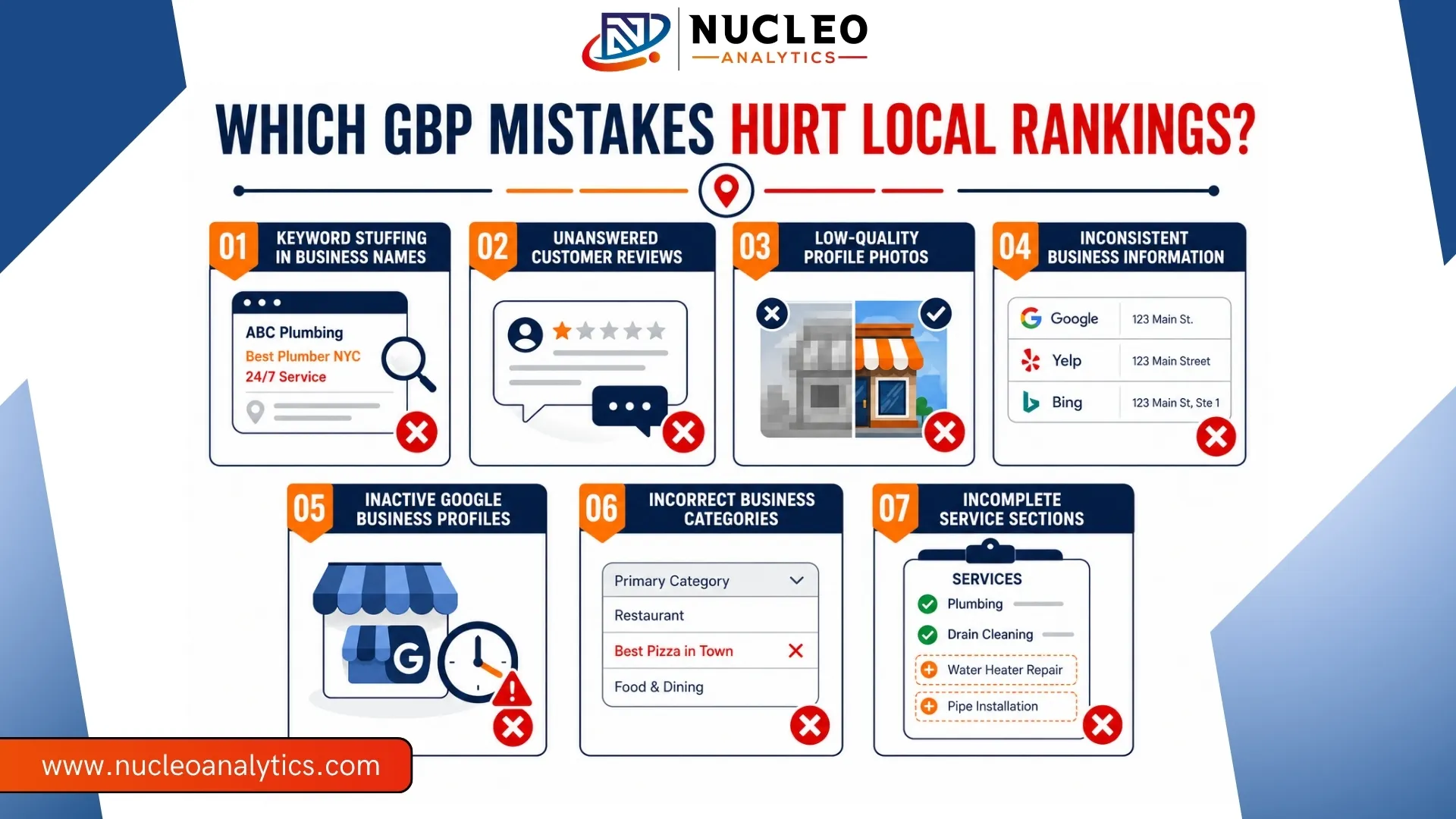
Use the exact legal business name displayed on signage and official documents. Google regularly suspends profiles using extra keywords inside business names, creating long-term ranking risks. A clean and accurate business name improves trust signals and keeps the profile aligned across local directories and websites. Keyword stuffing in business names remains one of the fastest ways to lose ranking stability.
Primary category selection strongly influences search visibility. Choosing the most specific category available outperforms broad options. Keywords and secondary categories also help, but irrelevant additions dilute profile relevance. So, limiting selection to three to six highly connected categories produces the strongest results.
NAP consistency — name and address with phone number must remain identical across websites and directories. Google compares this information across platforms constantly, and even small formatting differences reduce trust signals and local authority. Use the same abbreviations with punctuation and address structure everywhere without exception.