







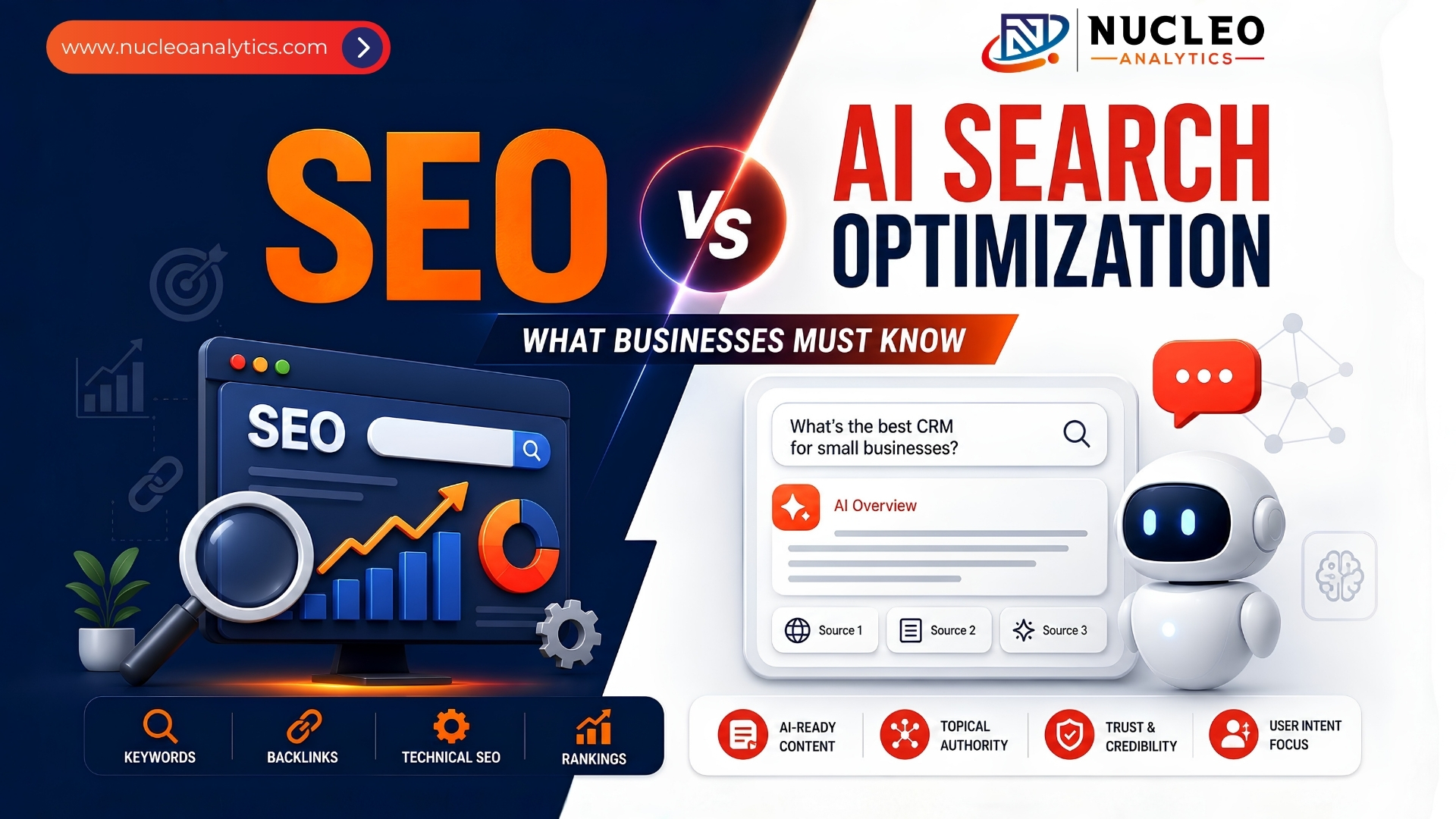
SEO vs AI Search Optimization: What Businesses Must Know
Search has changed fast during the last two years. People still use Google every day. At the same time, millions now ask AI tools for direct answers before clicking websites. That shift changes how businesses earn traffic, trust, and sales online.
Here is the simple answer to SEO vs AI search. Businesses still need strong SEO because search engines still drive massive traffic. At the same time, brands also need AI visibility because AI tools now summarize websites instead of sending users through ten blue links. Businesses that adapt early gain more reach, stronger trust, and better long-term growth.
At Nucleo Analytics, we see this shift every day across modern digital campaigns. Search no longer works in one straight line. Customers jump between Google, ChatGPT, Gemini, Bing AI, voice assistants, YouTube, Reddit, and social platforms before making decisions. A business that only focuses on old SEO methods loses attention fast.
What Changed in Search During the AI Era?
Search engines once worked like directories. Users typed questions. Google ranked pages. Users clicked links and explored websites.
Now, AI tools answer questions directly on the screen. That one change affects almost every business online.
People ask long questions instead of short keywords. AI tools scan many sources quickly. After that, AI creates one summarized answer. Users often stop searching after reading that summary.
This creates a major shift between traditional SEO and modern AI visibility.
| Traditional Search | AI Search Experience |
| Users click multiple links | Users receive direct summaries |
| Ranking pages matter most | Trusted sources matter most |
| Keyword placement drives visibility | Context and clarity drive visibility |
| Search intent stays broad | Questions stay conversational |
| Traffic comes from rankings | Visibility comes from mentions |
Many businesses still chase rankings alone. That approach feels incomplete now. Strong visibility needs more than rankings.
Businesses need trust signals, topical authority, expert content, and structured answers.
That is where AI search optimization vs traditional SEO becomes important for modern brands.
Why Traditional SEO Still Matters Today?
Some marketers speak about SEO as if it had disappeared overnight. That idea creates confusion for business owners.
SEO still matters deeply.
Google still processes billions of searches daily. Local businesses still depend on map visibility. E-commerce brands still rely on product searches. Service companies still earn leads from search traffic.
Strong SEO creates the foundation for every other digital strategy.
A good SEO structure helps businesses:
- Build long-term visibility
- Earn qualified organic traffic
- Improve website trust
- Reduce dependence on paid ads
- Increase local discoverability
- Create stable lead generation
- Support AI content discovery
Search engines still crawl websites using technical signals. Fast pages still matter. Strong headings still matter. Clear content still matters. Internal linking still matters.
However, AI systems now evaluate content differently. AI looks for clarity, expertise, context, citations, readability, and direct answers. Pages that ramble usually lose visibility.
At Nucleo Analytics, we focus on search systems that support both human readers and AI systems. That balance creates stronger long-term visibility.
How AI Search Optimization Works Today?
AI search optimization focuses on helping AI systems understand, trust, and reference your content. That process looks different from old SEO tactics.
Instead of chasing exact keyword repetition, businesses now need content that answers real questions clearly. AI systems prefer useful explanations instead of robotic writing.
Modern AI systems also examine:
- Topic depth
- Brand authority
- Writing clarity
- User engagement
- Structured formatting
- Source credibility
- Freshness of information
That shift explains why many thin blogs lost visibility recently. Businesses now need content built for understanding instead of pure ranking manipulation.
This is where SEO vs AI search optimization becomes a real business conversation instead of another marketing trend.
Future Proof Your Business With Smarter Search Visibility
What Businesses Must Change Right Now?
Many websites still publish content using outdated SEO formulas. That creates weak engagement and low trust.
Businesses need smarter publishing systems now.
Build Content Around Questions
AI tools respond best to question-based content.
Good examples include:
- What causes local ranking drops?
- How does AI search work?
- Why does structured content matter?
- Which SEO strategy works best today?
Question-focused content improves visibility across both search engines and AI tools.
Improve Content Readability
Complex writing creates friction. AI systems prefer clear and direct explanations. Human readers prefer the same thing.
Good content should:
- Use simple language
- Avoid filler words
- Keep paragraphs short
- Answer questions early
- Use logical headers
- Add examples naturally
Focus on Topical Authority
Publishing random blogs weakens authority signals. Businesses should build clusters around core services and topics.
For example, a digital agency discussing AI search should also cover:
- AI content visibility
- technical SEO
- structured data
- voice search
- content quality
- search intent
- AI summaries
That creates stronger contextual trust.
Why User Intent Matters More Than Keywords?
Old SEO campaigns often chased search volume alone. That strategy creates weak traffic today.
Modern search systems care more about user intent. Someone searching “best SEO agency” wants different information compared to someone searching “why traffic dropped after AI search updates.”
Intent shapes visibility now. Businesses should create content for:
| Search Intent | Content Type |
| Learning | Guides and explainers |
| Comparing | Comparison pages |
| Buying | Service pages |
| Trust building | Case studies |
| Local discovery | Local SEO pages |
| Quick answers | FAQ sections |
This approach improves visibility across search engines and AI systems together.
That is one reason modern AI digital marketing strategies focus heavily on audience behavior instead of keyword stuffing.
What AI Systems Look for Inside Content?
Many business owners ask why AI tools mention some websites often while ignoring others. The answer usually comes down to content quality and structure.
AI systems prefer content that feels:
- Clear
- Direct
- Helpful
- Organized
- Human
- Credible
Content should answer the main question early. Long introductions reduce engagement.
Good AI-friendly content also uses:
- Clear headings
- Tables
- Bullet points
- Short paragraphs
- Natural language
- Strong context
AI systems also value consistency. Brands that publish useful information regularly build stronger authority signals over time.
5 AI-Friendly Content Types Businesses Should Publish
Businesses need content formats that work across modern search systems.
These are the 5 AI-friendly content types creating strong visibility today.
1. FAQ Pages
FAQ sections match conversational search behavior naturally. AI systems often pull direct answers from well-written FAQs.
2. Comparison Guides
Comparison content helps users during decision stages.
Examples include:
- SEO tools comparison
- agency comparison
- platform comparison
- software comparison
3. Step-by-Step Tutorials
Tutorials create strong engagement because users want practical help. These pages also build trust quickly.
4. Industry Explainers
Educational content supports authority building. Businesses that explain trends clearly earn more citations and references.
5. Case Studies
Real examples create credibility. AI systems often value evidence-based content more than vague claims.
How Brand Mentions Influence AI Visibility?
Traditional SEO focused heavily on backlinks. Backlinks still matter today. However, AI systems also examine brand mentions across the web.
Mentions from:
- podcasts
- interviews
- forums
- reviews
- articles
- social media
- directories
All help strengthen authority signals.
A business mentioned consistently across trusted sources gains stronger visibility. That shift changes how businesses approach digital PR and content marketing.
Strong authority now extends beyond website rankings alone.
Why Human Content Still Wins?
AI tools create massive amounts of content daily. Most of it sounds repetitive and generic. Readers notice that instantly.
Businesses need content with personality, experience, examples, and useful insight. Human writing still creates stronger trust.
At Nucleo Analytics, we focus heavily on human clarity because audiences respond better to useful information instead of polished corporate language.
People remember useful advice. People ignore robotic filler. That difference matters more now than ever before.
The Growing Role of Generative Engine Optimization
Search engines no longer act like simple directories. AI systems now generate answers directly.
That shift created a new strategy called generative engine optimization. This approach focuses on improving visibility inside AI-generated responses.
Businesses using this strategy often focus on:
- strong authority signals
- direct answers
- trusted citations
- conversational formatting
- expert insights
- entity recognition
- structured content
Generative visibility may become one of the biggest traffic drivers during the next few years. Businesses that ignore this shift risk losing discoverability slowly over time.
AI Search Optimization vs Traditional SEO: The Real Difference
Many businesses think that AI search optimization replaces SEO completely. That idea misses the bigger picture.
SEO creates discoverability. AI optimization creates reference visibility. Both systems support each other.
| Traditional SEO | AI Search Optimization |
| Focuses on rankings | Focuses on AI references |
| Targets search engines | Targets AI systems |
| Depends heavily on keywords | Depends heavily on context |
| Measures clicks and traffic | Measures mentions and visibility |
| Prioritizes crawlability | Prioritizes understanding |
Businesses need both strategies working together now. Strong technical SEO without useful content creates weak engagement.
Strong content without a technical structure creates indexing problems. Balance matters most.
How Businesses Can Optimize Their Websites for AI Search?
Businesses asking how to optimize their websites for AI search should focus on practical improvements instead of gimmicks.
Start with these areas first.
Improve Website Structure
A clear structure helps both search engines and AI systems.
Important improvements include:
- clean navigation
- proper headings
- internal linking
- fast loading speed
- mobile optimization
Answer Questions Directly
AI systems prefer direct responses. Avoid vague introductions before answering important questions.
Add Real Expertise
Experience creates trust. Use examples, observations, and real insights whenever possible.
Build Strong Topic Clusters
Connected content improves authority signals. A scattered blog weakens topical relevance.
Keep Content Updated
Fresh information improves trust signals. Outdated pages lose visibility gradually.
What Businesses Should Stop Doing Immediately?
Some SEO habits now create more harm than value.
Businesses should avoid:
- keyword stuffing
- AI spam publishing
- duplicate content
- weak guest posts
- meaningless backlinks
- fake authority signals
- generic blog writing
Search systems became smarter. Readers also became smarter. Useful content wins longer attention.
The Future of Search Will Feel More Conversational
Search behavior has already changed dramatically. People now ask complete questions naturally.
Voice search also supports this trend. Instead of typing: “best SEO company.”
Users now ask: “Which SEO strategy works best for small businesses during AI search changes?”
That shift changes the content strategy completely. Businesses need conversational content structures now.
This trend also explains why AI SEO strategies focus heavily on natural language and semantic relevance instead of exact keyword repetition.
Micro Influencers vs AI Influencers: What Businesses Should Know?
Another major shift affects online visibility today. Brands now compare Micro influencers vs AI influencers during digital campaigns.
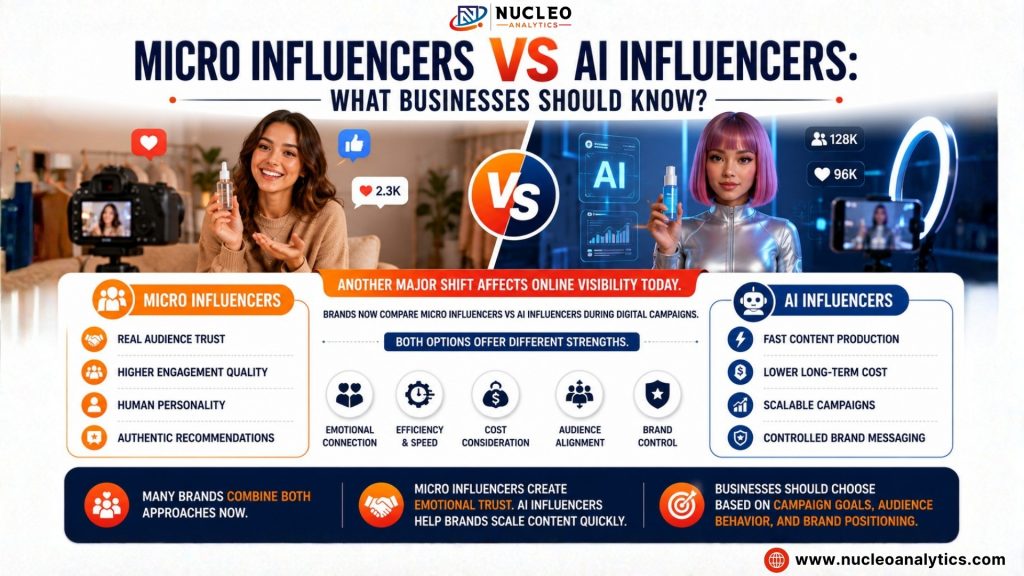
Both options offer different strengths.
| Micro Influencers | AI Influencers |
| Real audience trust | Fast content production |
| Higher engagement quality | Lower long-term cost |
| Human personality | Scalable campaigns |
| Authentic recommendations | Controlled brand messaging |
Many brands combine both approaches now. Micro influencers create emotional trust. AI influencers help brands scale content quickly.
Businesses should choose based on campaign goals, audience behavior, and brand positioning.
Why Trust Signals Matter More Than Ever?
AI systems evaluate trust constantly. Businesses that lack credibility struggle with visibility.
Strong trust signals include:
- expert authorship
- customer reviews
- media mentions
- consistent branding
- clear contact details
- updated information
- secure websites
Trust also improves conversions. Users buy faster from brands that feel reliable. That remains true across both SEO and AI search environments.
How Local Businesses Should Prepare for AI Search?
Local search still drives huge business opportunities.
Restaurants, hotels, agencies, healthcare clinics, and service providers still depend heavily on local discovery.
Businesses should strengthen:
- Google Business Profile
- customer reviews
- local landing pages
- FAQ sections
- location content
- structured business data
At Nucleo Analytics, we help businesses combine local SEO with modern AI visibility strategies because local discovery still shapes buying decisions heavily.
AI systems also pull information from trusted local signals frequently.
The Smartest Long-Term Strategy for Businesses
Businesses chasing shortcuts usually lose momentum quickly. Long-term visibility comes from consistency.
The smartest strategy combines:
- technical SEO
- human content
- AI visibility
- authority building
- audience trust
- structured publishing
Search will continue evolving. That part feels certain. Businesses that stay flexible will continue growing while outdated strategies fade slowly.
Conclusion
The conversation around SEO vs AI search creates confusion for many businesses right now. Some marketers push fear. Others promise instant AI visibility overnight. Real growth works differently.
SEO still matters deeply because search engines still drive discovery, traffic, and leads daily. AI optimization also matters because users now rely on AI summaries before visiting websites. Businesses need both strategies working together instead of choosing one side.
At Nucleo Analytics, we believe modern visibility depends on useful content, clear structure, strong authority, and real audience trust. Businesses that focus on helping users clearly will stay visible across both traditional search engines and modern AI systems for years ahead.
Build Stronger Visibility Across SEO And AI Search
Frequently Asked Questions
What Makes SEO vs AI Search Important for Businesses Today?
How Does AI Search Optimization Help Website Visibility?
Why Do Businesses Still Need Traditional SEO Strategies?
Which Content Formats Work Best for AI Visibility Today?
How Can Businesses Improve Authority During AI Search Growth?
Related Posts
What Can Competitor Analysis Reveal About Your SEO Performance?
When you look only at your own data, growth can feel unclear. Traffic changes may seem random and confusing. Rankings may move without obvious reasons. […]
How to Improve Brand Visibility in AI-Generated Search Results?
These days, being listed on page one of results is not enough. The search results world is changing with the realm of artificial intelligence. What […]
User-Generated Content (UGC): Best Strategies and Inspiring Brand Examples
Today, people trust other people more than ads. A photo from a real customer or a short review often convinces faster than a polished commercial. […]
Is Link Stability a Signal for Google Rankings?
Backlinks have been the foundation of SEO. The sites that receive links from high-authority sources will occupy more favorable positions in the search results. However, […]
How Long Does SEO Take to Show Results?
A lot of businesses start SEO expecting magic in 30 days. That’s usually where frustration begins. Someone hires an SEO agency, publishes a few blogs, […]
How SEO Enhances Your Digital Marketing Strategy?
A strong digital marketing plan is crucial for every company in today’s fast-paced digital world to succeed in the competitive world. Every effective digital marketing […]