Search is changing fast. People now get answers before clicking through to websites, and AI tools surface information directly in search results. Users expect instant responses, and fewer people visit pages just to find basic information.
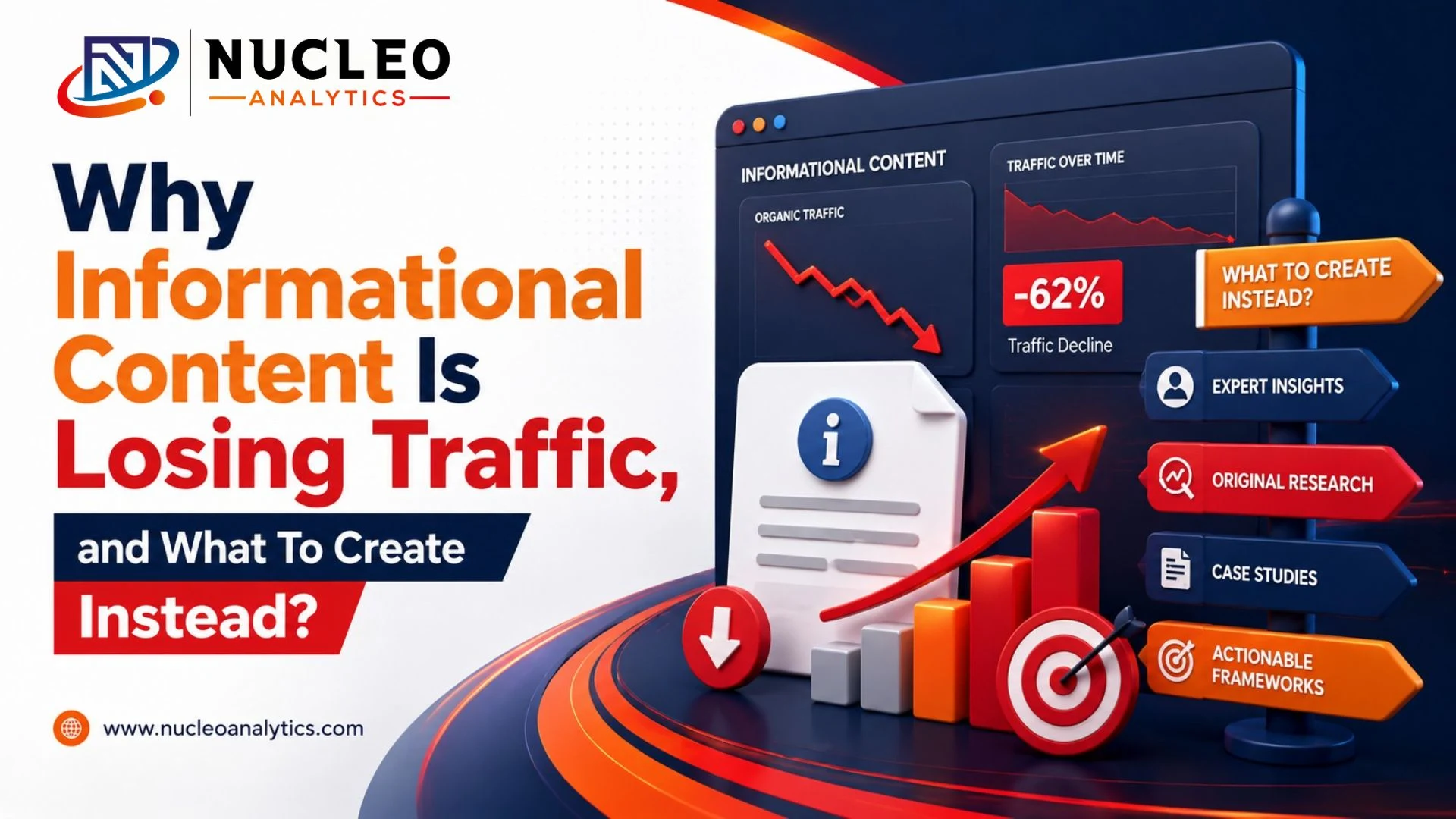
At Nucleo Analytics, we see the shift clearly. Informational content SEO used to pull steady clicks, easy wins, and quick wins for brands. That game is changing fast. Search pages now answer more questions before people click. Users get faster answers. AI tools lift answers straight into the search path. So traffic drops, even when rankings look fine. That sounds harsh, yet it gives a clear lesson.
Why Is Informational Content Losing Traffic?
Search has changed, and user habits have changed too. People ask shorter questions. Search engines give faster answers. AI panels, summaries, and rich results reduce clicks. Many brands see strong impressions and weak visits. That gap feels confusing at first. It is a real sign of content traffic decline, and the cause is often simple.
The old blog model leaned on basic questions. “What is this?” “How does this work?” “Why does it matter?” Those topics still matter, yet the click path is weaker now. Search results do more of the first job. A page can rank and still miss the visit. That is the new tension in AI search traffic.
At Nucleo Analytics, we see three common reasons behind the drop. First, the query gets answered on the results page. Second, many pages sound alike, so search sees less value in each one. Third, the content gives facts, yet gives no next step. Readers need more than a surface answer. Search does too.
How To Understand Why Informational Content Is Losing Traffic
You do not need guesswork. You need a clear read on the pattern. Start with the search console data. Find pages with high impressions and low clicks. Then check the query type. Many of those searches are simple definition terms, broad “how to” searches, or quick comparison searches. That matters.
Next, look at the page itself. Ask a blunt question. Does the page give a fast answer, or does it only explain? Does it show lived experience, examples, or a unique process? Or does it recycle the same lines found everywhere else? Search engines reward clearer value. Readers do too.
Use this simple check from Nucleo Analytics:
- Find the pages with rising impressions and falling clicks.
- Review the query intent behind each page.
- Spot answers search now shows without clicks.
- Compare your page with the top results.
- Ask what value only your team can add.
This process reveals the real issue. The page is often useful, yet too easy to replace. That is where content strategy must change. We stop asking, “What can we explain?” We start asking, “What can we prove, show, or help people do next?”
What Changed In Search And User Behavior?
Search users want speed, but also confidence. They want direct answers, yet they also want trust. AI tools and search summaries now handle quick facts well. That means plain informational articles face more pressure. A single paragraph can satisfy the first question. That leaves fewer reasons to click.
Users also trust brands that sound real. They notice useful examples. They notice fresh data. They notice original views. A page with generic advice feels weak now. A page with strong proof feels alive. Search systems notice that shift as well.
At Nucleo Analytics, we treat this as a content quality reset. The web is full of repeated facts. That means the new edge comes from depth, clarity, and usefulness. Surface content fades faster. Strong content keeps earning attention.
What Should Brands Create Instead?
The answer is not “stop publishing.” The answer is “publish with more purpose.” Brands need content that matches deeper intent. That means content that solves a bigger job, not only a smaller question. It means content that leads readers into action.
Here is the better mix:
- Original guides that show a real process
- Comparison pages that help buyers decide
- Case studies that prove results
- Opinion-led articles that show a clear point of view
- Tool pages and templates that people can use right away
- Product-led education that ties learning to action
This kind of content works better because it feels harder to copy. It gives searchers a reason to stay. It gives search engines more signals, too. Most of all, it supports business goals, not only traffic goals.
We also recommend stronger internal paths. Link readers from educational pages into deeper service pages, product pages, and proof pages. Add a next step on every page. A reader should always know where to go next. That simple structure lifts the full site.
How Can Brands Turn Informational Content Into Conversion Content?
Many informational pages stop after giving an answer. That approach leaves readers without a clear direction. A stronger page should help visitors take the next step with confidence. Add real examples, practical checklists, comparison tables, customer stories, and simple calls to action. Show how your solution fits into the reader's journey instead of ending with basic information.
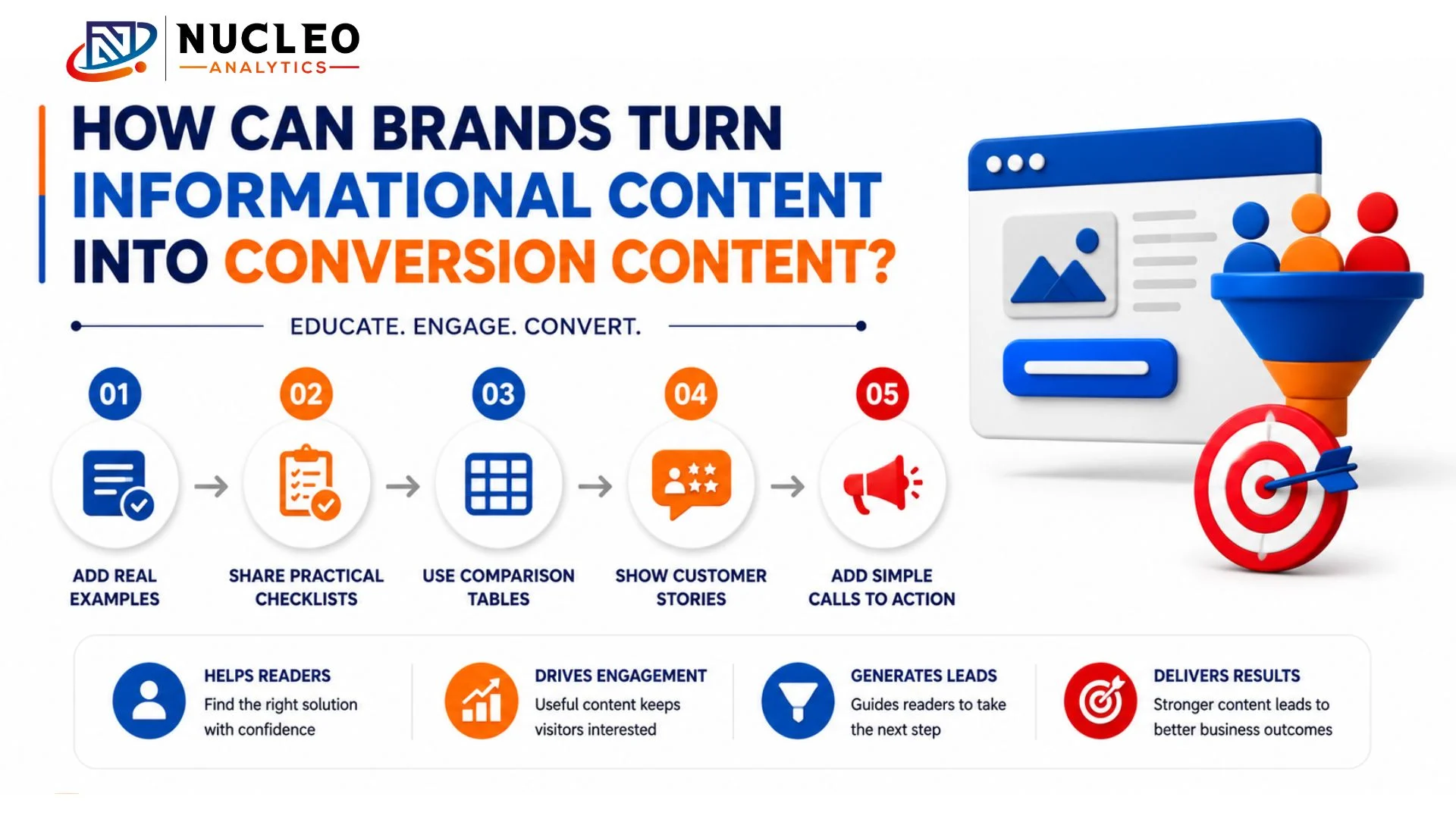
At Nucleo Analytics, we build every educational page with a business goal in mind. That keeps the content useful for readers while supporting qualified leads, stronger engagement, and better long-term results from every published article.
Why Does Brand Authority Matter More Than Content Volume?
Publishing more articles no longer guarantees better results. Search engines now reward trusted brands that consistently provide accurate, useful, and original information. A smaller library of high-quality content often performs better than hundreds of similar articles. Focus on expertise, real experience, and content that reflects your brand's unique knowledge. Keep every page updated and connect related topics across the website.
At Nucleo Analytics, we help businesses build authority instead of chasing content volume. That approach creates stronger trust with readers and helps content remain valuable as search continues to evolve.
Build Content That Earns Trust Beyond AI Search Results Today
How To Build A Stronger Content Strategy Now
A good content strategy starts with intent, not volume. Do less random publishing. Do more intentional publishing. That sounds simple, and it is. The hard part is saying no to weak topics.
At Nucleo Analytics, we use a three-layer model. First, we keep a few informational pages that still earn trust. Second, we build comparison and consideration pages around those topics. Third, we add proof pages, examples, and conversion paths. That mix gives each article a job.
Here is a clear way to think about it:
Layer 1: Learn
Answer the core question in a clean, useful way.
Layer 2: Compare
Show options, tradeoffs, and best use cases.
Layer 3: Decide
Give proof, next steps, and a clear action.
This model helps a brand stay useful even when search changes again. It also creates more entry points for users at different stages. Some visitors want facts. Some want trust. Some want action. Good content serves all three.
How To Respond To AI Impact On Content Marketing
The best response is to publish content that AI cannot fully replace. That means original insight, first-hand experience, brand point of view, and clear proof. AI can summarize common facts. It cannot live your process. It cannot share your client's work. It cannot create a unique method.
At Nucleo Analytics, we tell teams to write like experts, not like encyclopedias. Show the work. Explain the tradeoffs. Share the “why” behind the advice. Add examples from real projects. Make the reader feel guided, not lectured. That is how content earns more trust.
This also changes how we measure success. We do not judge every post by raw traffic alone. We check assisted conversions, branded searches, email signups, demo interest, and repeat visits. A page may lose some clicks and still help the business grow. That view matters in a changing search world.
How To Prepare For The Future Of Informational SEO
The future belongs to brands with a stronger story and sharper utility. Pages must answer fast, yet also go deeper. They must serve search and serve the human reader. That balance matters more every month.
At Nucleo Analytics, we think future-ready pages will include three things. First, clear answers in the opening lines. Second, the original proof in the middle. Third, a useful next move near the end. That structure works because it respects time and earns trust.
Also, build content around brand signals. Add named methods. Add expert quotes. Add use cases. Add data from your own work. Search systems love patterns, and readers love certainty. When your site stands for something, your content starts to compound.
Use this future-ready checklist:
- Keep only high-value informational topics.
- Build deeper pages around each topic.
- Add proof, examples, and next steps.
- Connect learning pages with money pages.
- Refresh pages before traffic falls harder.
This is the real shift. The goal is no longer “more blogs.” The goal is better journeys. That means each page should support trust, intent, and action.
What Metrics Should You Watch Now?
Traffic still matters, yet it cannot stand alone. Watch impressions, clicks, time on page, return visits, scroll depth, and conversion assists. Those signals tell a better story. A page that helps a buyer may deserve a place even if traffic feels smaller.
At Nucleo Analytics, we also watch brand searches. When more people search for your name after reading, that means the content did its job. That is a healthier sign than shallow traffic spikes. It shows memory, trust, and interest.
Watch the pages that keep users engaged. Watch the pages that drive visits to service pages. Watch the pages that support sales. Those are the pages that deserve more effort.
Win More Qualified Traffic With Content Built For Trust First
Conclusion
Informational pages still matter, yet the old playbook is fading. Search has changed. Reader habits have changed. AI has changed the click path. So the job is different now. We need content that answers, proves, and leads. That is how informational content SEO stays useful in a harder search world.
At Nucleo Analytics, we believe the future belongs to brands that teach with purpose. Build fewer weak pages. Build more useful pages. Add proof. Add action. Add a real point of view. That is how content keeps earning trust, even when traffic shifts.