The digital marketplace has experienced an unprecedented shift in consumer discovery habits. Traditional directories that once pointed users toward standard web lists are rapidly being bypassed in favor of direct, computational processing networks.
According to global research from Gartner, traditional search engine volume is projected to drop by 25% as users increasingly migrate toward generative AI platforms. This transition changes the fundamental mechanics of brand visibility.
To survive this algorithmic evolution, forward-thinking enterprises are re-engineering their public web content. Modern digital survival requires moving past outdated ranking patterns and focusing entirely on immediate, structured synthesis.
This tactical evolution is known as answer engine optimization, a discipline designed to align corporate databases with the precise retrieval needs of automated language models.
What is Answer Engine Optimization
To understand the modern landscape, you must ask a foundational question about how systems process information today. This process represents a departure from traditional indexing mechanics.
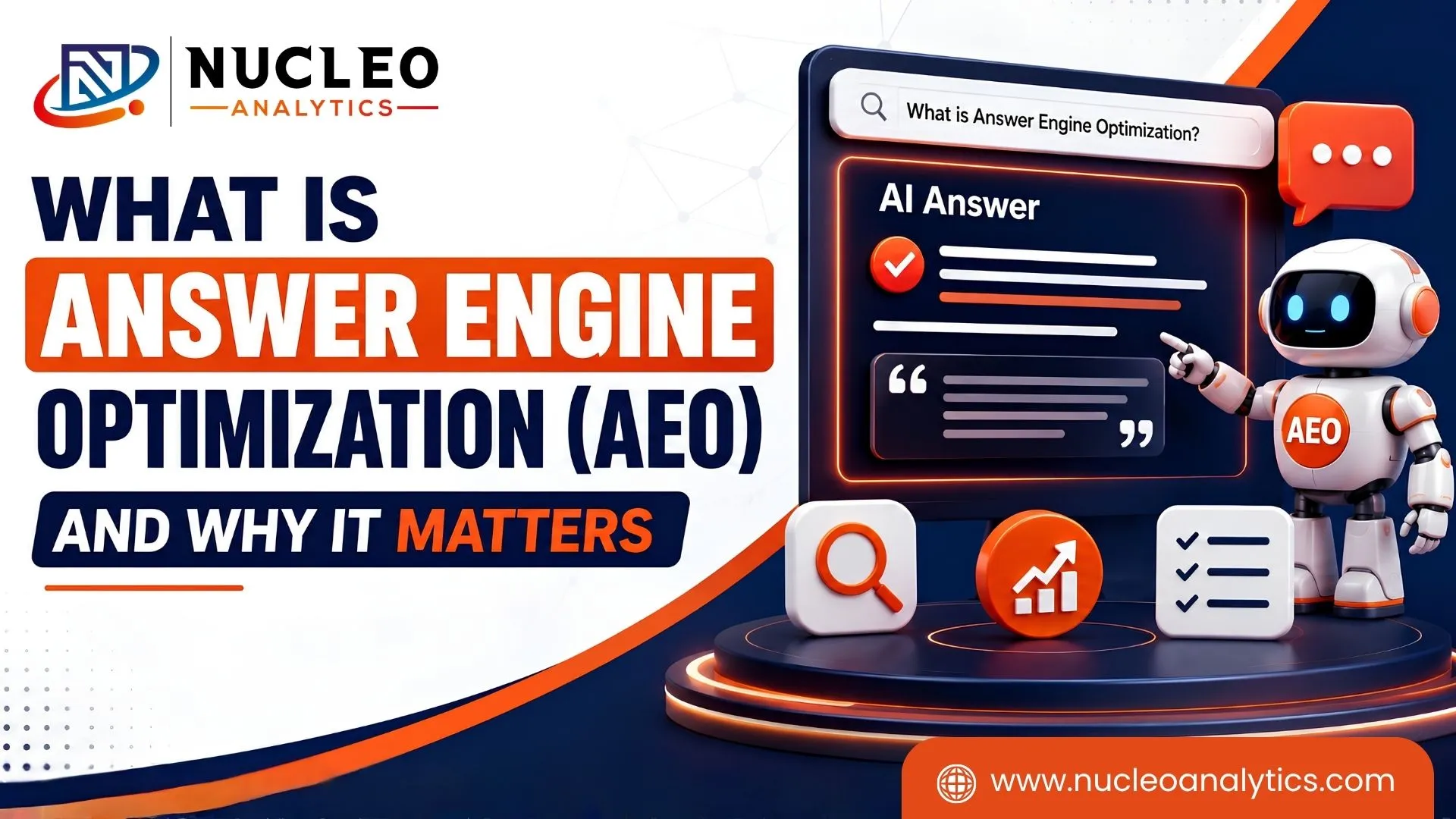
In essence, the art of answer engine optimization entails the exact science of organizing content online to enable easy extraction by AI systems.
Unlike conventional search engine optimization, which involves efforts to get a website ranked at the top of a results page, answer engine optimization ensures that the brand is recognized as the source of the information in the AI-generated text summary.
ChatGPT, Perplexity, and Google Gemini are not concerned about the keyword density or the link-building activities in the creation of their real-time answers.
These platforms utilize advanced retrieval networks to scan the web, transform text into multi-dimensional mathematical vector embeddings, and select the absolute clearest answer layout.
- Traditional engines use inverted indexes to point toward external documents.
- Generative engines rely on direct semantic reasoning to synthesize direct answers.
- Discovery shifts entirely from a list of blue links to a single paragraph.
- Citation authority replaces traditional click-through metrics as the main goal.
Understanding this technical framework allows your content creation team to stop writing vague narrative fluff. You can begin engineering information specifically for deep machine consumption.
Answer Engine Optimization for Businesses
The commercial implications of this automated landscape are deep and irreversible for modern corporations. Traditional organic acquisition channels are experiencing systemic, structural declines across every major vertical market.
Data reveals that the average zero-click search rate has climbed to 68% for modern informational queries. This means fewer than one-third of searches send a click to any web property.
When artificial intelligence summaries occupy the top viewport of a screen, the likelihood of a consumer clicking an organic link drops even further to approximately 8%.
Implementing comprehensive Answer Engine Optimization for businesses protects your commercial pipeline from becoming completely invisible during early buyer research phases.
- B2B software buyers increasingly start vendor research inside AI chatbots.
- Hidden technical errors can block language models from reading your catalogs.
- Competitors with superior data structures win primary recommendations automatically.
- Brand authority relies on your presence within conversational synthesis blocks.
If your corporate knowledge assets are hidden behind complex interaction layers, automated crawlers will simply choose alternative resources to answer the consumer's request.
Deploying a structured framework ensures that when a qualified buyer asks a conversational system for vendor recommendations, your enterprise is displayed as a verified option.
How to Execute AEO Marketing Effectively
Integrating generative visibility into your broader commercial framework requires a complete overhaul of your promotional workflows. Legacy promotional campaigns are no longer sufficient to secure modern digital authority.
Executing successful AEO marketing requires treating your public content assets as an open data feed for machine learning models. Every article must provide unambiguous, objective reality.
This structural transformation allows your business to capture high-intent buyers exactly when they are formulating complex, multi-layered problem statements.
- Replace promotional jargon with verifiable industry performance metrics.
- Publish objective product comparison tables across your domain.
- Ensure all technical specifications are rendered in clean HTML formatting.
- Build external credibility signals across validated public knowledge graphs.
When you align your AEO marketing with machine preferences, you increase your conversational footprint. This ensures your products are highlighted during the automated discovery phase.
How to Build an Answer Engine Optimization Strategy
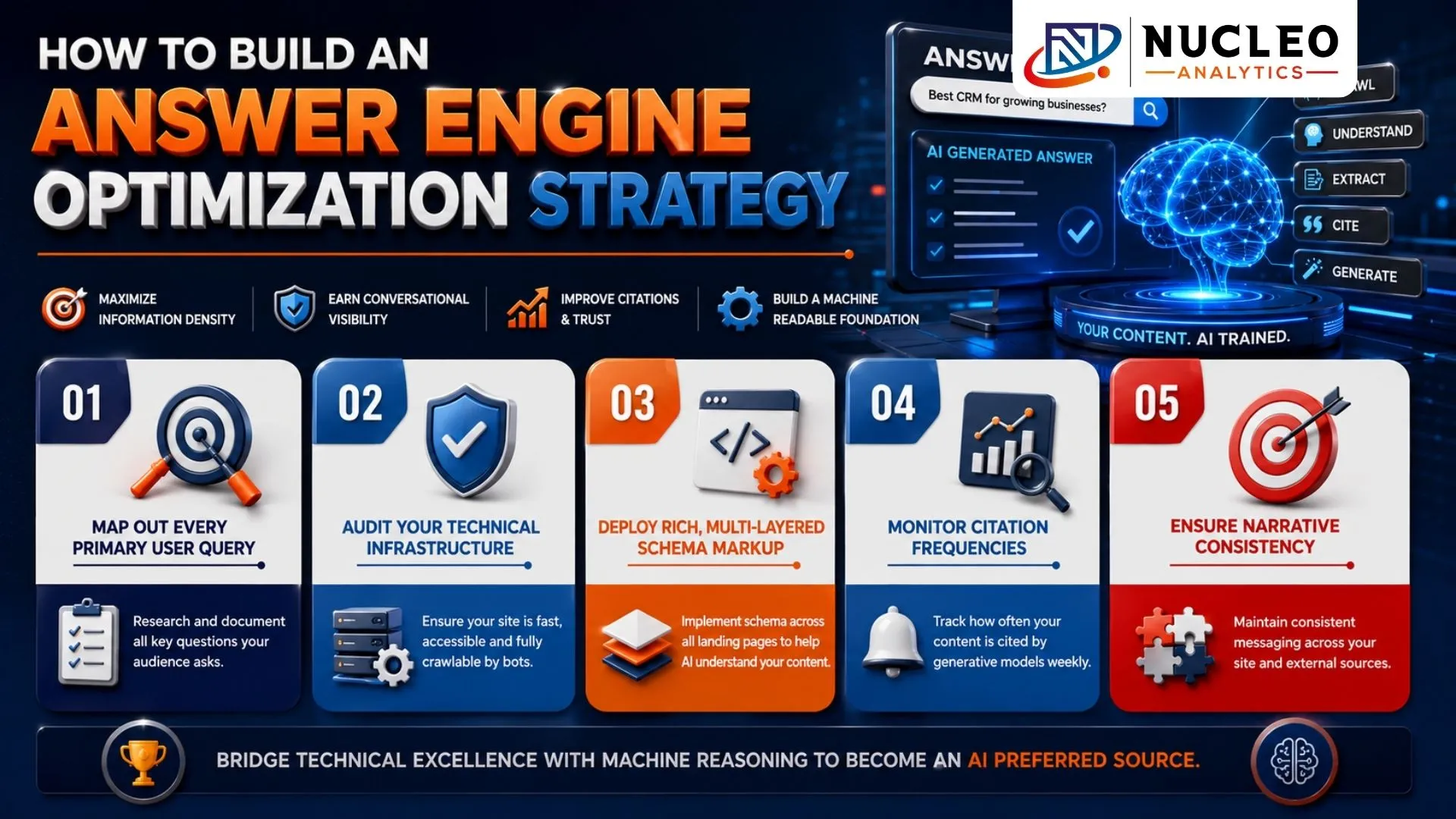
Creating an enduring digital footprint requires a systematic approach to informational design. You cannot achieve conversational visibility through sporadic blog publishing or uncoordinated content creation.
Your corporate Answer Engine Optimization strategy must focus entirely on maximizing the information density of your text. Every paragraph must serve a distinct semantic purpose.
This framework requires continuous optimization of your site's codebase, structural data feeds, and external narrative consistency.
- Map out every primary user query within your industry vertical.
- Audit your technical infrastructure to ensure unhindered bot access.
- Deploy rich, multi-layered schema markup across every active landing page.
- Monitor your citation frequencies across multiple generative models weekly.
A mature Answer Engine Optimization strategy bridges the gap between old-school technical structure and modern machine reasoning. It transforms your corporate website into a premium training asset for crawlers.
Are AI Chatbots Ignoring Your Brand?
How to Optimize for Answer Engines
Transitioning from theoretical concepts to practical execution requires strict adherence to technical content engineering. To succeed, your development team must deploy precise structural patterns.
Learning how to optimize for answer engines begins with restructuring your page layouts using the inverted pyramid model. Your conclusion must be stated instantly.
Place an explicit, forty-word answer capsule immediately below your primary section headers to ensure automated scrapers can capture your conclusions without analyzing deep text blocks.
- Utilize strict heading hierarchies ranging from H1 down to H4.
- Keep your subject-verb-object patterns simple and highly direct.
- Front-load all essential industry definitions within the first sentences.
- Use clean Markdown tables to compare complex technological data points.
Recent benchmarks show that content formatted specifically for large language model extraction is three times more likely to be cited than unstructured equivalents.
When you master how to optimize for answer engines, you eliminate ambiguity from your text. This mechanical clarity turns your pages into the preferred choice for synthesis models.
Aligning Corporate Assets with Modern Retrieval Systems
The technical architecture of modern discovery tools demands a deep focus on semantic context. AI scrapers use advanced entity recognition models to identify the relationships between brands and services.
If your website uses vague corporate terminology, automated systems cannot categorize your business accurately. You must use precise proper nouns and definitive industry definitions.
- Maintain identical corporate descriptions across all external public profiles.
- Link your content assets directly to authoritative public data nodes.
- Publish primary research reports that contain completely unique data sets.
- Embed detailed FAQ components within every core transactional service landing page.
This disciplined approach ensures that retrieval algorithms can calculate a high correlation between your enterprise and specific commercial consumer needs.
Strategic Operational Updates with Nucleo Analytics
Navigating this highly complex shift in digital visibility requires absolute technical precision. At Nucleo Analytics, we specialize in transforming traditional web properties into advanced, machine-readable information architectures.
Our engineering teams build comprehensive data frameworks that align with the latest retrieval patterns. At Nucleo Analytics, we focus on eliminating code errors, optimizing entity density, and deploying precise schema integrations.
We help your enterprise build clear, extractable content assets that conversational tools trust. Partnering with Nucleo Analytics guarantees your business stays visible across all major generative discovery channels.
Own the Answers in the Generative Era
Conclusion
The evolution of digital discovery has forced an inevitable comparison between past methodologies and modern requirements. Understanding the operational balance of AEO vs SEO is essential for long-term market dominance.
While traditional technical optimization ensures your domain remains crawlable, modern answer engine optimization determines whether your brand is actually cited within conversational answers.
The businesses that succeed will not choose between these frameworks. They will use stable technical foundations to fuel advanced, extractable data architectures across the entire web.
By prioritizing clear, fact-dense content structures today, your organization ensures it remains the definitive source of truth in an automated world.