
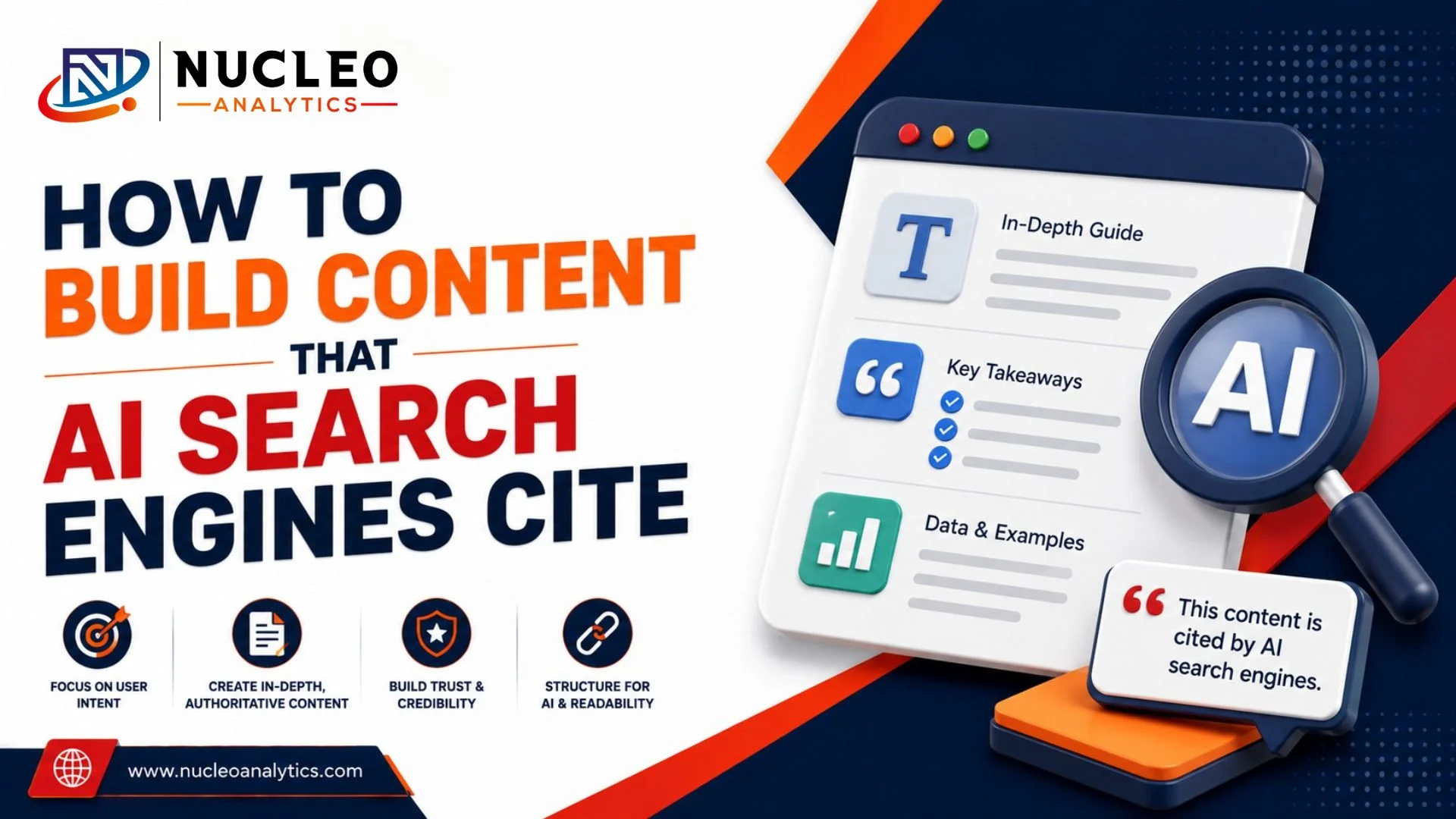
Generative search engines and conversational platforms have fundamentally reshaped how information is discovered across the digital ecosystem. Millions of users now rely on automated answer engines to synthesize complex topics and deliver direct recommendations.
To maintain organic visibility in this new paradigm, digital publishers must focus on creating high-density AI searchable content. Producing content that language models easily parse, verify, and quote ensures your brand stays visible during zero-click searches.
A study across 10,000 conversational prompts revealed that content containing clear data and direct quotes achieved a 35% higher citation rate in generative responses. This proves that factual density directly influences conversational selection algorithms.
Web data shows that pages utilizing structured schema markup and forty-word answer blocks experience a 42% increase in extraction probability by retrieval-augmented engines. Investing in AI searchable content is therefore the primary mechanism for long-term category leadership.
How to Get Cited by ChatGPT
OpenAI's conversational models analyze vast repositories of web data and real-time search indexes to construct natural language answers. Earning link citations within these generated responses requires publishing information that is structured for immediate machine extraction.
When evaluating how to get cited by ChatGPT, editorial teams must shift away from long-winded introductions and emotional storytelling. Language models favor concise, fact-dense statements that answer user prompts without extra filler words or marketing hype.
Structuring your assets to serve as ideal content for AI search requires placing direct answer summaries immediately beneath section headings. Every primary concept should begin with a clear two-sentence definition that functions out of context.
Large language models break web pages into discrete text segments during real-time web retrieval. Formatting your key takeaways into clear bulleted lists allows automated systems to quote your operational insights accurately.
- Lead every main topic with a standalone summary containing thirty to forty words.
- Format step-by-step instructions using clear numerical sequences and clean semantic tags.
- Incorporate precise technical terms, dates, and named entities to maximize informational value.
- Audit your site architecture to ensure search crawlers can parse body text without executing complex scripts.
Consistently publishing AI searchable content ensures that conversational bots recognize your pages as reliable primary sources. You position your enterprise as an indispensable reference point across modern chat interfaces.
This structured approach streamlines how automated scrapers evaluate your published insights. By reducing processing friction, you make your content the easiest source for language models to extract and quote.
How to Get Cited in AI Search
Generative answer engines rely heavily on Retrieval-Augmented Generation to fetch live web data when generating user responses. Understanding this real-time retrieval process is essential for brands trying to secure persistent visibility.
When learning how to get cited in AI search, publishers must ensure their web infrastructure permits rapid server rendering. If automated scrapers experience loading timeouts, your page content is immediately skipped during the synthesis process.
To successfully optimize content for AI, you must align your editorial strategy with real-world conversational user prompts. Users ask detailed, multi-part questions rather than typing short, fragmented keywords into search bars.
Addressing these nuanced user prompts requires developing deep, topic-cluster content hubs. Covering a core industry subject from every operational angle demonstrates broad topical authority that generative algorithms reward.
- Build comprehensive topic clusters containing a central pillar page and interconnected supporting articles.
- Map content outlines directly to real-world user questions identified in search query reports.
- Update existing informational resources quarterly to maintain factual accuracy and fresh publication dates.
- Verify that server response times remain under two seconds to support real-time data retrieval.
Executing these publishing standards strengthens your overall content for AI search architecture. Search engines favor domains that provide detailed, logically grouped insights backed by reliable technical infrastructure.
Building deep topical coverage ensures that language models find complete answers on your site. As automated systems synthesize web consensus, your domain emerges as an essential source of truth.
How to Implement Content Optimization for AI Engines
Effective content optimization for AI engines demands a structural overhaul of how information is formatted on the page. Language models analyze text using semantic parsing, seeking explicit relationships between concepts and entities.
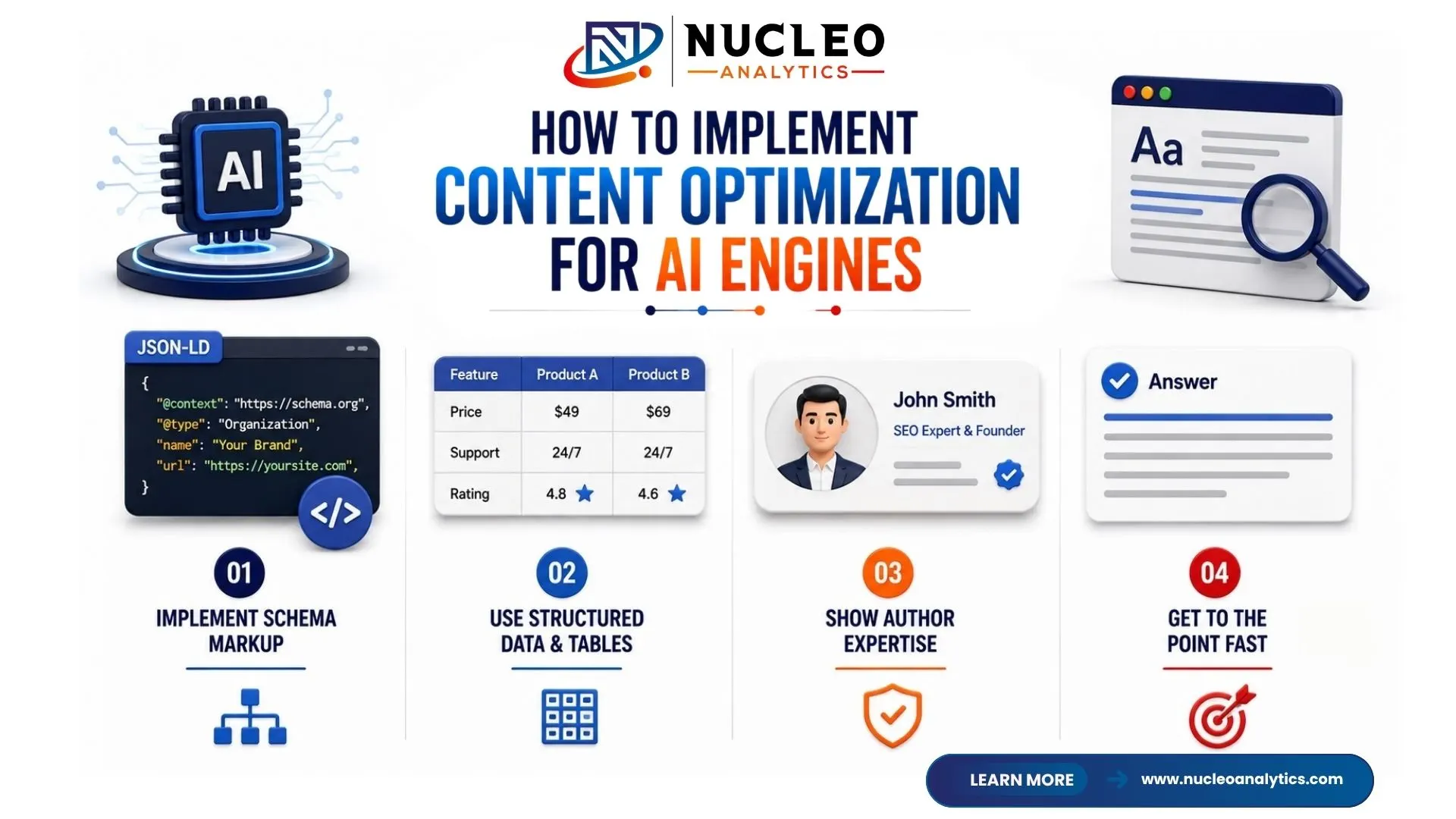
To optimize content for AI, editorial teams should deploy explicit JSON-LD schema markup across all published URLs. Schema code translates written prose into structured machine data, leaving no room for algorithmic misinterpretation.
Structuring your pages into modular content blocks allows conversational systems to pull specific sections to answer targeted user prompts. Each section should operate as a complete, standalone source of information.
Publishing high-density AI searchable content means replacing vague assertions with precise, verifiable facts. Language models prioritize objective data over speculative commentary when constructing summaries for users.
- Implement nested Organization, Article, HowTo, and FAQPage schema markups across your site.
- Organize comparative data into clean semantic HTML tables with descriptive column headers.
- Include verifiable author credentials and professional biographies to establish clear subject expertise.
- Eliminate redundant intro paragraphs and get straight to the primary answer within the first hundred words.
Systematic optimization transforms standard landing pages into high-value knowledge bases. Your web properties become prime candidates for direct quotes, link citations, and persistent on-screen placement.
By aligning page layout with machine extraction patterns, you protect your digital assets against evolving algorithm updates. Modern content architecture ensures long-term visibility across all major generative platforms.
Building Structural Clarity and Entity Trust for RAG Engines
Retrieval-Augmented Generation engines rely heavily on established trust signals to select which websites to quote. A beautifully formatted page will fail to earn citations if automated engines cannot verify brand legitimacy.
Algorithmic systems evaluate authority by measuring cross-web consensus around your brand entity. When independent trade publications, directories, and news outlets mention your business, search models register your brand as a category authority.
Establishing strong entity relationships requires maintaining absolute consistency across your entire digital footprint. Your company name, executive team, address, and core services must be defined uniformly across all public channels.
Publishing original research, proprietary survey data, and detailed case studies creates citable reference points that other websites cite. These third-party citations act as powerful trust signals for generative answer platforms.
- Align corporate descriptions across public business registries, social channels, and media outlets.
- Secure unlinked brand mentions and official citations on authoritative industry websites and news portals.
- Feature verified customer reviews and documented case studies on core product and service pages.
- Link author profiles to recognized external publications and professional social networks.
Building verifiable entity authority ensures that language models choose your site when synthesizing complex industry topics. High trust scores elevate your content above competing sources in real-time retrieval cycles.
When automated engines detect consistent positive mentions across independent platforms, their confidence in your data increases. This algorithmic trust converts directly into reliable citation placement.
High-Density Formatting and Answer Capsules
To maximize the extraction probability of your published text, editorial teams should master the art of writing concise answer capsules. An answer capsule is a standalone text block designed to answer a specific prompt directly.
Placing these thirty-to-forty-word summaries directly under major H2 and H3 headings allows web scrapers to parse your key claims effortlessly. If a language model needs a quick definition, it extracts your capsule verbatim.
Complementing these capsules with bulleted lists and structured comparison tables provides multi-layered data for complex queries. Generative models frequently pull tabular data to build side-by-side comparison charts for users.
Maintaining high information density across every paragraph prevents crawlers from abandoning your page. Eliminating unnecessary filler ensures that every sentence provides distinct value to automated retrieval systems.
- Position concise forty-word answer capsules immediately following primary question headings.
- Use bulleted lists to outline steps, feature lists, and operational requirements clearly.
- Design side-by-side comparison tables evaluating features, costs, and technical specifications.
- Keep paragraph lengths brief and focused on a single logical claim to ease automated parsing.
Adopting high-density formatting standards makes your content exceptionally easy for language models to digest. You create an ideal environment for automated data extraction and persistent citation.
This disciplined editorial approach elevates the overall quality of your digital publishing program. Your web pages become clean, machine-readable hubs that drive continuous organic discovery.
Enterprise Content Engineering with Nucleo Analytics
Building digital assets that command continuous visibility across conversational search platforms requires technical precision, structured data architecture, and expert entity positioning. At Nucleo Analytics, we specialize in engineering modern web environments designed specifically for real-time generative retrieval models.
Our team transforms traditional corporate websites into high-density knowledge hubs that language models recognize, trust, and quote. We eliminate technical crawling bottlenecks, construct multi-layered schema frameworks, and refine your published assets into machine-readable data structures.
- Technical AI Crawler Audits: At Nucleo Analytics, we optimize server configurations, eliminate script latency, and guarantee seamless crawler access for automated search scrapers.
- Semantic Schema Architecture: We deploy complex JSON-LD schema networks that explicitly define your brand entity, executive leadership, and service capabilities for search algorithms.
- Modular Content Restructuring: Our editorial squads re-engineer landing pages into modular answer capsules designed specifically to capture generative summary citations.
- Cross-Platform Entity Alignment: At Nucleo Analytics, we establish broad web consensus by aligning your corporate profiles across major industry registries and trade media.
- Generative Share of Voice Tracking: We monitor your brand's citation frequency and recommendation share across all major conversational platforms.
Partnering with Nucleo Analytics equips your enterprise with the technical tools and editorial strategies needed to dominate modern conversational search layouts. We help you publish high-performing AI searchable content that secures persistent market authority.
Conclusion
The transition toward conversational discovery demands a fundamental shift in how digital content is planned, written, and structured. Mastering modern AI citation optimization principles is essential for any business seeking to maintain strong organic visibility.
By prioritizing direct answer capsules, structured schema markup, technical site speed, and entity trust, you ensure your content remains citable. Executing a disciplined AI citation optimization strategy today secures your competitive edge in tomorrow's search landscape.