If you’re running a small business, chances are you’ve already heard people argue about SEO vs Google Ads like it’s some kind of final decision you have to make once and never revisit. That’s not really how it works in real life. Most businesses that actually grow don’t pick one and ignore the other. They figure out how both fit into their situation, budget, and timeline.
The problem is, a lot of content online either sounds too polished or too theoretical. It talks about “maximum ROI” and “data-driven funnels” but doesn’t really explain what happens when you’re spending your own money and waiting for results. So here, we’re going to break things down in a simple, practical way.
Understanding the Basics Before Comparing
What is SEO (Search Engine Optimization)?
Typical SEO here entails the following:
Technical SEO involves making your site fast, fixing the links that do not work, making the site mobile-friendly, and ensuring that Google can crawl your site effectively. When this area is poor, the good content will not be ranked appropriately.
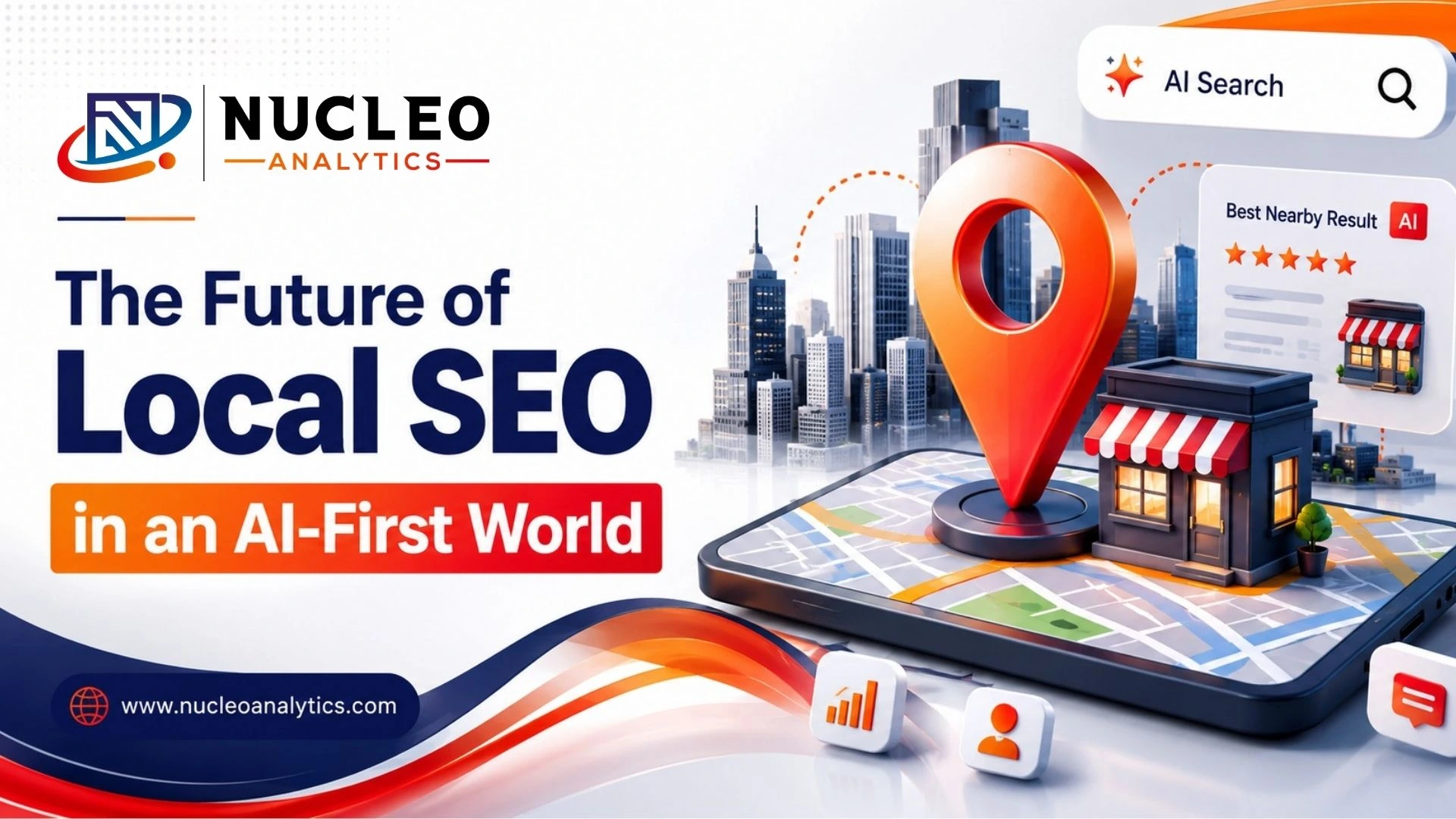
Local SEO is particularly significant to small companies. It allows your business to appear in the results of the near me search engine and Google Maps, which can attract high-intent customers.
Content Optimization is writing content that fits User Intent in SEO, in other words, writing what people actually seek when they search for something.
SEO monitoring and forecasting means regularly tracking your keyword rankings, traffic, and overall performance, and using that data to predict future growth instead of just guessing what’s working.
SEO is not that fast; it develops something that will continue working, even when you have ceased active expenditure.
What is Google Ads?
Google Ads is a paid platform where a product or a website is displayed on the first page of results almost instantly. You will be able to begin to gain visibility the same day your campaign is launched, as opposed to waiting months, as in the case of SEO. You select your target words, you place a daily or monthly limit on your ad, and your advertisements are displayed to individuals who are actively browsing the words. It is quick, adaptable, and handy in cases where you require instant traction.
Some important concepts to understand here:
- PPC vs CPC in Google Ads
- PPC (Pay Per Click) is the overall model
- CPC (Cost Per Click) is the actual amount you pay per click
- You can target very specific keywords and audiences
- You can turn ads on and off anytime
- Results can come within hours if campaigns are set correctly
However, the moment you stop paying, your traffic also stops. That’s the trade-off.
SEO vs Google Ads: Detailed Comparison Table
Factor | SEO (Search Engine Optimization) | Google Ads (Paid Advertising) |
|---|---|---|
Time to Results | Slow start, usually 3–6 months to see solid results, but growth compounds over time | Almost instant visibility, can start getting clicks and leads within hours |
Cost Structure | Monthly investment in SEO services, content, and optimization | Pay per click (CPC), every visitor costs money |
Long-Term Value | Very high rankings can bring traffic for months or years without extra cost | Low long-term value, traffic stops immediately when ads are paused |
Traffic Quality | High-quality organic traffic, especially when aligned with User Intent in SEO | High intent traffic, but it depends heavily on targeting and keyword selection |
Trust & Credibility | Higher trust, users tend to trust organic results more than ads | Lower trust compared to organic, some users skip ads completely |
Scalability | Scales gradually, requires consistent effort and patience | Easily scalable by increasing the budget, but costs rise quickly |
Control & Flexibility | Limited control, depends on Google algorithm updates | Full control over budget, targeting, timing, and audience |
Click Through Rate (CTR) | Generally higher for top organic rankings | Varies, but often lower than organic unless ads are highly optimized |
Conversion Rate | Strong if the content matches the intent and the website is optimized | Can be high with proper landing pages and targeting |
Maintenance Required | Ongoing SEO Monitoring, updates, and optimization needed | Continuous campaign management and budget monitoring required |
Risk Level | Low risk if done properly, penalties only if bad practices are used | High risk of budget loss if campaigns are poorly managed |
Technical Dependency | Requires a strong technical SEO foundation (speed, structure, indexing) | Less dependent on technical factors, but landing page quality still matters |
Local Business Impact | Excellent with local SEO, especially for "near me" searches | Good for local targeting, but can become expensive over time |
Brand Building | Strong long-term brand authority and visibility | Limited brand building unless combined with awareness campaigns |
SEO Monitoring & Forecasting | Essential for tracking growth and planning strategy | Campaign data provides instant insights but needs constant optimization |
This table gives a quick overview, but the real decision depends on how these factors apply to your business.
SEO vs Google Ads Cost: What You Really Pay
Cost is one of the biggest deciding factors, especially for small businesses. But the mistake most people make is only looking at short-term spending instead of long-term value.
Google Ads Cost Breakdown
Google Ads can get expensive quickly, especially in competitive industries. You might pay anywhere from $0.60 to $12+ per click, depending on your niche
Here’s what typically happens:
- High competition = higher CPC
- Poor targeting = wasted clicks
- Weak landing pages = low conversions
Example:
If you spend $600 on ads and your cost per click is $1.20, you’ll get around 500 clicks. But if only 2% of those convert, that’s just 10 customers. If your product margins are low, you might end up barely breaking even or even running at a loss.
SEO Cost Breakdown
SEO usually involves a monthly investment rather than per-click charges. Costs vary depending on the agency and competition level. Typical pricing includes:
- Content creation
- Technical fixes
- Keyword research
- Ongoing SEO Monitoring
Example:
If you invest around $500 monthly in SEO, you may not see results immediately. But after 4–6 months, you could start getting 1000+ organic visitors each month without paying per click, which makes it more sustainable over time.
The Role of Local SEO for Small Businesses
For small businesses, local SEO services for small businesses can be more powerful than both SEO and ads alone. It focuses on attracting customers in your specific location.
Key benefits include:
- Higher visibility in local searches
- More calls and walk-ins
- Better trust through Google reviews
Example:
A bakery that is rated in Google Maps as the best cake shop in my area will most probably receive more visitors than a bakery with advert placements, but without localization.
Struggling to Choose Between SEO and Google Ads for Your Business?
When to Choose Google Ads
Google Ads is best used where time is of the essence, and you are in need of fast recognition. It enables you to put yourself before prospective clients virtually, and this can be quite handy when your business requires you to gain momentum. Rather than use months to organically grow, campaigns can be configured to create traffic and leads in a few days, as long as they are configured properly.
You may want to use Google Ads because:
- You require direct tips or questions.
- You are introducing a new service or product.
- You would like to check the demand in the market within a short time.
- Your budget on paid advertising is flexible.
With that said, using ads over an extended period can be costly. When you no longer spend, you will no longer have traffic, so it is essential to ensure that ads are combined with a less aggressive approach
When to Choose SEO
SEO is more appropriate to the business that thinks long-term and is interested in creating a gradual stream of traffic. This might not yield quick results, but as soon as your website begins to rank, you can always have visitors without necessarily having to pay for each of those clicks. This culminates in it being a powerful pillar of growth in the long term online.
You should focus on SEO if:
- You want consistent, long-term traffic
- You’re working on building brand authority and trust
- You want to reduce dependency on paid ads over time
- You’re planning sustainable business growth
SEO requires patience and ongoing effort, but it creates long-lasting results that continue even when you’re not actively spending on ads.
The Smart Strategy: Combining Both
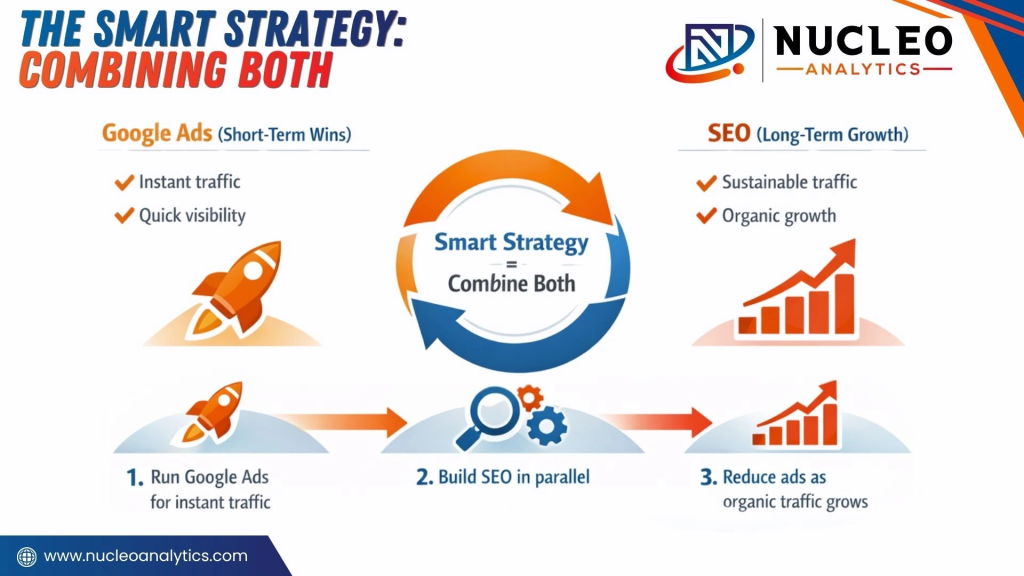
Example Strategy:
- Use Google Ads to have instant traffic.
- Build SEO in parallel
- Slowly cut advertising when organic traffic increases.
By so doing, you have short-term benefits without losing out on long-term growth.
How Nucleo Analytics Helps Small Businesses Grow
Now this is where things actually matter: execution. Strategy sounds good on paper, but without the right team, it often doesn’t work properly.
That’s where Nucleo Analytics comes in.
We don’t just run campaigns blindly. We focus on understanding your business first and then building a proper plan that combines SEO and paid ads effectively.
What We Do Well
- Provide affordable SEO services for small business without cutting corners
- Offer website design services for small business that actually convert visitors
- Help with SEO Forecasting and Monitoring so you see real progress
- Optimize Google Ads campaigns to reduce wasted budget
Example of Our Approach
Instead of just running ads, they might:
- Fix your website speed issues
- Improve landing page design
- Target high-intent keywords
- Optimize local SEO listings
This kind of combined approach gives better results than focusing on one thing alone.
The SEO vs Google Ads debate isn’t really about choosing one forever. It’s about using the right strategy at the right time based on your business goals. Google Ads can bring quick leads, while SEO builds long-term growth that keeps working even when you’re not spending daily.
At Nucleo Analytics, the approach is simple and practical. We don’t push one channel blindly. We analyze your business, fix what’s not working, and create a balanced strategy using both SEO and ads where needed. The focus is always on real results: more leads, better conversions, and steady growth, not just traffic numbers.