People throw around PPC and CPC like they are the same thing. They are not. They are related, sure, but confusing them is one of those quiet mistakes that doesn’t feel dangerous at first. Then a few months later, the ad budget is gone, results are thin, and nobody can quite explain why. This is something a PPC advertising company sees happen far more often than it should.
Business owners do this all the time. Marketers do it too, even some experienced ones. You see, such stuff as our CPC is killing us, or we must discontinue PPC, it is too costly. In the vast majority of cases, it is not Google Ads. It is a misconception of the working of the system.
This guide breaks it down. It only takes a straightforward definition of what is meant by PPC and CPC within the context of Google Ads, the relationship between the two, and the reason as to why knowing the difference would save money and stress.
What PPC Really Means in Google Ads
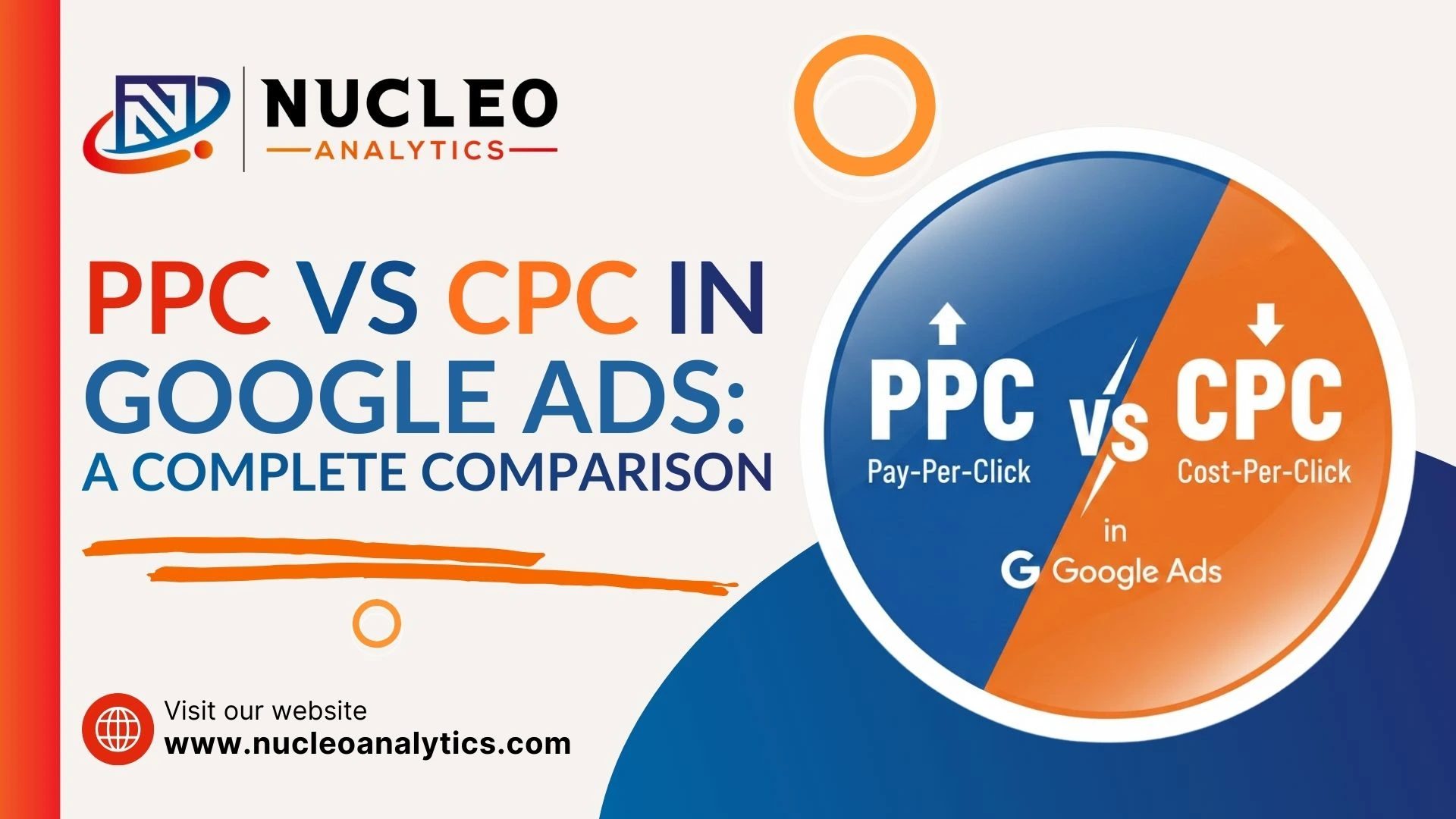
PPC stands for pay-per-click. It is not a metric. It is not a performance indicator. It is simply the pricing model.
When you run PPC ads, you pay only when someone clicks your ad. That’s the deal. You are not paying for impressions, visibility, or branding alone. You are paying for action.
In Google Ads, PPC is the backbone of most campaigns. Search ads use it. Display ads often use it. Shopping ads rely on it. Even YouTube ads can operate on a click-based structure depending on setup.
When people say “we do PPC,” they usually mean a bundle of things:
- They run Google Ads
- They bid on keywords
- They pay per click
- They expect traffic and leads from it
A PPC advertising company manages all of that moving machinery. Keyword selection, bids, ads, extensions, targeting, budgets, and tracking. PPC itself does not tell you whether it’s working. It just describes how you are charged.
What CPC Actually Means
CPC stands for cost per click. This is where the numbers come in.
CPC tells you how much you are paying for each individual click. It is a result of the auction, not a decision you fully control.
If you spend $1,000 and get 400 clicks, your CPC is $2.50. Simple math. But how that number gets there is anything but simple.
CPC changes constantly. Hour to hour, day to day, keyword to keyword. It reacts to competition, user behavior, seasonality, and how Google evaluates your ads.
This is where people start obsessing. They stare at CPC like it’s a grade on a test. High CPC feels bad. Low CPC feels good. But CPC on its own does not tell you whether your ads are making money or wasting it.
The Simple Difference Between PPC and CPC
Here’s the clean version, without marketing spin.
- PPC is how you pay.
- CPC is how much you pay per click.
PPC is the framework.
CPC is the outcome.
You can run PPC ads with high CPCs or low CPCs. The payment model stays the same. The cost does not.
Once you really get this distinction, a lot of Google Ads confusion disappears.
Why This Difference Actually Matters
This is not just terminology. It changes how decisions get made.
When businesses mix up PPC and CPC, they often chase the wrong goals. They ask agencies to lower CPC without asking whether leads are improving. They pause campaigns that are profitable because clicks feel “too expensive.”
It also affects expectations. PPC does not promise cheap traffic. It promises controlled traffic. What you do with that traffic is what determines success.
If you talk to a digital advertising company and the conversation stays stuck on CPC, that’s a warning sign. Strategy lives above that number, not inside it.
How PPC Works Inside Google Ads
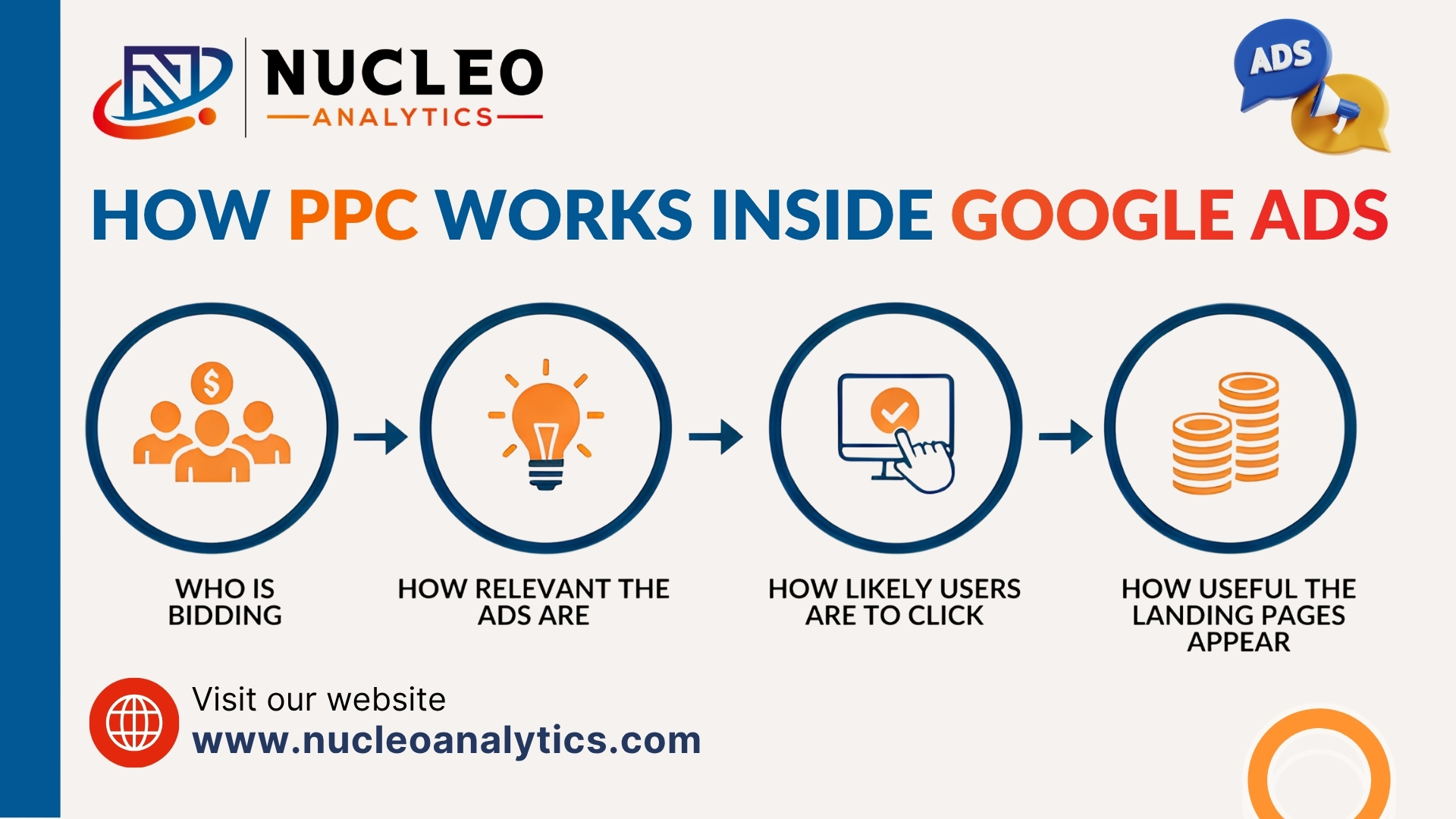
Every Google search triggers an auction. It happens in milliseconds. You never see it, but it decides everything.
Google looks at:
- Who is bidding
- How relevant the ads are
- How likely users are to click
- How useful the landing pages appear
Your bid matters, but it’s not everything. Google cares deeply about user experience. Ads that feel spammy or misleading pay more or get buried.
This is why two advertisers bidding on the same keyword can see wildly different CPCs. One might pay $3 per click. Another pays $7. Same keyword. Different quality.
This is also why Google Ads optimization services matter. Optimization is not cosmetic. It directly impacts cost.
What Influences CPC in Google Ads
Keyword Competition
Quality Score
Bidding Strategy
Industry and Market
Account Structure
Why Lower CPC Is Not Always Better
This is where people sabotage themselves.
They lower bids, chase cheaper keywords, and broaden targeting. CPC drops. Clicks increase. Everyone feels good for a week.
Then the leads slow down. Sales dry up. The traffic was cheap for a reason.
A $1 click from someone just browsing is not better than a $6 click from someone ready to buy. Cheap traffic is easy to get. Profitable traffic is not.
A good PPC advertising company understands this tradeoff and does not panic at higher CPCs if conversions are strong.
PPC Strategy Is Bigger Than CPC
PPC strategy covers the whole ecosystem.
It includes:
- What keywords do you target
- Which searches do you exclude
- How ads are written
- Where traffic is sent
- How conversions are tracked
- How budgets shift over time
CPC is one metric inside that system. Important, yes. Central, no.
If your entire strategy revolves around CPC, you’re playing defense instead of building something that actually grows.
Ready to boost your Google Ads performance?
Common PPC vs CPC Misunderstandings
These come up constantly.
“We Don’t Want PPC. It’s Too Expensive.”
PPC is not expensive by default. Unfocused PPC is expensive.
“Our CPC Is High, So Google Ads Doesn’t Work.”
High CPC often means competitive intent. That’s not a bad thing.
“We Need Cheaper Clicks.”
You need clicks that turn into revenue.
How Agencies Talk About PPC vs CPC
Pay attention to language.
Strong agencies talk about:
- Cost per lead
- Cost per acquisition
- Conversion quality
- Revenue impact
Weak ones hide behind CPC because it’s easy to show and easy to explain.
A digital advertising company should help you understand performance, not just report numbers.
PPC vs CPC in Reporting
Reports can mislead if you don’t know what to look for.
- PPC explains the model.
- CPC shows the cost.
- Conversions show the truth.
Never judge a campaign by CPC alone. That’s how good campaigns get shut down too early.
When CPC Actually Matters More
There are times CPC deserves close attention:
- When scaling budgets
- When testing new markets
- When margins are thin
- When competition spikes
Even then, CPC should be read alongside conversion data. Always.
The Role of Optimization
Google Ads rewards effort.
Ads that improve over time cost less and convert more. Ads that sit untouched get expensive and stale.
Optimization means:
- Testing ads regularly
- Cleaning up keywords
- Improving landing pages
- Adjusting bids with intent, not fear
This is the real value behind Google Ads optimization services. Not tricks. Just disciplined improvement.
DIY vs Professional Management
Some businesses manage PPC themselves and do fine. Others burn money learning.
DIY means:
- Learning by doing
- Making mistakes
- Spending time instead of fees
Hiring help means:
- Faster clarity
- Fewer wasted clicks
- More focus on the business itself
Neither is wrong. What matters is knowing which one you’re choosing.
How PPC and CPC Impact Small vs Large Businesses
Small businesses feel CPC pressure more. Every dollar matters. There’s less room for error.
Larger businesses can absorb higher CPCs but still need efficiency.
The rules are the same. The stakes are different.
Choosing the Right Keywords Matters More Than CPC
Keywords decide intent.
High-intent keywords cost more because they work. Low-intent keywords are cheap because they don’t.
Smart campaigns lean into intent instead of running from cost.
Final Thoughts on PPC vs CPC
Understanding PPC and CPC is not complicated. One shows how you pay. The other shows what each click costs. Get them wrong, and your budget vanishes. Fast.
Google Ads can feel overwhelming. Confusing metrics. Random clicks. Wasted spend. Yet it does not need to be like that. Put emphasis on strategy, conversions, and intelligent optimization, and all will be different.
It’s about more than just cheap clicks. High intent keywords. Strong ad copy. Landing pages that actually convert. Targeting the right audience. These small moves make a big difference.
Experience counts. When to change, when to rest, when to work harder. And that is the difference between the campaigns that work and the campaigns that waste money.