

Plastic surgeons often earn more patient consultations when they align their website copy with the exact phrases people type in when they’re picking a cosmetic specialist. Medical practices use proper plastic surgeon SEO tactics too, tuned for local intent, so their clinic lands near the top on Google Maps as well as in the organic results. Instead of paying continuous money for expensive clicks or broad ads, doctors optimize their site structure, build absolute clinical trust, and display real transformation results.
You want to fill your surgical schedule with high-value cosmetic cases and consultation bookings. Just relying on traditional print media or random social media posts, it can create a pretty unstable client pipeline. Most patients nowadays do a ton of online digging before they even think about booking a face-to-face consult.
When a person decides to alter their physical appearance, that individual turns to search engines to find a highly skilled specialist nearby. If your clinic fails to appear on the first page of these local searches, you miss out on premium cases. Winning this digital race requires a smart plan that proves your medical expertise to both Google and human searchers.
Diagnosing Your Patient Acquisition Channels
Before you touch even a single line of website code, you have to actually look at how your traffic behaves in real life. A lot of clinics waste thousands of dollars by buying shared leads or by running broad ads that aim at people who are only browsing around. True growth happens when you own your search space instead of renting it.
Look at how these different patient channels stack up against each other:
Your Organic Search & Map Listings
- This channel belongs entirely to your private clinic.
- The patient intent is incredibly high because people are looking for a direct fix.
- Your overall acquisition costs go down over time as your rankings become permanent.
Third-Party Medical Directories
- You are sharing space with local competitors who get the same lead alerts.
- Patients are usually bargain-hunting and comparing consultation prices.
- You pay a flat, continuous fee for every phone call or email form you receive.
Traditional Print and Billboard Advertising
- Your message is blasted to the general public with zero competitive filtering.
- Intent is completely passive since people only see your sign while driving.
- Requires massive upfront cash with very short campaign windows.
Claiming Territory in the Local Map Pack
The map section sits at the top of local Google results. If your clinic is absent from the top three spots, you lose daily consultation bookings. To fix this, fill out every blank field on your Google Business profile using your real office location. Use your exact medical practice name and your phone line.
Keep your daily office hours updated so prospects do not encounter frustrating disconnected lines. Upload real photos of your surgical suites, patient recovery rooms, and medical team. Real images establish strong comfort for individuals researching complex aesthetic updates. Select your primary business category carefully so search systems understand your precise clinical focus.
Patient reviews directly dictate how high your practice climbs on local maps. Ask happy individuals for online feedback right after their final post-op checkup. Send a quick text containing a direct link to your map profile before they leave your driveway. Respond to every review professionally while maintaining total medical privacy compliance.
Targeting Keywords That Bring Patients
You cannot build a thriving private clinic by chasing massive, broad keywords. Trying to rank globally for a word like "liposuction" is a massive waste of marketing capital. Focus your energy on local transactional phrases that include your specific city name.
Think about how an individual searches when planning an aesthetic alteration. They type in specific phrases like best tummy makeover specialist in [City Name] to find local solutions. Those specific terms display high intent to schedule an actual office consultation soon. Align your main website content with those precise user queries to win premium cases.
Executing a smart plastic surgery SEO strategy means building a deep page for each procedure instead of bundling everything together. If you handle breast adjustments, facial rejuvenation, and body contouring, build three distinct subpages. This structural separation prevents different sections of your site from competing against each other. It gives web searchers the exact clinical answers they want instantly.
Designing Location Pages for Nearby Towns
If your medical group pulls patients from multiple surrounding suburbs, a basic homepage will fail. Top clinics deploy unique location landing pages to capture market share across their entire region. Never publish lazy duplicates where you simply swap out the town name at the top text.
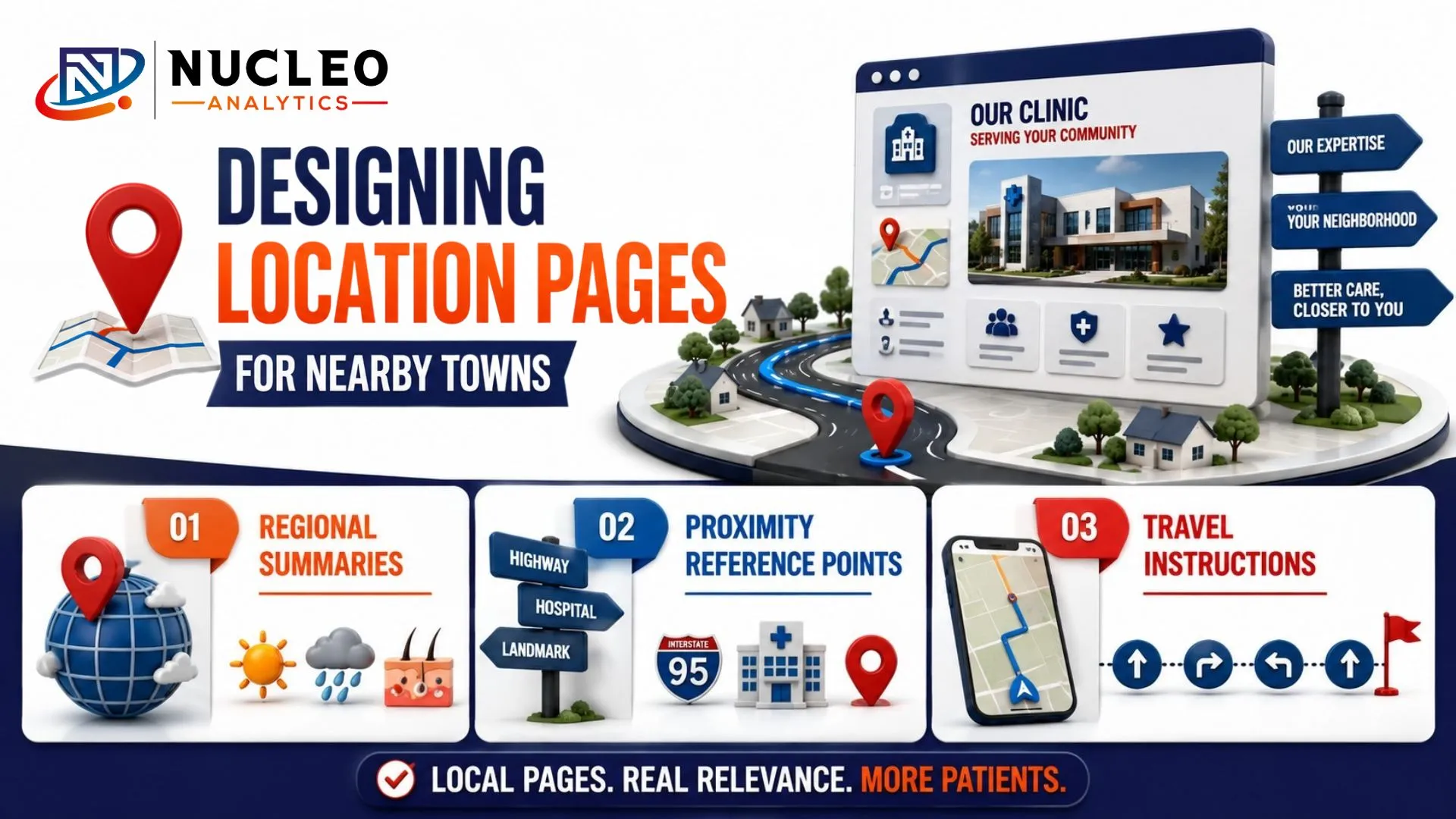
Every successful regional page requires these specific structural elements to convert readers:
- Regional Summaries: Write about popular treatment trends or specific climate challenges affecting skin recovery in that suburb.
- Proximity Reference Points: Mention major regional highways, neighboring medical centers, or town landmarks to prove your geographic footprint.
- Travel Instructions: Provide clear, turn-by-turn driving directions from that specific neighborhood straight to your primary office door.