Search evolution is moving fast as ever. The introduction of AI is transforming how individuals ask questions, discover data, and take actions through search. Search results will become more conversational, direct, and answer-oriented. Any business that operates under organic visibility should be aware of the changes that are going on.
The future of SEO at Nucleo Analytics lies within the brand’s ability to generate reliable and structured content for its audience. Even though AI will not eliminate search, it will transform the ways users find data and websites receive visibility. The key to success is to understand the search intent, build authority, and produce useful content for your visitors.
How AI Will Change Search
AI is making search feel less like a list and more like a conversation. Searchers want one clean answer, then the next step. That shift changes how pages earn clicks. It also changes which pages get seen at all. A page must do more than exist. It must help.
Search results now compete with summaries, answer boxes, and chat-style tools. That creates new pressure on brands. Content must be easy to scan, easy to trust, and easy to cite in a human mind. At Nucleo Analytics, we build pages with that in mind from the start. We write for real people first. Search engines come next.
The old game was simple. Rank first, get clicks, win traffic. The new game is wider. A page can appear inside an answer, feed a chat response, or earn trust before a click happens. That means visibility starts earlier than the old blue-link era. Brands must show up in more places, with more proof.
This is where AI search engines matter. People are getting used to asking full questions, not just typing short terms. They want follow-up help too. That changes the kind of content that works best. Short pages with weak value will fade. Clear guides, strong examples, and direct answers will stand out.
What Searchers Want Now
Searchers want speed, but speed alone is not enough. They also want confidence. They want to know the answer is current, honest, and useful. That is why thin pages keep losing ground. At Nucleo Analytics, we focus on depth without fluff. We keep the language simple and the point clear.
Search also rewards structure more than before. Strong headings help. Clear definitions help. Real examples help. Pages that guide a reader from question to answer have a better chance of staying useful in a fast AI world. That is the kind of content people remember and share.
How to Understand Will AI Replace Google Search
The short answer is no, at least not in the near future. Google has scale, habit, and deep product reach. It also has search data, maps, shopping, video, and local intent. AI may take pieces of attention, yet Google still owns a huge part of daily search behavior.
A better way to think about it is this. AI may change the front door, while Google keeps much of the house. Users may start with a chat tool, then move to Google for proof, shopping, local help, or brand checks. That means the answer is not a clean swap. It is a split journey. Search becomes more layered.
The phrase AI replacing Google sounds dramatic. It gets attention. It also misses the bigger point. The real change is that people expect faster answers with less effort. Google is already adapting to that shift. Brands must adapt too. A page that only chases old ranking tricks will fall behind.
At Nucleo Analytics, we treat this change as a warning and a chance. The warning is simple. Traffic can drop when content lacks depth. The chance is bigger. Brands can win trust by giving better answers than the machine can give alone. That kind of content still matters.
What Google Still Does Well
Google still handles a huge variety of intents. People search for products, local businesses, news, comparisons, directions, and brand names every day. That range keeps Google strong. AI chat tools often help with ideas and summaries. Google still helps with action and choice.
Google also has a long trust trail. Many users check the results there before making a move. They may read reviews, compare pages, or look for a familiar name. That behavior will stay for a long time. So the smart move is not to fight Google. The smart move is to build around the new habit.
How to Prepare for the Future of SEO in the Age of AI
The best prep starts with useful content. That sounds simple, yet many brands still miss it. Write for the person behind the query. Answer the main question fast. Then expand with real detail, real examples, and real next steps. That is how content stays valuable in search and in AI summaries.
Next, improve your content structure. Use clear headings, clean paragraphs, and direct language. Add proof where it matters. Use data, examples, expert insight, and strong internal links. At Nucleo Analytics, we also suggest building topic clusters. A strong core page plus supporting pages gives search engines a better map of your expertise.
Focus on brand signals too. Search is changing, yet trust still wins. People click names they know. They also remember names they see often. That is why consistent brand mentions matter. This is also why a strong website experience matters. Slow pages, weak copy, and messy navigation hurt more now.
You also need to think beyond traffic alone. A page can help a reader even before a click. It can build memory, trust, and brand recall. That means your work must support visibility, conversion, and authority at once. Search is no longer just about one keyword and one page. It is about a whole system.
Create Content That Performs Better in Modern Search Experiences Everywhere
What Brands Should Build Next
The next phase of search favors depth, clarity, and original value. Brands need content that answers a query and proves experience. Generic writing will fade. Clear points will win. Pages that sound human will stand out. People can feel the difference fast.
Think about what makes your brand hard to copy. Maybe it is a process. Maybe it is case studies. Maybe it is a niche point of view. Build content around that edge. At Nucleo Analytics, we like content that shows how something works, why it matters, and what to do next. That is the kind of page searchers keep open.
Search is also becoming more multimodal. Users type, speak, upload, and ask follow-up questions. That means your content should be flexible. Use plain words. Use direct answers. Use examples that a non-expert can follow. The easier you make the page, the easier it becomes to trust.
This is where the future of search becomes practical. The future is not only about ranking. It is about being the answer people remember. A brand that teaches well will stay visible longer. A brand that hides behind vague claims will fade.
Why Content Depth Beats Content Volume
Many sites still chase more pages. That old habit can backfire. More pages do not always mean more value. One strong page can beat five weak ones. Search engines and users both prefer clarity. That is why depth matters more than volume now.
Depth does not mean stuffing in words. It means covering the topic in a useful way. Define the problem. Show the fix. Add examples. Anticipate the next question. Keep the wording simple. That pattern works for readers and for search systems.
At Nucleo Analytics, we often see better results from content that solves one job very well. A page should help a reader make a move. That move could be learning, comparing, choosing, or buying. Once the page does that job, it earns more trust. Trust brings more value over time.
How AI Changes SEO Teams
SEO teams now need stronger content thinking. The old focus on keywords alone is too narrow. Teams must understand audience pain, brand voice, site structure, and search intent. They also need to work faster. AI moves quickly, so strategy must move with it.
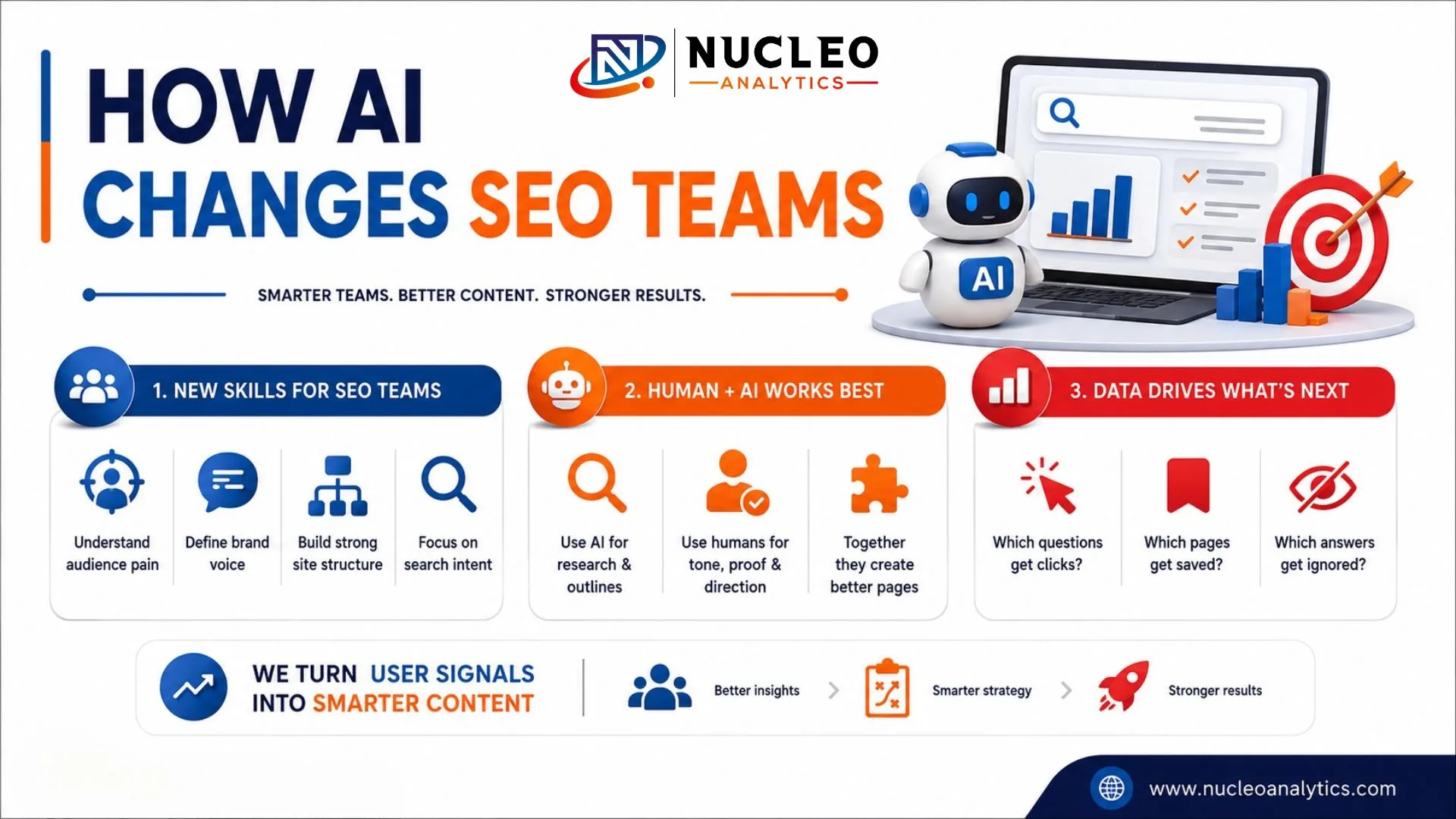
That does not mean hands-off content creation. It means smarter support. Use AI for research, outlines, and pattern finding. Use human judgment for tone, proof, and final direction. The best pages will come from both. One without the other leaves gaps.
A good team also watches user behavior closely. Which questions get clicks? Which pages get saved? Which answers get ignored? These clues matter more each month. At Nucleo Analytics, we use that signal to sharpen future content and keep the brand useful.
Where the Real Opportunity Lives
The biggest chance is not in chasing every trend. It is in becoming the easiest expert to trust. Search users want fast help, but also want real confidence. Brands that deliver both will stay visible, even as tools change.
That means your site should act like a clear guide. Each page should have one job. Each section should move the reader forward. Each link should help the next step feel easy. That kind of design supports search, AI, and people at once.
The future will reward brands that make hard topics simple. It will reward pages that answer cleanly. It will reward helpful language over noisy promotion. At Nucleo Analytics, that is the path we trust. It keeps the brand strong while search keeps shifting.
Make Your Business Easier to Find in AI Search Results
Conclusion
AI will not erase search. It will raise the bar. The brands that win will teach better, answer faster, and sound more human. Search is moving toward trust, clarity, and useful depth. That is the real path ahead. The future of SEO belongs to brands that adapt early, stay helpful, and keep the reader at the center. At Nucleo Analytics, that is the strategy we believe in, and it is the strategy we would build on today.