
A lot of businesses will keep losing search traffic in 2026 because of simple SEO mistakes. The problem is usually loud and plain. A page looks fine, yet search growth stays flat. A site gets updated, yet leads still stay weak. A team keeps publishing, yet results never move the right way.
At Nucleo Analytics, we see this pattern again and again. Most brands still build for clicks first and people second. That habit hurts trust, rankings, and leads. The strongest pages in 2026 will do the opposite. They will answer fast. They will feel clear. They will solve one real problem with confidence. That is the short answer to the whole topic.
The long answer is more useful. Search is changing. Search systems want better structure, cleaner signals, and stronger intent match. Readers want faster answers, less noise, and simple next steps. Brands that keep chasing old tricks will fall behind. Brands that fix the basics will move ahead.
What Are the Biggest SEO Mistakes Businesses Will Make in 2026?
The biggest SEO mistakes in 2026 will come from old habits that still look safe. Keyword stuffing will keep failing. Thin pages will keep missing trust. Slow sites will keep losing readers. Weak topic depth will keep hurting authority.
At Nucleo Analytics, we see one clear truth. Search now rewards pages that feel useful from the start. A page should answer the main question fast. A page should also give enough depth to earn trust. When that balance breaks, traffic stalls.
A common pattern starts with fear. Many teams think more words mean better results. That is wrong. Many teams think more pages mean more reach. That is also wrong. Search wants clear answers, clean structure, and real value. That is the new floor in 2026.
Search Intent Will Decide Page Success
Search intent is the first test. A user types a query with a real goal. The page must match that goal or lose the click. A buyer wants pricing. A reader wants a guide. A local user wants a nearby option. One page cannot ignore that context.
This is where many SEO errors begin. A service page sounds like a blog. A blog sounds like a sales page. A landing page gives broad talk instead of a direct path. We shape each page around the question behind the search. That keeps the content useful and the path clear.
Why Do Small Businesses Keep Making the Same SEO Mistakes?
Many owners keep repeating SEO mistakes small businesses make because time and budget feel tight. That pressure creates shortcuts. A business launches fast pages, skips deep research, and hopes search will fill the gap. Search rarely rewards that kind of rush.
Small brands need focus. A single strong page beats five weak ones. A clear service area beats a vague location mess. A direct offer beats a page full of broad claims. We often see small businesses grow faster after cutting clutter.
Common SEO Mistakes Usually Start with Weak Focus
One of the most common problems is broad targeting. A page tries to rank for ten ideas at once. The result feels muddy. Readers do not know the core point. Search systems get mixed signals. Rankings stay stuck.
That is why common SEO mistakes still matter. Even in 2026, a site can still lose ground from messy focus. The fix is simple, yet many brands skip it. Pick one page goal. Pick one core user need. Support that page with a few related pages. That structure gives the site a stronger shape.
Brand-Led Pages Build More Trust
A brand page should sound like a real business, not a template. Readers can feel that difference fast. A page with a clear voice feels honest. A page with plain words feels easy to trust. A page that sounds like a real team feels safer to buy from.
At Nucleo Analytics, we write from the brand point of view on purpose. That keeps the message steady. It also helps readers see the business as active, clear, and ready to help. Search value grows faster when the brand voice stays consistent across the site.
What Content Problems Create the Worst SEO Problems?
Weak content still creates the biggest SEO problems for many websites. A page can rank for a term and still fail once the reader arrives. That happens when the content gives too little detail, too much fluff, or the wrong message for the search.
We look at content in layers. The page must answer the main question near the top. It must also show enough depth to prove value. Then it should guide the reader toward the next useful step. That simple flow works well in 2026.
Thin Content Still Loses Trust Fast
A thin page may look clean. It may even sound polished. Still, if it gives no real help, readers leave fast. Search systems see that behavior. The page loses strength over time.
This is one of the most damaging SEO errors on the web. A lot of teams write around the topic instead of into the topic. The reader wants the real answer. The page gives a soft summary. That gap kills momentum.
Ready to Fix SEO Mistakes Before Rankings Start Falling Today?
Duplicate Ideas Hurt More Than Many Brands Expect
Some pages keep saying the same thing in different words. That fills space, yet adds little value. Search systems can spot repetition. Readers can feel it even faster. The page starts to feel tired before the third scroll.
We cut repeated ideas early. Every section should add something new. Every H2 should move the topic forward. Every paragraph should earn its place. That is a simple rule. It saves time and improves quality.
Search Systems Want Clear Structure
Good content needs more than words. It needs shape. Headings matter. Short blocks matter. Clear examples matter. A reader should know where the page is going at every step.
That is where AEO matters too. Answer engines want direct language and useful structure. The page should give a simple answer first, then expand. This helps both users and search systems understand the value quickly.
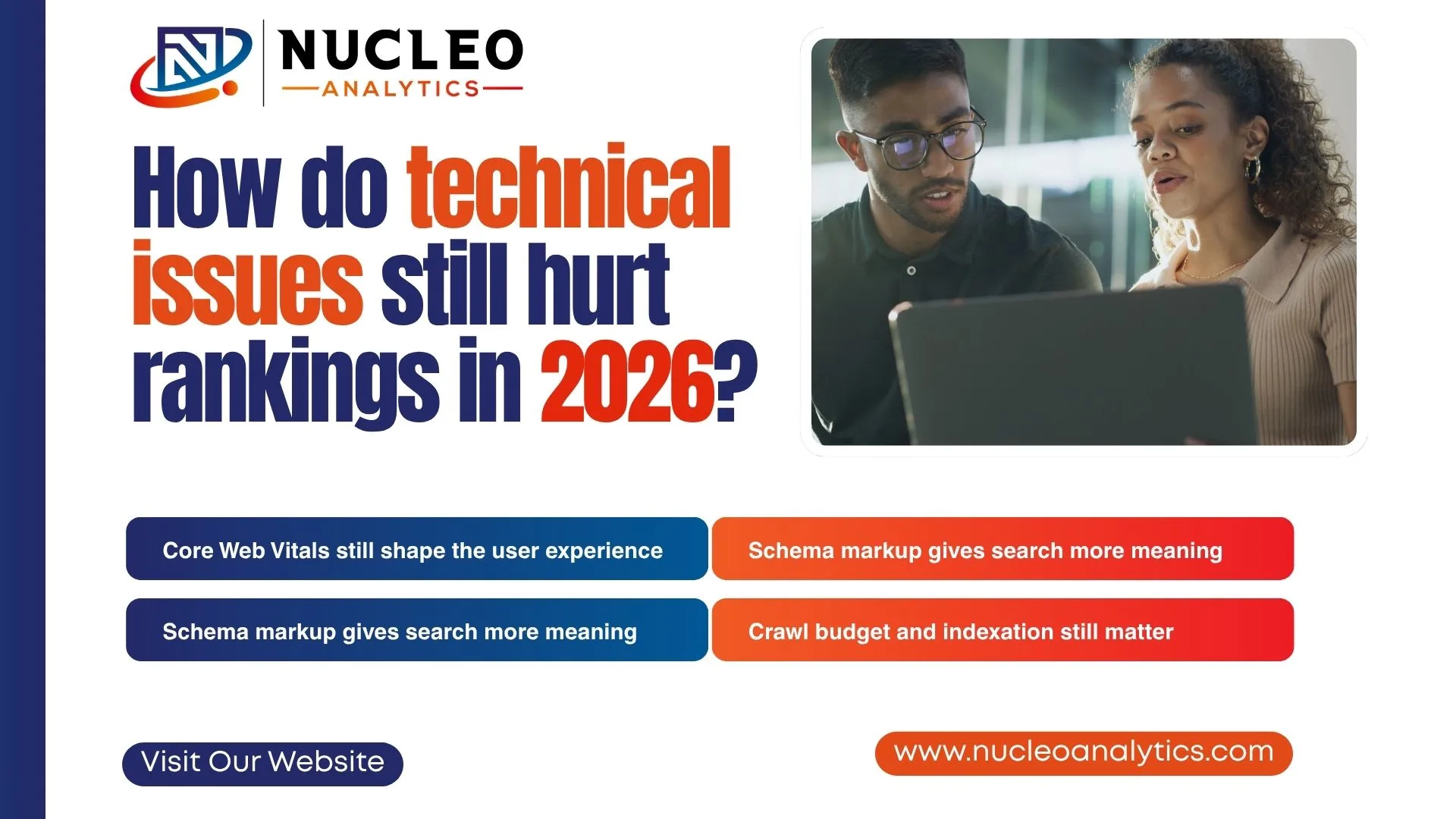
How Do Technical Issues Still Hurt Rankings in 2026?
A lot of technical work still gets ignored because it feels boring. That is a mistake. A strong page can still fail if the site runs poorly. Slow speed, broken links, poor mobile layout, and messy index signals can all weaken growth.
We treat technical work as the base layer. If the base breaks, the rest of the strategy struggles. A site must load fast, crawl cleanly, and stay stable on every screen. That is the minimum.
Core Web Vitals Still Shape the User Experience
A page that jumps around feels weak. A page that loads slowly feels annoying. A page that reacts late feels broken. Those moments hurt trust fast. Search systems know users care about that experience.
Core Web Vitals still matter because user comfort still matters. Speed helps the first impression. Stable layout helps reading flow. Fast interaction helps the next click. Good content needs a good frame.
Schema Markup Gives Search More Meaning
Search systems need context, not just text. Schema markup helps give that context. It can show what the page covers, what the business does, and how the content fits into the wider site.
At Nucleo Analytics, we use schema as a guide, not decoration. It helps search read the site with more confidence. That can support rich results, clearer understanding, and better page relevance over time.
Crawl Budget and Indexation Still Matter
Large sites often waste search attention on low-value pages. That drains crawl budget. Search bots can spend time in the wrong places, while important pages stay underused.
Then comes indexation. If a useful page does not get indexed well, it cannot perform well. Clean site maps, smart internal links, and strong page control all help fix that. These tasks sound basic. They still matter a lot.
Mobile-First Design Keeps Rising in Value
Most users will still reach pages from mobile devices. A page that works only on desktop is already behind. Buttons must be easy to tap. Text must be easy to read. Menus must be simple to use.
We check the mobile experience early. That step protects engagement and keeps the content usable. A page can lose a lead in seconds if the screen feels messy. That loss is avoidable.
What Link Mistakes Will Hurt Sites Most in 2026?
Links will still shape trust. Search uses links as one signal of authority. Weak link habits can still hurt. Spam links, random links, and forced links do little good. Quality matters more than volume.
At Nucleo Analytics, we focus on links that make sense. Relevant references matter. Clean site links matter. Trustworthy external signals matter. A strong link profile feels natural, not stuffed.
Backlinks Still Matter When Earned Well
Backlinks still help when the source fits the topic. A useful mention from a strong site can carry more value than a pile of weak ones. That is why link quality keeps winning.
Many brands still chase easy link volume. That habit rarely works for long. Search systems keep getting better at seeing real value. The safer path is quality, relevance, and patience.
Internal Linking Helps Readers Move with Ease
A good site feels connected. A reader should move from one useful page to another without friction. Internal linking creates that path. It helps users find related answers. It also helps search systems understand which pages matter most.
We see internal links as a simple growth tool. One strong link can guide a reader from a blog into a service page. Another link can support a local page. That structure strengthens the whole site.
How Does Brand Voice Affect SEO Results?
Brand voice matters more than many teams think. Search can measure behavior, but people still make the final choice. A page with a calm, direct voice feels easier to trust. A page with too much jargon feels stiff. A page with too much fluff feels empty.
We write in plain language because plain language works. It reduces confusion. It improves reading flow. It helps the user get the point faster. That is good for trust and good for search.
Useful Pages Win Over Polished Pages
A polished page can still fail. A useful page keeps winning. That is the real lesson for 2026. Brands that speak clearly will have an edge. Brands that hide behind fancy words will keep losing time.
A useful page answers the question, shows proof, and ends with a clear next step. That pattern works across service pages, local pages, and blog posts. It also works across many industries.
What Should Brands Fix First?
A full site audit usually shows the same core problems. Wrong intent. Weak content. Slow technical setup. Poor internal links. Thin topic depth. Those issues sound simple. They still hurt a lot.
At Nucleo Analytics, we usually fix the following first:
- Tighten page intent.
- Improve page structure.
- Add missing detail.
- Remove repeated content.
- Strengthen internal links.
- Clean technical errors.
- Add schema where useful.
- Improve mobile flow.
- Refresh outdated pages.
- Build better topic clusters.
That list looks basic. It is basic. Basic work still drives strong results when the execution is sharp. That is the part many teams miss.
How Can Businesses Avoid the Biggest SEO Mistakes in 2026?
The safest way to avoid SEO mistakes to avoid is by building a clear content plan before publishing anything. Every page should serve one user need. Every section should push the topic forward. Every link should help the reader move. Every technical step should support the full site.
We build around that logic. We do not chase noise. We do not pad pages with extra words. We do not treat search like a trick. We treat it like a system that rewards clarity, value, and good structure.
A Better Search Plan Starts with the Audience
The reader should come first. Always. A page that solves a real problem earns attention faster than a page built for the algorithm alone. That is true in 2026 and true long after. Search changes. Human need stays.
That is why SEO mistakes often begin with a missing audience view. A brand writes for the keyword, yet ignores the user behind the keyword. The fix is simple. Study the searcher. Match the format. Give the right answer. Keep the page clean.
Build Stronger Search Growth With Proven SEO Strategies That Convert
What Does Nucleo Analytics Do Differently?
We build SEO around useful content and clean execution. We start with search intent. Then we shape the page structure. After that, we strengthen technical signals and internal links. That order saves time and improves results.
We also keep the writing human. No empty fluff. No overdone jargon. No fake polish. The page should feel like a real business speaking to a real person. That tone builds trust faster than noisy copy ever can.
Search Growth Needs Patience and Consistency
SEO still rewards steady work. A strong page rarely wins by accident. A strong site rarely grows from one fix alone. It takes consistency. It takes review. It takes clean updates over time.
We use that mindset across every page. One good fix helps. Ten good fixes help more. A site that keeps improving will outlast a site that keeps guessing.
Conclusion
The biggest SEO losses in 2026 will come from simple gaps. Weak pages. Weak intent. Weak structure. Weak trust. Businesses that ignore the basics will keep falling behind. Brands that clean up those issues will keep moving forward.
At Nucleo Analytics, we believe search still rewards clarity, usefulness, and steady work. That is the real lesson here. Fix the page. Fix the structure. Fix the message. Then build from there. That is how SEO mistakes stop hurting growth and start turning into progress.