
Traffic alone does not build business. A page can attract thousands of visitors and still miss the right audience. The problem starts when content answers the wrong question. High numbers may look impressive, but qualified leads create real growth.
At Nucleo Analytics, we see many brands focus on search volume first. They chase popular keywords without understanding what users actually need. A strong page connects with the person behind the search, offers a clear answer, and guides the next step. This is where search intent SEO helps brands create content that attracts better opportunities.
What Does Search Intent Mean?
Search intent is the reason behind a search. A person types a phrase because a problem needs a fix, a question needs an answer, or a product needs a decision. That simple idea changes everything. A page built for the wrong motive will miss the mark, even if the keyword gets huge traffic. A page built for the right motive can win with less volume and far less waste.
We look past raw numbers and read the query like a signal. That signal shows what the searcher wants at that exact moment. A guide, a comparison, a product page, or a local service page all serve different needs. When a page meets that need fast, the reader stays longer and moves forward with more trust.
Volume alone can make a team feel busy. It can also hide weak results. A keyword may bring traffic, but traffic without action does little. Intent fixes that gap. It gives every page a job. It also gives every team a clearer target, which makes planning cleaner and content stronger.
Why Search Volume Can Mislead Your Team
Search volume can pull attention fast. It makes dashboards look busy. It makes reports look strong. However, a large number does not promise a strong result. A broad search can attract people far from the buying stage.
This explains why search intent matters when businesses want better leads instead of empty traffic. The answer is not about vanity. It is about fit. A smaller search with clear purpose can bring more leads than a huge search with loose interest. Fit beats noise.
Many teams make the same mistake. They chase broad terms because the chart looks exciting. Then the content brings the wrong crowd. Readers bounce. Leads stay weak. Sales teams feel the pressure. The issue was never traffic. The issue was intent.
At Nucleo Analytics, we treat volume as a clue, not a goal. We use it to size demand. We do not let it choose the whole strategy. That keeps the content grounded in real business value.
How To Identify Search Intent Fast
Knowing how to identify search intent gives a brand a real edge. The clues are already in the search term and the results page. The words tell part of the story. The ranking pages tell the rest. Once you learn the pattern, the guesswork drops hard.
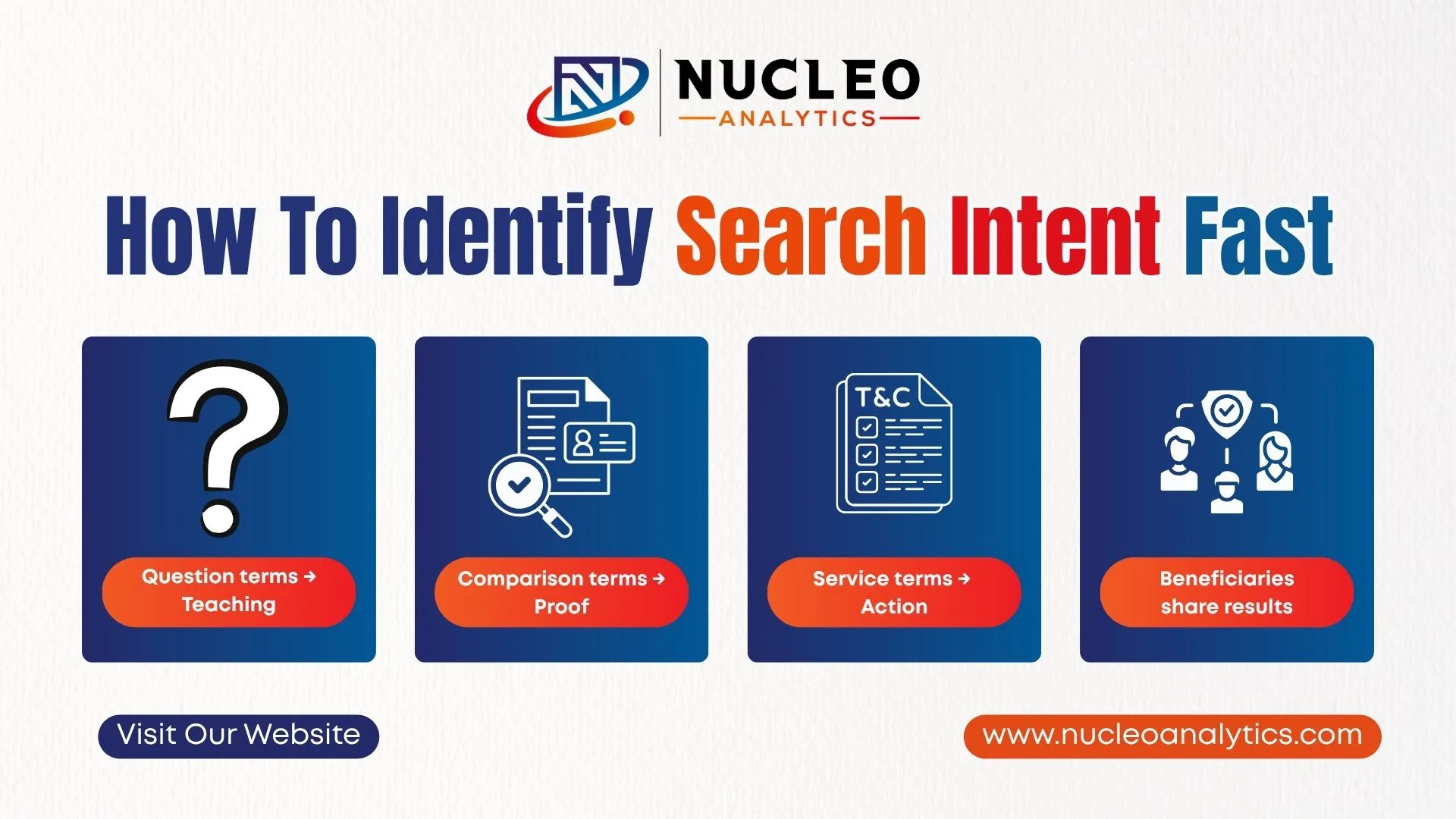
A search with “what,” “how,” or “why” usually points to learning. A search with “best,” “top,” or “vs” usually points to comparison. A search with “near me,” “service,” or a Nucleo Analytics often shows stronger action. That is a clean signal map.
Here is a simple way to read it:
- Search terms with questions often need teaching.
- Search terms with comparison words often need proof.
- Search terms with service words often need action.
- Search terms with brands often need trust and clarity.
We use this filter before writing any page. It keeps the message sharp. It also keeps the page from trying to do too much at once. That is a fast way to improve quality without adding fluff.
How Search Intent SEO Shapes Better Pages
A good page follows intent from the first line. It answers the core question fast. It then adds proof, detail, and next steps. That flow keeps the reader moving. It also helps search engines understand the page faster. That is the practical side of search intent SEO.
A brand does not need more words. It needs the right words in the right order. That simple idea changes the whole page structure. It also changes the way teams plan content. A blog post should teach. A service page should convert. A guide should support both, but only in a clear way.
We map the page type to the search goal. That keeps the work clean. It also keeps the reader from getting lost. People do not want a maze. They want the answer. They want the next move. They want the page to feel like it was built for them.
This is where structure matters. The best pages use a clear headline, a strong opening, and useful subheads. Each part should move the reader forward. Each part should earn the next scroll. That is how intent turns into performance.