Search evolution is moving fast as ever. The introduction of AI is transforming how individuals ask questions, discover data, and take actions through search. Search results will become more conversational, direct, and answer-oriented. Any business that operates under organic visibility should be aware of the changes that are going on.
The future of SEO at Nucleo Analytics lies within the brand’s ability to generate reliable and structured content for its audience. Even though AI will not eliminate search, it will transform the ways users find data and websites receive visibility. The key to success is to understand the search intent, build authority, and produce useful content for your visitors.
How AI Will Change Search
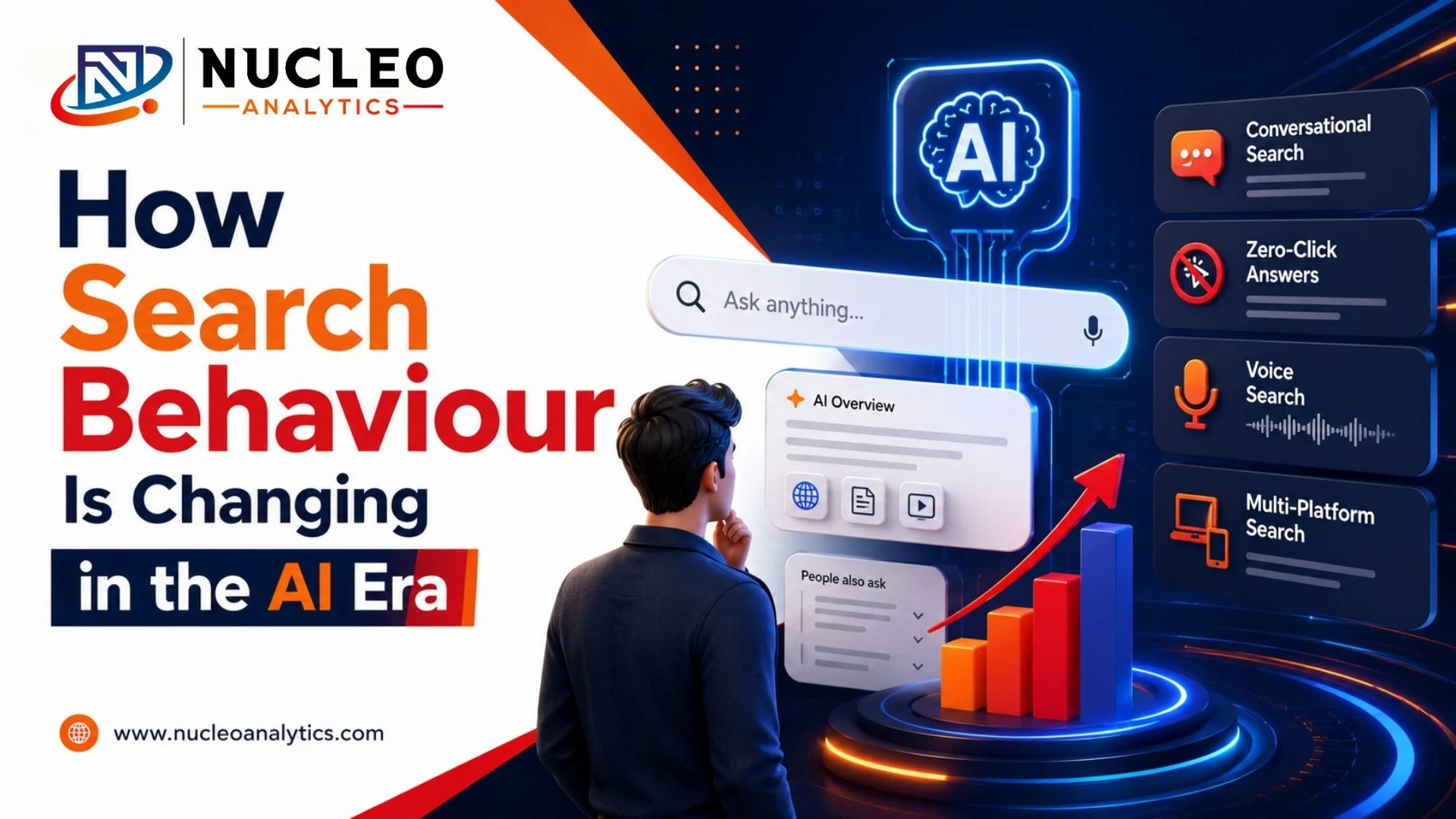
AI has changed the first move in search. Many people start with a chatbot, a voice tool, or a smart answer box before opening a classic search page. That means the search begins with a request for a clear answer, a quick summary, or a guided next step.
This change is more than a small update. It changes the way people think. Search now feels more like a conversation and less like a list of links. Users want a direct reply, a useful source, and a fast path forward. At Nucleo Analytics, we build content for that exact shift.
The biggest shift is intent. People want faster decisions and fewer steps. A user may ask one broad question first, then refine it with follow-up prompts. That creates a deeper search trail, and brands need to be ready for each step.
Here is what we see most often:
- Searchers ask longer and more natural questions.
- People compare answers across more than one tool.
- Fast summaries often shape the next click.
- Clear brand trust matters before the final action.
- Helpful content must answer and guide at once.
Why This Matters for Brands
Brands that still write for old keyword patterns lose attention fast. Searchers want real help, simple language, and a clean answer path. At Nucleo Analytics, we treat every page like a direct conversation with a customer.
That means our content must do more than rank. It must be solved. It must reassure. It must guide the next step with confidence. This is where the new search game starts to feel very different.
How AI is changing Search Behavior
AI search trends show that users now move with more speed and less patience. Many users want an answer before a long page even loads. Some want a short summary first, then a deeper read after trust is built.
That means content needs a smarter shape. Strong pages now lead with the answer, then expand with proof, detail, and action. At Nucleo Analytics, we focus on that balance because the modern search journey feels layered.
Users also switch formats more often. A person may read a search result, scan a video, ask a chatbot, and then revisit a brand page. This mix makes the search more fluid. It also makes brand messaging more important across every channel.
AI brings a few clear changes:
- Users ask in full sentences.
- Users expect context, examples, and quick clarity.
- Users trust direct, plain language more.
- Users move between search, chat, and social proof.
- Users want results that feel personal and useful.
Search once felt like a map. Today, it feels like a guided talk. That shift changes content planning, SEO, and even page design. It also changes how brands earn trust before the sale.
At Nucleo Analytics, we build pages that meet that new need. We shape answers for scanners, deeper readers, and buyers who compare fast. That approach helps us stay useful in a search world built around speed.
Prepare Your Brand for the Future of AI Search Today
How to Understand Future Consumer Search Behavior
The future of search behavior will lean even more toward speed, trust, and simple answers. Buyers will keep asking bigger questions, but the best answer will win the moment. That means brands must understand what a customer wants before the customer even names it.
Future search behavior will also feel more personal. Users will expect search tools to remember context, past intent, and location clues. A single query may lead to a custom path that feels made for one person. That raises the bar for content quality.
At Nucleo Analytics, we see three big signals in this shift. First, users want answers that feel human. Second, users want proof that feels easy to scan. Third, users want the next step that feels safe and simple.
To read future consumer behavior well, brands should watch:
- Question shape and query length
- Repeat searches around the same topic
- Follow-up prompts after the first answer
- Pages that earn the final click
- Content that supports trust, clarity, and action
This is where brand voice matters. When content sounds clear, calm, and useful, people stay longer. When content feels stuffed or robotic, users leave fast. At Nucleo Analytics, we shape content for trust first because trust still drives the result.
The future also rewards brands that understand emotion. Searchers want help, and people also want relief. A strong answer can remove doubt in seconds. That is a major edge for brands that build content around the real person behind the query.
How to Understand Search Trends in 2026
By 2026, consumer search trends will likely revolve around multi-step journeys. One query will start the process. A second query will narrow the choice. A third action may happen inside an AI tool, a review page, or a brand site.
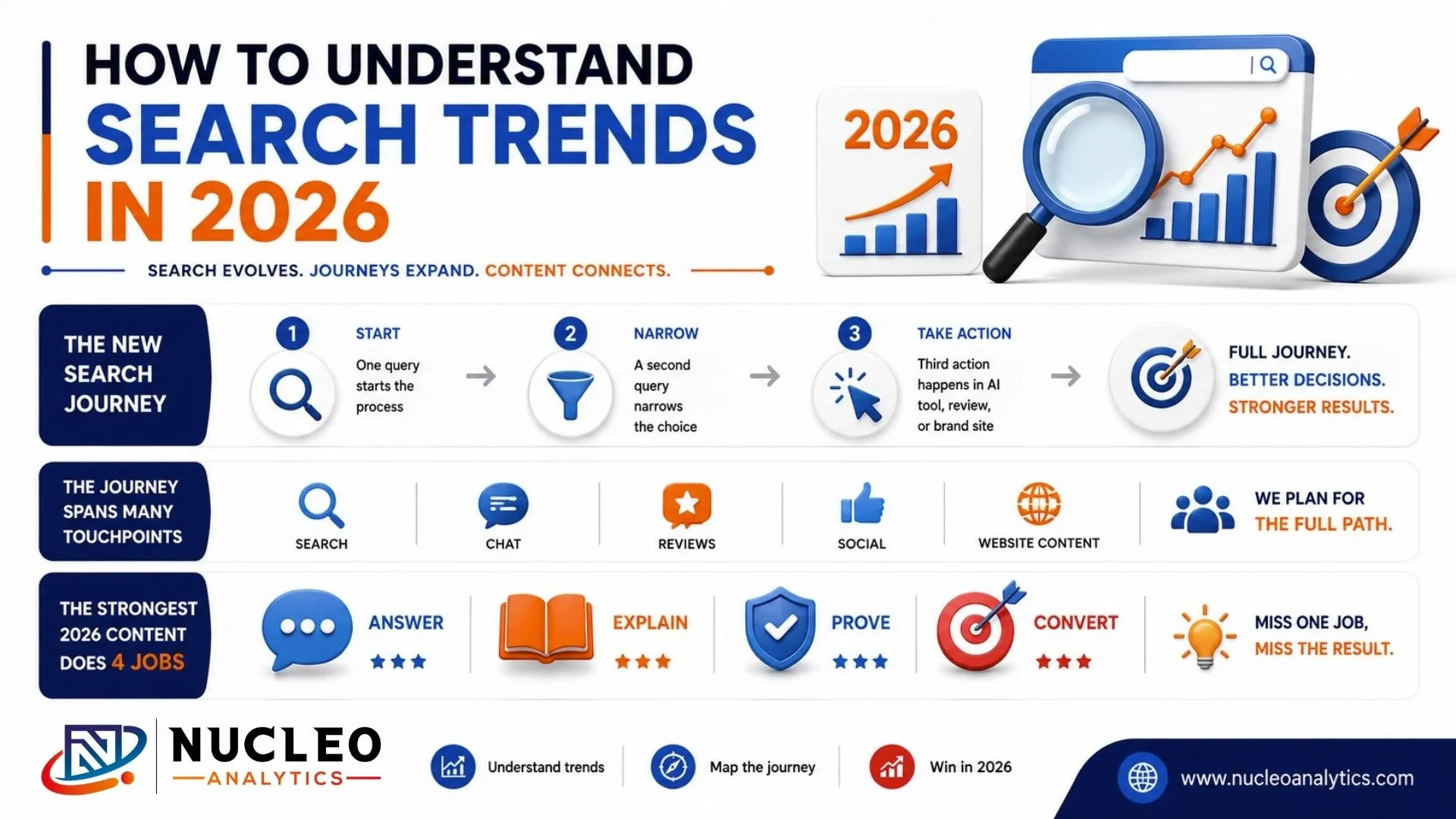
That means brands must stop thinking about one search page alone. The real journey now spreads across many touchpoints. Search, chat, review, social, and website content all work together. At Nucleo Analytics, we plan for the full path.
The strongest 2026 content will do four jobs at once. It will answer, explain, prove, and convert. That sounds simple, but many pages still miss one of those jobs. A page with no proof feels weak. A page with no action feels unfinished.
What Search Teams Should Build Now?
- Clear page answers above the fold
- Deep supporting detail below the first answer
- Strong internal links to related pages
- Short proof points, examples, and use cases
- Brand pages that feel helpful, current, and direct
At Nucleo Analytics, we also watch how format choice changes. Some users prefer quick summaries. Others want long reads with steps and examples. A strong website serves both. That creates more reach and a better chance of turning attention into action.
Search trends in 2026 will also reward pages that sound like a real expert. That means no fancy words. It means clean structure, honest detail, and advice that feels practical. People want a page that helps fast and still feels credible.
What Brands Should Do Next?
Brands need a search plan built for the new behavior. Old keyword stuffing will keep losing ground. Clear topic depth, sharp page intent, and strong brand trust will keep winning.
At Nucleo Analytics, we recommend a simple structure. Start with a direct answer. Add a short explanation. Then give examples, proof, and a next step. That shape fits both search engines and human readers.
Use these moves across your site:
- Refresh older pages with clearer answers.
- Add internal links to deeper help pages.
- Build topic clusters around real buyer questions.
- Write for fast scanning and easy trust.
- Match content to each stage of the buyer path.
The best brands will treat search as a conversation. A user asks. The page answers. The next page guides. That pattern feels natural, and it works across channels. It also keeps content useful even as AI keeps changing the rules.
What a Modern Search Journey Looks Like
A modern search journey starts with a question and moves fast. A user may ask an AI tool first, then compare a result, and then visit a brand page for proof. Some people repeat the same idea three or four times before choosing. That pattern matters because one page no longer owns the whole journey.
At Nucleo Analytics, we map that journey in simple stages. First comes curiosity. Then comes comparison. After that comes trust. Finally comes action. Each stage needs a different content shape, and each shape needs a clear job.
A short answer can win the first glance. A deeper section can win the second look. A case study can win the trust check. A clear next step can win the final move. Thus, the brand that serves each stage gets more chances to stay on the path.
Search teams should look for these signs:
- Users start with broad, high-level questions.
- Users return with tighter, more specific questions.
- Users compare several brands before action.
- Users expect direct proof from the page.
- Users move faster when copy feels human.
This journey is shaping every content plan. It affects SEO, paid traffic, product pages, and support content. At Nucleo Analytics, we build for that full path, since one page rarely closes the loop alone.
How Brands Should Measure the Shift
Brands need more than traffic reports. Traffic shows movement, yet meaning stays hidden. Search change becomes clear when teams watch the full pattern across questions, clicks, and return visits. Therefore, the best teams track both search action and user depth.
At Nucleo Analytics, we look at query style, landing page use, and next-page clicks. We also watch how often people ask follow-up questions after the first visit. That helps us see where content works and where clarity still misses the mark.
Useful signals include:
- Longer queries with clearer buying intent
- Lower clicks from some answer-heavy searches
- Stronger visits from pages with a clean structure
- Better conversions from content with proof
- More repeat visits from users still comparing
These signals show more than rank. These signals reveal real interest. These signals reveal doubt, trust, and timing. Moreover, these signals help brands decide which pages need a refresh and which topics need deeper support.
A brand that measures well can move faster. It can fix weak pages, strengthen internal links, and build new content around real behavior. At Nucleo Analytics, that kind of steady review keeps our search strategy useful across each change.
What Content Formats Work Best Now
The best content formats match how users search today. Short answer blocks work well for quick questions. Deeper guides work well for research. Comparison pages work well for choice. FAQ hubs work well for voice search and AI answers. At Nucleo Analytics, we use each format for a clear purpose.
A page should give the first answer fast, then support the answer with details. A guide should teach, then direct the reader to the next step. A comparison page should stay fair, clear, and easy to scan. Hence, the format matters as much as the topic.
Brands should also pair pages with internal links. A useful guide can point to a service page. A service page can point to a case study. A case study can point back to a related article. That web of support helps readers move with less friction.
Strengthen Your SEO Strategy for Changing Search Behavior Now
Conclusion
Search keeps changing because people keep changing. AI made search faster, more direct, and more conversational. It also pushed brands to explain more clearly, prove more quickly, and guide more smoothly. The winners will be the brands that read search behavior trends early and build content that fits the new path.
At Nucleo Analytics, we believe the future belongs to useful pages. Useful pages earn trust. Useful pages win attention. Useful pages turn search into action. That is the real game in the AI era, and it is already here.