
Contractors get leads with SEO, so their business shows up right at the very top of Google when local property owners search for "a fix". Rather than just paying third-party websites for those shared names, builders rely on contractor SEO to draw in ready-to-hire clients, straight to their own phone lines. By managing a free Google Map profile, creating separate service pages, and gathering reviews, you create a system that brings in jobs on autopilot. Nucleo Analytics is a premier digital agency that sets up these exact local search systems to help contractors scale their revenue predictably.
Contractorss get leads with SEO, so their business shows up right at the very top of Google when local property owners search for "a fix". Rather than just paying third-party websites for those shared names, builders rely on contractor SEO to draw in ready-to-hire clients, straight to their own phone lines. By managing a free Google Map profile, creating separate service pages, and gathering reviews, you create a system that brings in jobs on autopilot. Nucleo Analytics is a premier digital agency that sets up these exact local search systems to help contractors scale their revenue predictably.
Word of mouth is a great way to run a construction business until it suddenly stops. When your pipeline relies entirely on friends telling friends, you cannot predict your income next month. Relying on big lead aggregators is just as stressful because you end up fighting five other guys over the exact same cheap homeowner.
Smart business owners take control of their own growth by turning their website into a lead machine. When a roof leaks or a commercial space needs a remodel, people check their phones immediately. If your business name is the first thing they see, you get the phone call. This strategy connects you with clients who have cash in hand and are ready to hire. Let us look at how real contracting teams use search engines to keep their schedules booked all year.
Inbound Search vs. Paid Lead Sites
Performance Metric | Local Map & Organic SEO | Third-Party Lead Sites | Traditional Signs & Flyers |
Lead Ownership | 100% Exclusive To You | Shared With 3–5 Competitors | Random Public Exposure |
Long-Term Cost | Drops Hard As You Rank | You Pay For Every Single Click | Heavy Upfront Print Costs |
Client Intent | High Intent (Ready to Buy) | Price-Shopping and Browsing | Passive Visual Awareness |
Digital Value | Builds a Permanent Asset | Builds Someone Else's Platform | Temporary Visual Footprint |
1. Dominating the Local Google Map Pack
The local map section is the most valuable spot on a search page. It sits right at the top, right below the paid ads. When someone has a home emergency, they look at these map listings first. You must claim your free business profile on Google to get a spot here. Fill out every single blank space with real, honest details about your shop. Use your exact legal business name, your main office phone number, and your real physical address.
Keep your seasonal operating hours perfectly updated so clients do not get frustrated. Upload clear, bright photos of your real crew, your branded trucks, and your actual job sites. Real photos build immediate trust far better than fake stock images from the web. Pick your primary business category with care, so Google knows exactly what tools you bring to a job. Adding specific subcategories helps you show up for highly specialized local work.
Reviews are the secret fuel that pushes your map profile above your rivals. Create a fast system to ask every happy client for a review the moment you wrap up a project.
2. Target Phrases That Mean Business
You cannot just guess what words people type into Google when they need structural work. You have to find the specific phrases your real local clients use when they plan a project. Many contractors make the mistake of trying to rank for giant, broad terms. Trying to rank for "remodeling" puts you in a boxing match against national home decor blogs. Focus your power on specific local words that include your city name or neighborhood.
Think about how a panicked property owner searches when a pipe bursts in their basement. They do not just search for "plumbing." They type in something like "emergency basement drain repair near me." That phrase shows a high intent to spend money immediately to solve a major problem. You want to align your website content with those high-intent keywords to win the best leads. Group these search terms together based on the specific services your crew handles every week.
Using construction SEO tactics gives you a clean plan for organizing your web pages. Build a unique, dedicated subpage for every service you offer instead of stuffing everything onto your homepage. If you handle both stone masonry and patio installation, build two completely separate pages.
3. High-Converting Location Landing Pages
If your team drives out to multiple towns or surrounding suburbs, a basic contact page will not win the whole region. Top-tier contractors build distinct landing pages for every major city they service. These pages should never be lazy copies where you just swap out the town name at the top. They require real, local details to prove to search engines that your trucks actually operate in those zones.
Every good regional page needs specific parts to rank well and convert readers into buyers:
- Local Project Stories: Describe real jobs you finished in that specific zip code or neighborhood.
- Proximity Clues: Mention nearby roads, highways, or local landmarks to verify your physical territory.
- Regional License Data: Display specific city permits or county bond numbers to show you work legally.
Are you tired of chasing cold leads and fighting competitors on cheap third-party websites?
4. Building a Website That Actually Closes Deals
A top spot on Google really means almost nothing if your site looks like it was put together in 2005. Your business page has to load right away on every kind of smartphone or tablet. Most nearby searches are made on mobile while people are standing in kitchens or in their offices. If your page drags past a couple of seconds, they will swipe back (or press the back button) and ring up your competitor instead.
Put your office phone number right at the very top of every single page, so people can call with one click. Use really large, bright buttons that pop from the design background. Add short contact forms for people who would rather type out their project details during their lunch break. Tell your visitors exactly what step to take next to get an estimate on their project. Clear directions remove confusion and inspire people to reach out to your office team.
Write a couple of short sentences explaining how your team fixed a tough structural issue for that homeowner. Real examples prove your worth much faster than huge paragraphs of generic corporate text. Put your trade licenses, safety badges, and insurance documents where everyone can see them.
5. Write Helpful Guides to Answer Tough Questions
Homeowners often seem pretty stressed, and a bit anxious, right before they hire a contractor for a big renovation. You can reduce that confusion by writing straightforward articles that answer their most pressing question types. Lay out the real costs for common remodeling projects in your local area- no soft talk, no numbers that get “lost” in the fine print. Also, weigh the advantages and the downsides of various building materials, but tailor it to the way our specific climate behaves. When you share the honest details upfront, it helps create a solid bond before they even pick up the phone.
Drop the complicated industry jargon that makes regular people tune out. Explain your build process using everyday words that your clients use at the dinner table. Break down complex multi-stage projects into simple steps so clients know exactly what to expect from your crew.
Using smart contractor marketing means sharing your field knowledge to win local trust over your competitors. Write a brief guide on how to spot early signs of foundation cracks or structural roof rot. Homeowners who notice these red flags will find your advice while searching for answers online. Once they realize they have a serious problem on their hands, they will naturally call the expert who educated them.
6. Get Your Local Community to Back Your Site
Search engines check the authority of your website by looking at who links back to you from the outside. External links from other local websites act like online letters of recommendation for your business. You want to earn these links from respected companies and groups in your immediate town. Partner with your local material suppliers, neighborhood blogs, and regional trade groups to build these connections.
Sponsor a local little league team or donate your time to a community charity project. These fun activities usually get your business mentioned with a clean link on local news or community pages. Join your city chamber of commerce to secure a trusted, high-value link from their official business directory. These local links carry massive weight for boosting your local search rankings. Never buy cheap, automated link packages from weird online spammers because they will ruin your reputation.
Using SEO for construction companies helps you build a solid digital footprint across the whole internet. Make sure your business name, street address, and phone number are written exactly the same way everywhere. Inconsistent address details confuse search engine crawlers and drop your local map rankings. Check your profiles on Yelp, Yellow Pages, and Angi to fix any typos or old phone numbers today. Clean data helps Google verify your location with total confidence.
7. Simple Technical Fixes for the Backend
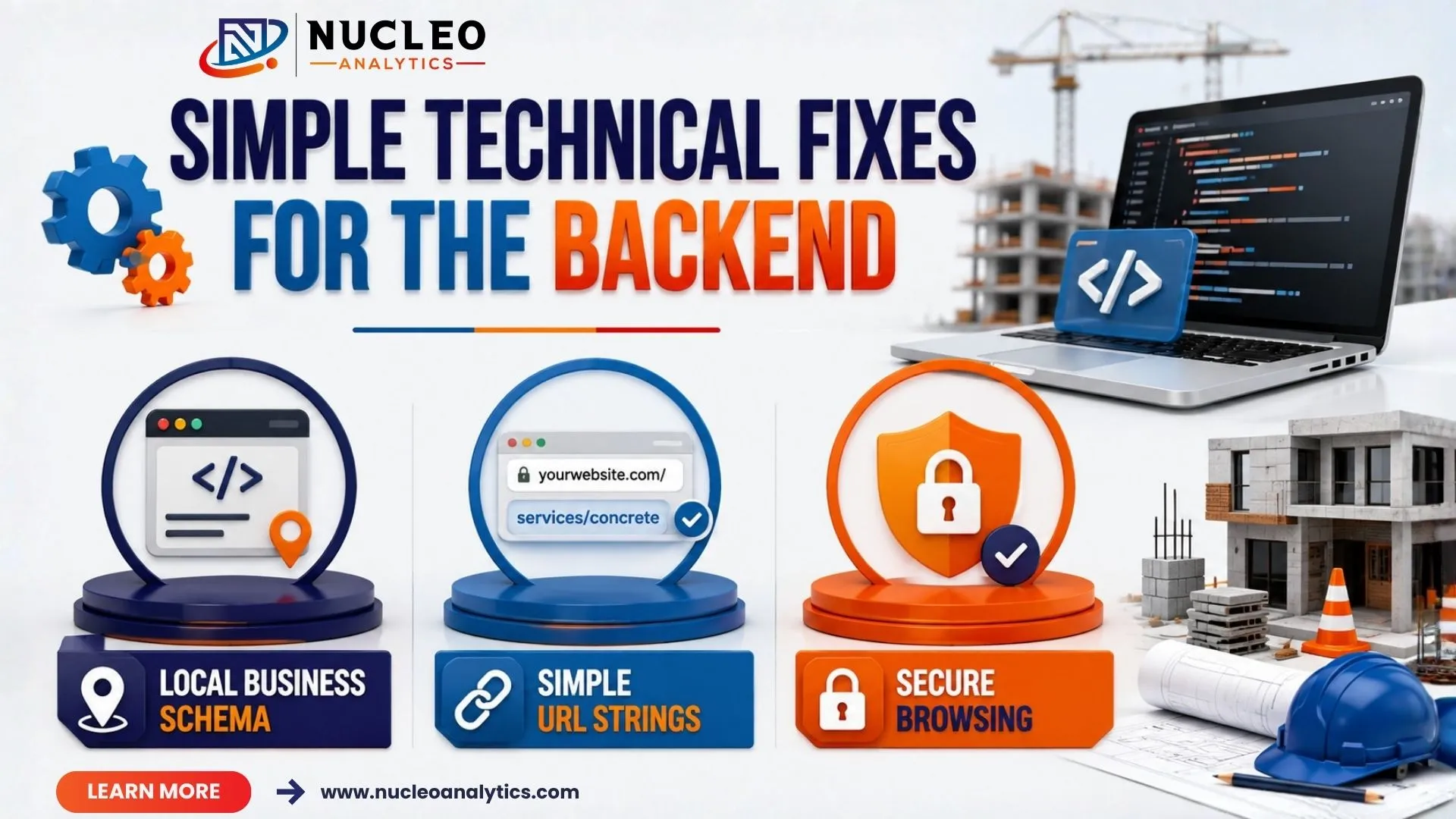
Behind your pretty project photos is a layer of code that search engine spiders read every day. If your backend setup is broken or messy, your best content will stay hidden on page five. Basic technical maintenance ensures that search engine crawlers can read and index your pages easily. It guarantees your service descriptions actually show up when a local client searches for help.
Keep your digital house in order by keeping an eye on these simple technical things:
- Local Business Schema: This is just a basic piece of code that tells search bots you are a real local shop.
- Simple URL Strings: Make sure your links use clean words like /services/concrete instead of confusing symbols and numbers.
- Secure Browsing: Lock down your domain with a standard security certificate so clients feel safe typing in their emails.
8. Track Your Numbers to Clean Up Your System
You cannot fix your search results if you do not pay attention to your performance data. Use free online tracking software to see exactly how people land on your website pages. Watch which service pages get the most views and which pages make people walk away. Tracking shows you what topics your local audience actually cares about. This data prevents you from wasting time on pages that do not bring in money.
Track your phone calls and form entries to see where your best leads come from. Learning what search terms make people pick up the phone helps you focus your marketing energy. If a particular service page starts pulling in high-profit jobs, then you can expand that section with more photos and extra details. Put your time and cash into the exact tactics that give you the best return on investment, not just the loudest ideas. Ongoing tracking helps you stop wasting money on poor marketing ideas.
Search engine rules change a little bit every year, so you have to keep tweaking your plan. Keep your website fresh by adding new job photos and customer reviews every single month. Steady effort keeps your phone ringing while your lazy competitors disappear from the web.
Ready to Outrank Your Competitors and Dominate Your Local Market?
Conclusion
Using contractor SEO is the single best way to build a steady line of exclusive leads without buying expensive ads. By cleaning up your Google Map profile, targeting high-intent local phrases, and building a fast mobile website, you create a permanent asset for your firm. Answering basic homeowner questions builds quick trust and makes your crew the obvious choice in your market.
Clean directory details and local links prove to search engines that you are a legitimate local authority. Tracking your traffic numbers lets you focus your energy on the specific services that make the most profit. Running these smart search strategies keeps your crews busy through every single season of the year.