


You launch your app. It freezes. Or worse, it crashes. Users open it once, maybe twice, then delete it. No warning. No feedback. Just gone.
App crashes, random bugs, slow loading screens, and battery drain. These things do not just annoy users. They quietly kill growth. A lot of teams think a few glitches are normal. They are not. Not anymore.
People expect speed. They expect stability. If your app lags for three seconds, they assume something is broken. If it crashes once, they assume it will crash again.
This is where App Performance stops being a technical afterthought and becomes survival. It is directly tied to your app’s overall technical performance, whether teams admit it or not. Working with experienced teams like Nucleo Analytics for mobile application development can help businesses build apps that are faster, more stable, and reliable for users.
Why App Crashes Hurt More Than You Think?
A crash is not just a technical failure. It is a trust failure. When users experience repeated crashes, uninstall rates go up. Ratings go down. Support tickets pile up. Revenue dips quietly.
And here is the frustrating part. Most crashes are preventable.
They usually come from:
- Memory leaks
- Unhandled exceptions
- Poor device compatibility testing
- Backend timeouts
- Third-party SDK conflicts
Teams often rush releases. New features get priority. Stability gets pushed to “next sprint.”
That delay costs real users.
Strong marketing strategies like App Store Optimization can bring traffic to your app listing. Paid campaigns might drive installs. But if the app crashes on launch, none of that matters.
At Nucleo Analytics, we often see that crash data directly correlates with weak technical performance foundations.
Common Bugs That Destroy App Performance
Not every issue is dramatic. Some are subtle.
A button that stops responding. A screen that loads more slowly over time. A background process that keeps running even after users close the app.
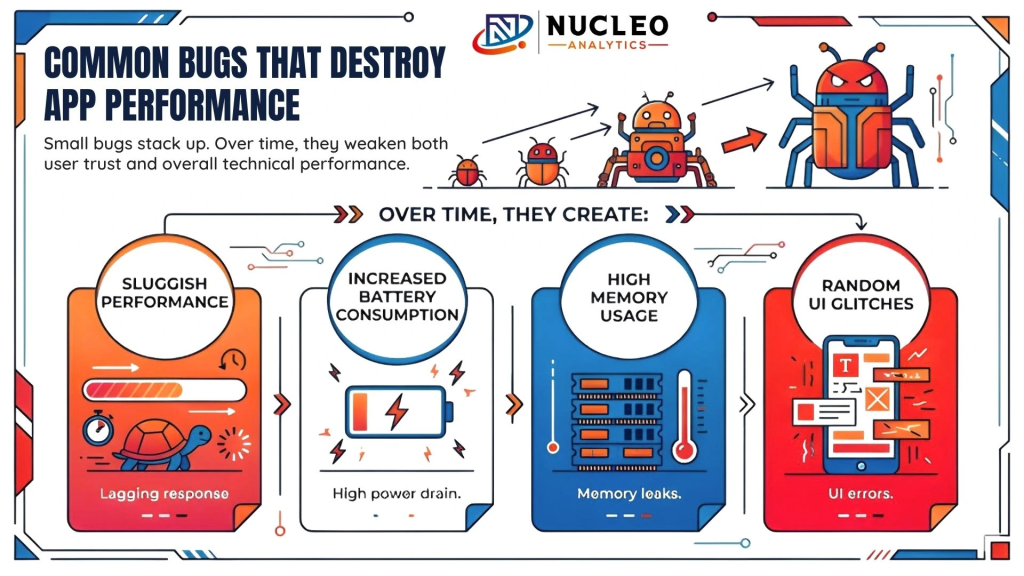
Small bugs stack up. Over time, they weaken both user trust and overall technical performance.
Over time, they create:
- Sluggish performance
- Increased battery consumption
- High memory usage
- Random UI glitches
Users may not know the technical reason. They just feel the friction. Tracking these issues consistently is part of maintaining long-term App Performance. It is not about perfection. It is about catching problems before users notice them.