The reason is simple. Early lead generation looks easy from the outside, but once you actually try to do it, you realize there are too many moving parts. Websites, ads, content, social media, landing pages, emails, SEO — suddenly everything feels important at once. That’s where people usually get stuck.
The good news is you do not need a massive budget or some super complicated funnel to get leads online at first. You just need a bit of a structured process that puts the attention on the right actions, in the right order, and not random stuff.
This guide breaks that process down step-by-step, but without the usual “vague vibes” telling you to post consistently. Also, no fairy tale overnight success tactics. It’s more like practical moves businesses are using today, and yes, in 2026 too, to get their first genuine leads online.
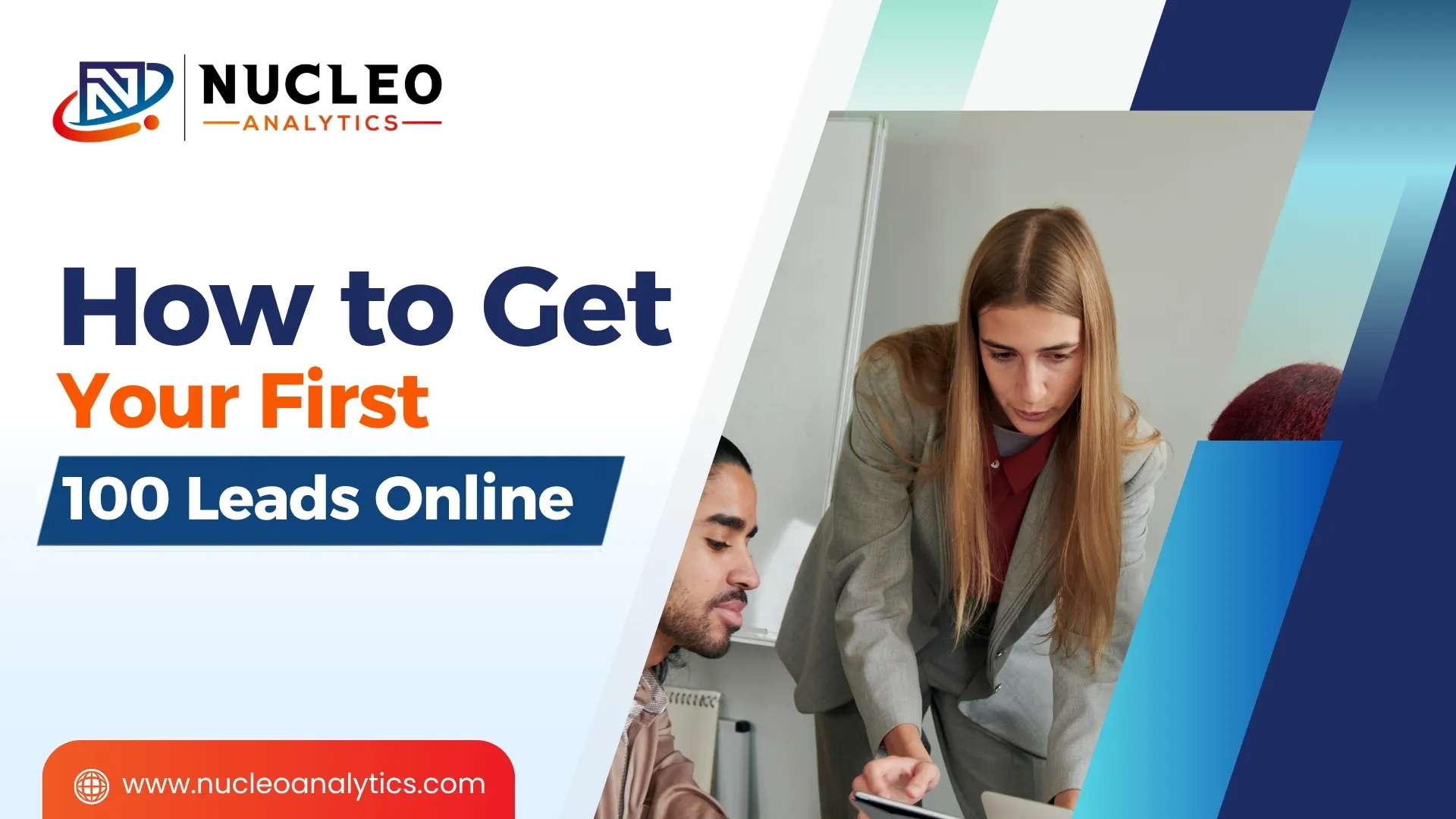
How to Get Your First 100 Leads Online
Getting your first few leads online feels exciting, but reaching your first 100 often becomes confusing. That is usually the point where most businesses either begin building real momentum or completely lose direction.
The reason is simple. Early lead generation looks easy from the outside, but once you actually start doing it, you quickly realize there are too many moving parts. Websites, ads, content, social media, landing pages, emails, and SEO all begin competing for your attention, making everything seem equally important.
That is where most businesses get stuck. The good news is that you do not need a massive budget or an overly complicated funnel to generate your first leads online. You simply need a structured process that keeps your attention focused on the right actions in the right order instead of chasing random tactics.
This guide breaks that process down step by step without relying on vague advice about posting consistently or promising overnight success. Instead, it focuses on practical approaches that businesses are using today, including in 2026, to generate their first genuine leads online.
Step 1: Get Clear on Who You Actually Want to Reach
One of the biggest mistakes beginners keep making is trying to market to everyone, as if you can please the whole planet. That usually creates weak messaging because the offer becomes too broad. Before doing anything else, define your audience clearly.
You need to know:
- What type of person or business do you help
- What specific problem are they facing
- Why would they choose your solution
- Where they spend time online
For example, “small businesses” is still too broad. A local gym owner and a SaaS founder behave completely differently online. This matters because most online lead generation tactics rely on getting in front of the right folks first. Once your targeting is better, everything else tends to line up after that, like ads, the content, and then those conversions a little later.
Step 2: Build a Straightforward offer people actually want
Most websites fail to collect leads because there isn’t anything compelling enough being offered in the first place. “Contact us” doesn’t count as a strong offer. People need some kind of reason to take action now, instead of just bouncing and later forgetting about your business. For that reason, it doesn’t have to be complicated or overly fancy, but it does have to feel genuinely useful.
Strong beginner offers often include:
- Free consultations
- Website audits
- Free strategy calls
- Checklists
- Templates
- Industry guides
This is especially important when trying to generate leads for beginners because people do not trust unknown brands immediately. A useful offer lowers resistance. The easier and more practical the offer feels, the better the conversion rate usually becomes.
Step 3: Build a Landing Page Instead of Sending Traffic to Your Homepage
A homepage tries to explain everything, and that usually hurts conversions. A landing page focuses on one specific action only. That clarity makes a big difference when you’re trying to get leads online consistently.
Your landing page should include:
Alt tags: your landing page should include
- One clear headline
- A short explanation of the offer
- A simple form
- Testimonials or proof, if available
- One strong CTA
Keep the design clean. Too many sections or distractions reduce conversions quickly. You also do not need a complicated website initially. One strong landing page often performs better than a large website with weak messaging.
Step 4: Start Posting Helpful Content Consistently
Content builds trust before conversations even begin. Most people will not convert the first time they see your business. They need familiarity first. Helpful content creates that familiarity gradually. Good content for beginners usually includes:
- Answering common questions
- Explaining the mistakes people make
- Sharing practical tips
- Breaking down simple processes
- Talking about real experiences
You do not need perfect production quality. Clear and useful content matters more. Businesses trying to generate leads online often overcomplicate content early instead of simply helping people understand problems better. That simplicity usually works better anyway.
Step 5: Use LinkedIn for Outreach if You’re Selling B2B
If your audience includes businesses, LinkedIn becomes extremely useful early on because decision-makers are already active there. Good LinkedIn B2B lead generation is not about spamming connection requests with sales pitches immediately. That approach usually gets ignored.
A better process looks like this:
- Connect with relevant people
- Engage with their posts occasionally
- Share useful insights regularly
- Start natural conversations gradually
The businesses succeeding on LinkedIn focus more on relationships than volume. That’s important because warm conversations convert much better than aggressive outreach.
Step 6: Run Small Paid Ad Campaigns Carefully
Paid ads can help you get leads faster, but beginners often waste money by scaling too quickly. Start small. The goal initially is not massive traffic. The goal is to learn what messaging and targeting actually work.
Strong beginner ad campaigns usually focus on one:
- Audience segment
- Clear offer
- Landing page
- Simple CTA
This is where PPC lead generation becomes useful because you can test offers and audience reactions quickly. Understanding PPC vs CPC also matters early. PPC refers to the advertising model itself, while CPC measures the actual cost per click. Many beginners confuse the two and struggle with budgeting decisions because of it.
Step 7: Improve Your Targeting Instead of Increasing Budget
A lot of businesses think poor results mean they need bigger budgets. Usually, the real problem is weak targeting. A strong ad targeting strategy often improves performance faster than spending more money.
Better targeting usually includes:
- Narrowing industries
- Targeting specific interests
- Focusing on geographic areas
- Excluding irrelevant audiences
- Retargeting engaged visitors
This is especially important when working with smaller budgets because every click matters more. Good targeting also improves lead quality, not just lead volume.
Step 8: Add Email Follow-Ups Immediately
Most leads do not convert right away. That’s normal. People get distracted, compare options, or simply need more time before making decisions. Follow-up emails help keep your business visible during that process.
A simple follow-up sequence might include:
- Welcome email
- Helpful tips or resources
- Case studies or examples
- Common questions
- Final CTA
You do not need complicated automation initially. Even simple follow-up systems improve conversions significantly. Businesses wondering how to generate leads online often underestimate how much consistent follow-up matters.
Step 9: Use Retargeting to Bring Visitors Back
Most website visitors leave without taking action. Retargeting helps bring them back. This works because people who have already visited your website are warmer than completely cold audiences. They already know who you are.
Good retargeting campaigns usually focus on:
- Website visitors
- Landing page visitors
- Video viewers
- Lead magnet downloads
This is one of the most effective lead generation ideas for businesses because it focuses on people already interested once. Retargeting usually becomes more effective over time as traffic grows.
Step 10: Track What Actually Generates Leads
Many beginners focus too much on vanity metrics. Likes, impressions, and traffic can feel exciting, but they do not always create business results.
Track metrics that actually matter:
- Conversion rates
- Cost per lead
- Lead quality
- Meeting bookings
- Email signups
This helps you identify what’s working and what needs improvement. The businesses that consistently get leads online usually improve because they pay attention to data early instead of constantly guessing.
Step 11: Create Case Studies and Social Proof
Trust becomes much easier when people see proof. Even small results matter early. If you helped someone improve website traffic, increase conversions, or solve a business problem, talk about it clearly.
Good case studies usually explain:
- The original problem
- What changes were made
- The outcome
- Lessons learned
People trust examples much more than generic claims. That trust helps improve conversions across every channel.
Step 12: Stay Consistent Longer Than Most Beginners Do
This step sounds simple, but honestly, it’s the hardest one. Most businesses quit too early. They post content for a few weeks, run ads briefly, or try outreach inconsistently, then stop when results are not immediate.
Online lead generation compounds slowly. Visibility grows over time, trust builds gradually, and data improves campaigns slowly. The businesses successfully using get leads online systems usually stay consistent much longer than their competitors. That consistency becomes a major advantage.
How We Help Businesses Build Lead Systems at Nucleo Analytics
At Nucleo Analytics, we’ve worked with businesses at every stage, including companies trying to generate their very first leads online. One thing becomes obvious quickly — most businesses do not fail because their product is bad. They fail because their lead generation process lacks structure. Some businesses focus only on traffic without optimizing conversions. Others run ads without proper targeting or follow-up systems. Many publish content consistently but never connect it to an actual funnel.
We approach lead generation differently. Instead of treating SEO, ads, content, and landing pages separately, we build systems where each part supports the other. That creates more predictable growth instead of random spikes in traffic or leads.
Our process usually includes:
- Conversion-focused landing pages
- SEO and content strategies
- Paid traffic systems
- Retargeting campaigns
- Funnel optimization
- Lead qualification systems
We also focus heavily on quality over vanity metrics. A thousand weak clicks mean very little if they do not become conversations or customers.
That’s why we prioritize:
- Better targeting
- Better messaging
- Better conversion systems
- Better follow-up processes
Because those improvements create much stronger long-term growth.
Businesses trying to build sustainable online lead generation systems usually perform much better once everything works together instead of separately. That’s where real momentum starts building.
Conclusion
Getting your first 100 leads online is not about finding one magical tactic. It’s about building a simple system that consistently attracts the right people and moves them toward action. The strongest businesses focus on:
Clear offers
Better targeting
Useful content
Strong follow-up
Consistent optimization
That combination works much better than constantly chasing shortcuts. The process may feel slower initially, but systems compound over time. That’s the part most beginners underestimate. The businesses successfully using get leads online strategies today are usually not doing anything wildly complicated. They are simply executing the basics more consistently and improving gradually based on real results. And honestly, that approach works much better long term anyway.