
Asking any entrepreneur running a digital agency what his main problem is, he will probably name the issue of custom scoping. A potential client contacts you, and you spend several hours examining his unique field, preparing a custom-made 30-page proposal, negotiating your hourly rate, and attempting to calculate how many hours you will need to invest in copywriting, technical SEO, and link building.
When you finally land the client, the real trouble starts. Your margins become razor thin, the scope expands, and the fulfillment team struggles to develop a completely unique strategy that bears no relation whatsoever to the project just signed up for another client. You haven’t created an agency; you have created a stress-filled consultancy posing as a marketing firm.
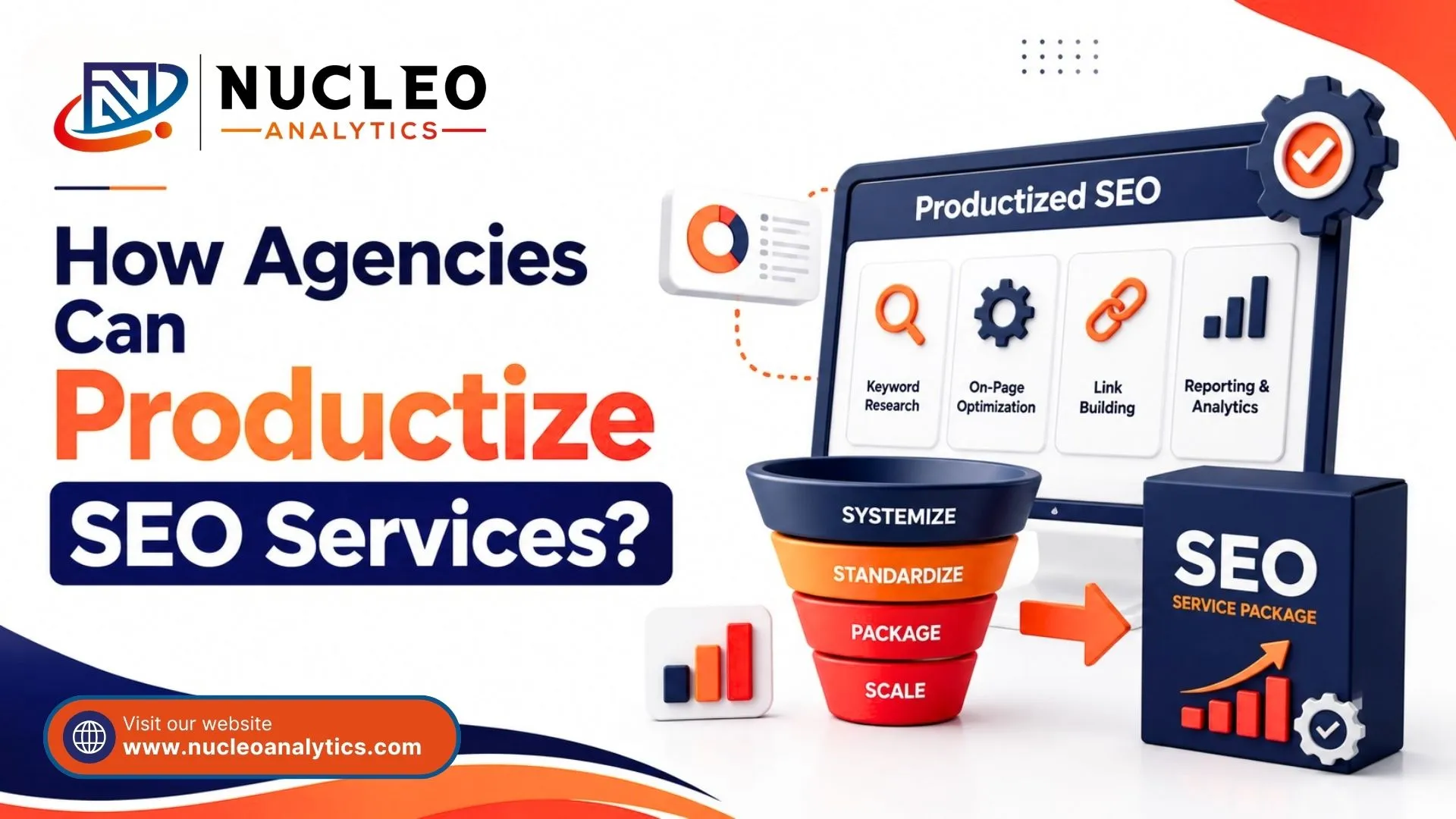
To break out of this cycle of feast-and-famine revenue, scaling agencies are shifting away from bespoke consulting. The secret to predictable growth, higher profit margins, and flawless execution lies in operational structure. Turning your custom workflows into standardized, fixed-price productized SEO services allows you to turn your services into products. Let’s explore how your agency can eliminate scope creep, automate client onboarding, and build a highly scalable fulfillment engine.
The Core Concept: Shifting from Services to Products
Before restructuring your business model, you must understand the operational mechanics of productized services within a digital marketing framework.
When a consumer buys a software subscription or a physical product, they know exactly what they are getting, what it costs, and when it will arrive. Productizing your agency services brings that exact same clarity to professional B2B marketing. It completely eliminates the need for complex, drawn-out sales cycles and custom scoping documents because the boundaries of the service are pre-set and published transparently.
How to Productize SEO Services Without Sacrificing Quality
Transitioning your operational model requires a systematic tear-down of your current fulfillment workflows. Building high-margin productized SEO examples is not about reducing the actual performance quality for your clients; it is about standardizing the internal operational assembly line that delivers those results.
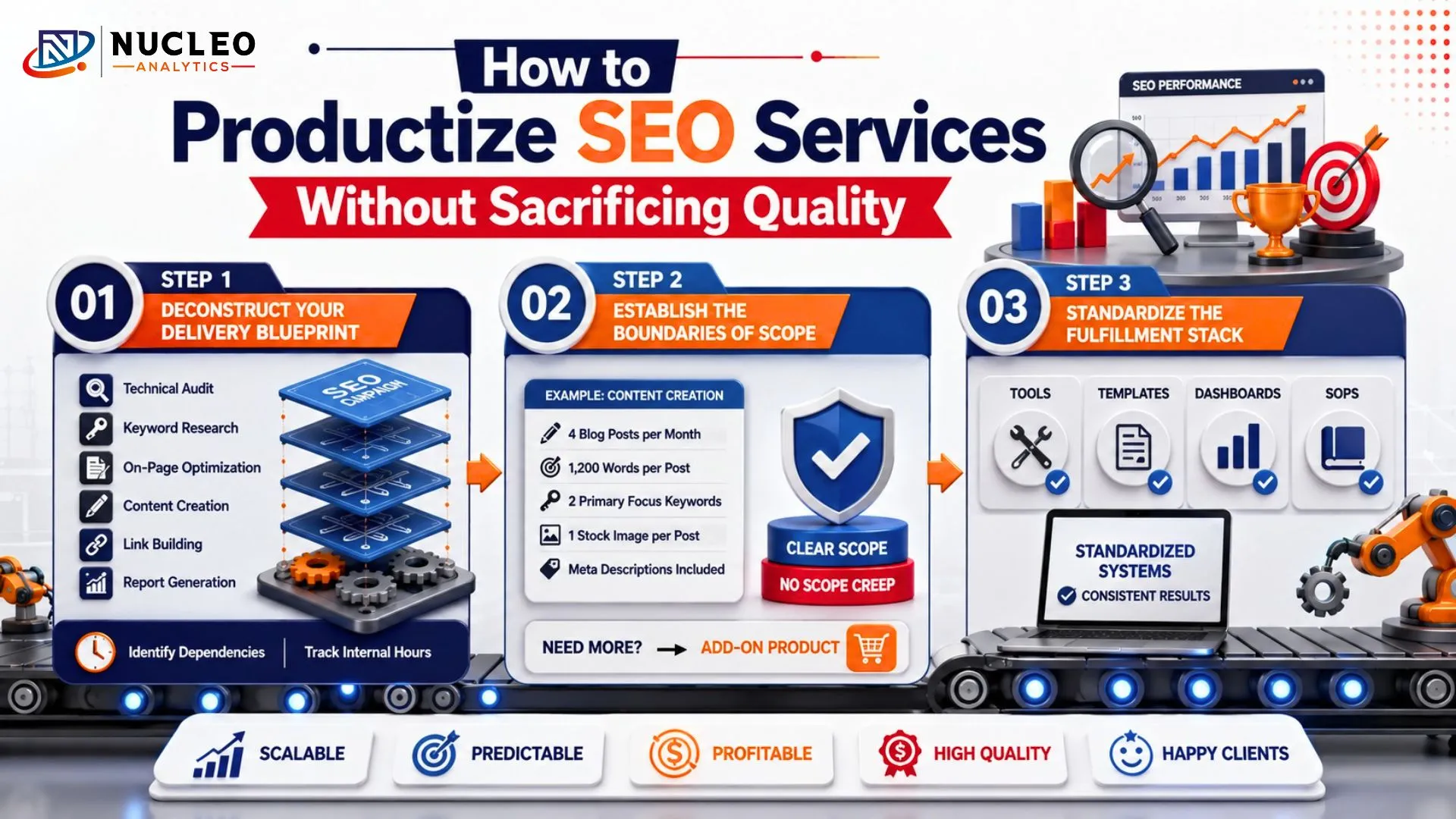
Step 1: Deconstruct Your Delivery Blueprint
Sit down with your fulfillment team and document every single task performed during a standard organic campaign. Identify all deliverables in a micro-level manner, such as technical audit, page titles, keyword research, blogging, and report generation. Classify all these tasks according to dependencies and find out the actual internal hours for completing each task.
Step 2: Establish the Boundaries of Scope
Scope creep kills agency margins. When you productize, you must create rigid, clear boundaries around your SEO Service offerings. If your package includes "Content Creation," specify the exact parameters: Four 1,200-word blog posts per month, including two primary focus keywords, one stock image per post, and meta descriptions included. If a client asks for a fifth blog post, they do not get it via a loose email agreement; they must purchase a clearly defined add-on product.
Step 3: Standardize the Fulfillment Stack
You cannot build scalable products if your team uses three different keyword tools, writes content in random Google Docs, and tracks projects across multiple unlinked project boards. Standardize your agency's software stack completely. Force every team member to follow identical execution templates, use identical reporting dashboards, and follow rigid, documented SOPs (Standard Operating Procedures).
Designing High-Margin SEO Packages for Agencies
Your success with productization depends largely on how well you tier and bundle your products. When designing SEO packages for agencies, the ladder should be structured in such a way that it serves different levels of business maturity while keeping your execution line consistent internally.
Tier 1: The Core Foundation (Growth Package)
This introductory product targets local small businesses or early-stage startups that need a clean baseline. The deliverables are entirely technical and structural: full core vitals audit, keyword alignment maps, fixed metadata updates across up to 30 primary pages, and a foundational internal linking architecture layout. It requires minimal ongoing manual labor and relies heavily on automated agency tools.
Tier 2: The Core Engine (Accelerate Package)
Your primary monthly recurring revenue (MRR) engine. This package targets established regional brands looking for active organic growth. It includes the structural foundation of Tier 1, plus a fixed content cadence (e.g., three optimized landing pages or blog posts per month) and a set volume of monthly link placements (e.g., four authoritative contextual backlink placements).
Tier 3: Market Expansion (Dominance Package)
Designed for enterprise clients or competitive national brands. This premium tier increases the fixed content volume, incorporates advanced semantic schema structure deployment, introduces automated brand mention tracking, and scales link acquisition to a higher, pre-set monthly threshold.